


Pilates Power
POWER OF PILATES
Utilizing Pilates in a private rehabilitation office is a good and effective business. Introducing techniques derived from Pilates into the offering provides new opportunities, but some may be intimidated by the need for additional investments. What equipment should be purchased? Should it be rented or bought? Can such equipment be deducted from taxes? Physical Therapy Products decided to show how it works by turning to the sources and talking to someone who has successfully integrated Pilates into their offerings.
Ada Wells is a certified Pilates instructor and part of ProBalance – a center for physical therapy and sports rehabilitation in Alameda, California. Wells discovered Pilates in 2001 and immediately saw its enormous potential for physical therapy. “The principles of Pilates are excellent for physical therapy because they help optimize movement and control without causing unpleasant sensations” – says Wells. “In our profession, we focus on correct posture and body alignment, and the precision of Pilates exercises greatly assists in this. For example, through Pilates, one can integrate signals for diaphragmatic breathing to facilitate spinal articulation, and adding signals to stimulate elongation engages the deep core stabilizers, which minimizes compressive forces acting on the spine.”
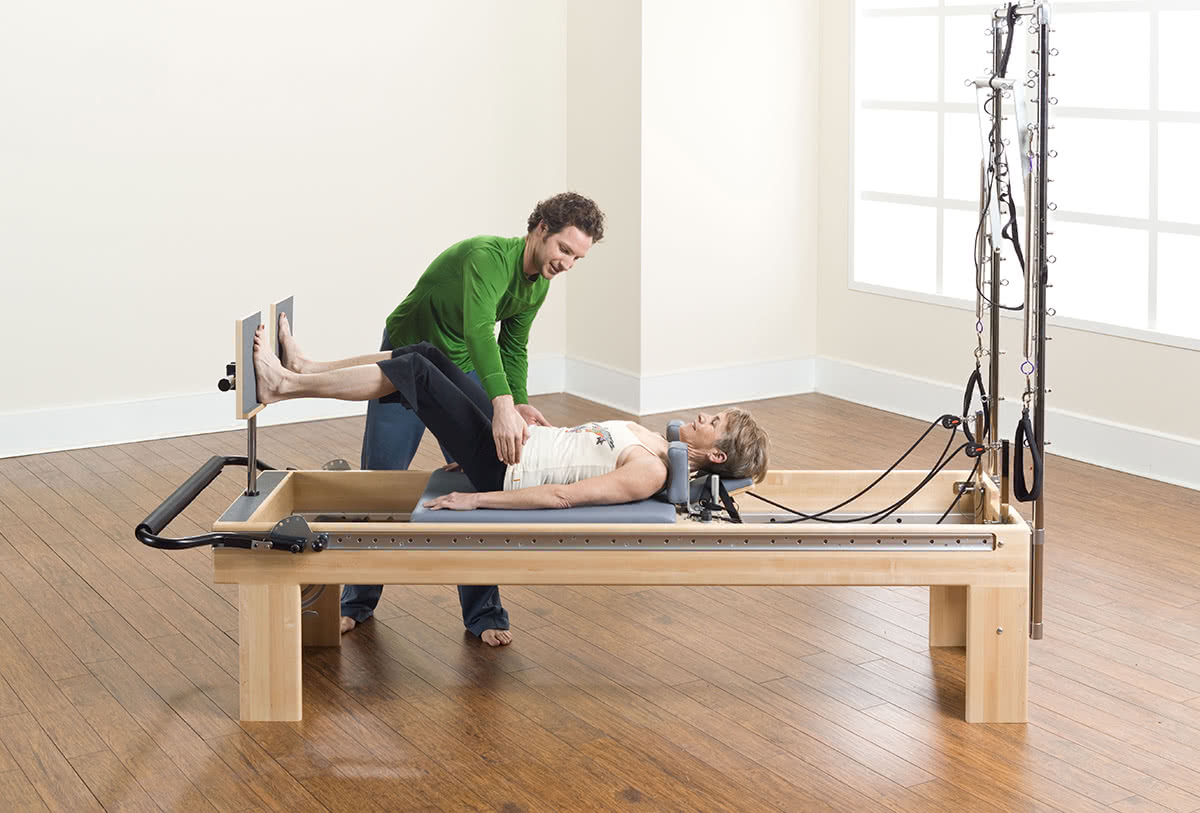
CREATING THE RIGHT BUSINESS MODEL
Ada Wells previously worked at a health center where she faced challenges utilizing Pilates due to the inappropriate business model of the facility. “When I first started using Pilates, I worked at a rehabilitation center that included a clinic receiving many patients, where often even three patients per hour were doing exercises” – says Wells. “I had difficulties performing exercises precisely in the short time frame I had to work with patients. I discovered that if we could properly train the staff on the basic exercises, we would be able to spend more time implementing changes and improvements.” This was indeed the case when in the second half of 2004 she established her ProBalance clinic. Ada Wells structured her business model so that from that moment on, she could work with only one patient per hour. Now she could fully combine her work as a physical therapist and Pilates trainer: “I quickly discovered that integrating Pilates into the business model was not a special challenge and in fact, it was one of the reasons for the successes and growth of my company.”
EQUIPMENT PURCHASE
Wells selected equipment for her clinic based on several factors. “I tested several brands and spoke with many people. I recommend conducting as broad a reconnaissance as possible on this matter. Information is readily available. The brand I chose is the best for me as a physical therapist because its equipment is continuously improved based on suggestions and feedback received from physical therapists and Pilates instructors. Additionally, it can be easily customized for specific individuals,” claims Wells. She cites her patient, who had limited spinal control after having polio. Dr. Wells was able to adapt the roll down and rowing therapy using a special foot exercise roller produced by this manufacturer. Although it was not an exercise from the typical Pilates repertoire, the principle used in it was consistent with the principle of improving motor control and mobility that is part of Pilates.
QUICK RETURN ON INVESTMENT
For clinic owners planning to purchase equipment, many manufacturers offer leasing options. However, Ada Wells decided to purchase equipment right at the beginning of her practice. “Before the purchase, I calculated how quickly this investment would pay off,” says Ada Wells. “By calculating the rates for patients and the expected number of them, it became clear that the equipment purchase would pay off relatively quickly. It turned out that it took me only 6 months to pay off all the equipment from the moment I started my practice.”
EXTENDED SERVICE
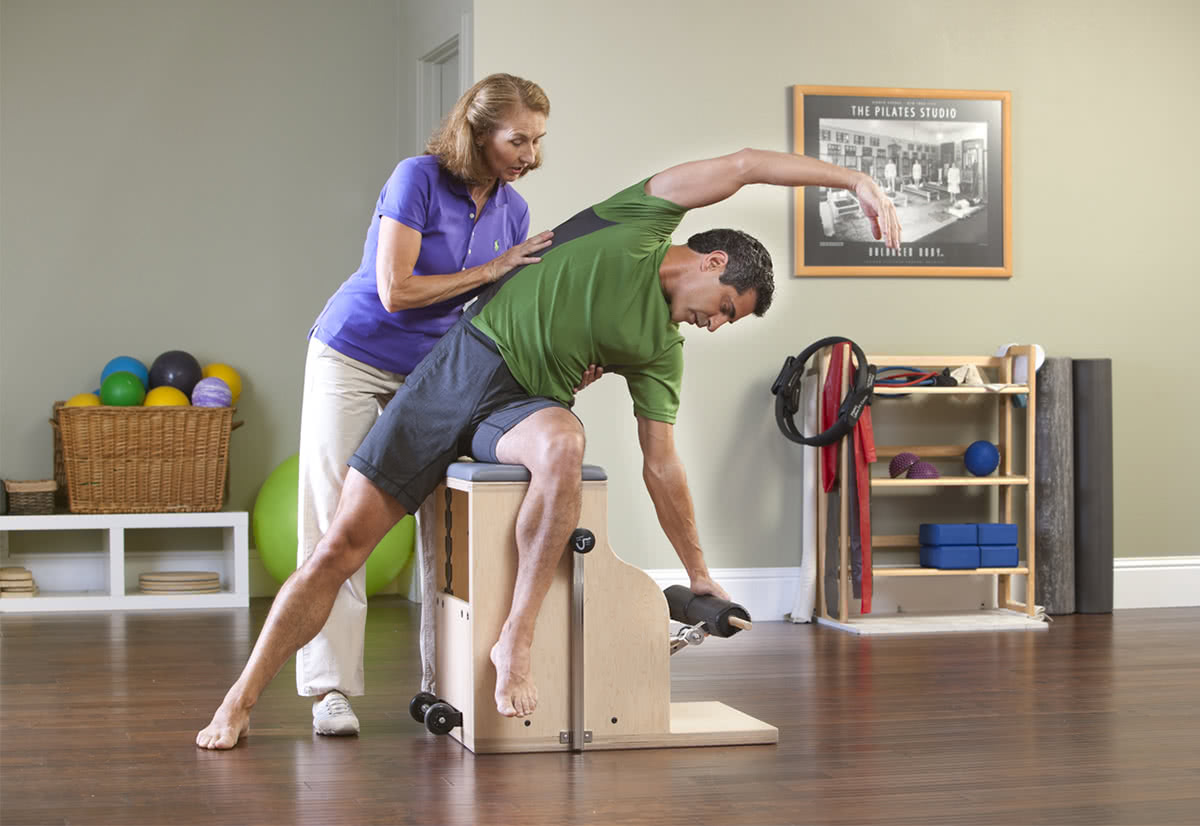
One of the beneficial aspects of Pilates in rehabilitation is the satisfaction of patients who come to us even after their therapy has ended. In her clinic, Ada Wells also employs fitness Pilates instructors and offers her patients who have completed their therapy good prices for continuing their exercises, this time solely for sports purposes. These “post-rehabilitation” classes are conducted in small groups of up to 4 people, which ensures precise monitoring of progress.
MARKETING IS THE KEY TO SUCCESS
As in any business, it is necessary to encourage patients to visit. Dr. Wells estimates that currently three-quarters of her patients come to the clinic by referral, but admits that at the beginning she used many available marketing tools. She advertised and wrote articles about Pilates in her local newspaper, taught Pilates instructors in local health clubs about various conditions and their treatment using Pilates (osteoporosis, back pain, etc.). She met many local doctors, chiropractors, and many others involved in healthcare, telling them about the benefits of Pilates and its possible applications in therapy.
SUBSTANTIAL TAX DEDUCTIONS
Pilates can also be a very good solution for private practices in this aspect. “In addition to equipment and props for Pilates, starting from April 14, I can also deduct from taxes all training I undergo related to Pilates,” says Wells. This includes conferences, specialized courses, books, or DVDs related to Pilates. “All of this represents an invaluable value in integrating Pilates exercises and physical therapy,” claims Wells.
CASE STUDY
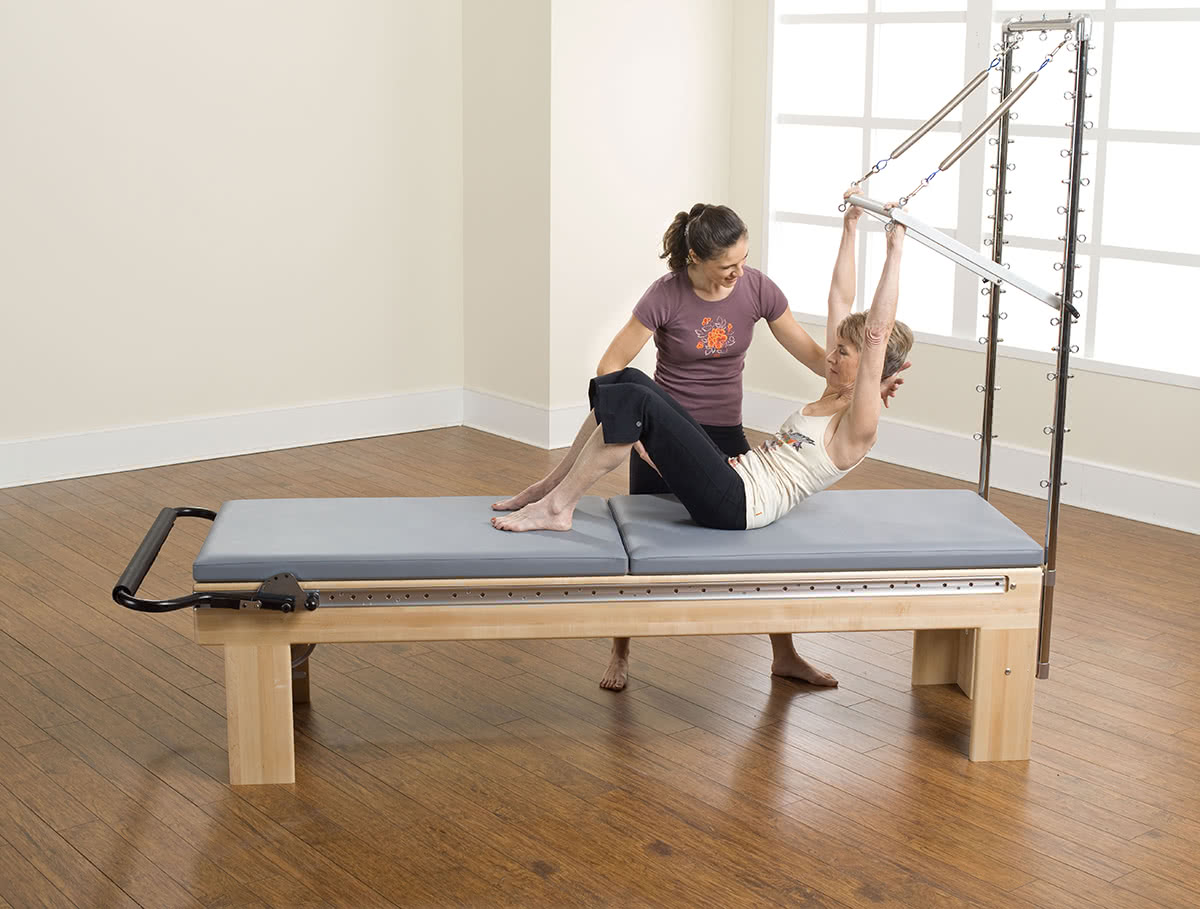
How does Pilates work in private practice? Here is a specific example of using Pilates in rehabilitation. Steve is a 57-year-old man who came to the ProBalance clinic with lower back pain and complained of pain in his lower limbs, which started 3 months earlier. The man’s passion is golf, but due to the pain, he had to limit his play to once a week, and instead of walking the golf course, he used a golf cart. An MRI showed stenosis of the 4th and 5th vertebrae, grade 1 spondylolisthesis, disc bulging, and wall hypertrophy. Dr. Wells began therapy with the patient using Pilates equipment. During the exercises, the physiotherapist assists the patient in performing correct movements and maintaining proper posture.
Steve suffers from degenerative disc disease with moderate broad disc bulging. The physical examination revealed limited lumbar mobility in flexion and lateral extension, weakness in hip abductors on both sides, and difficulties in hip/pelvis dissociation. While performing a golf swing, he started in a position with excessive spinal curvature; the patient had reduced thoracic mobility during the backswing and insufficient left hip rotation in the follow-through position. This appeared to increase the compressive force on his lumbar spine, especially on the left side during the follow-through position.
Treatment: Steve had 6 therapeutic sessions over 2 months. His specific treatment included a combination of manual techniques to reduce soft tissue restrictions in the spine and hips, instruction on how to exercise at home for mobilization and flexibility using a foam roller, Pilates fundamentals, training on proper posture, and later more advanced exercises similar to those performed in the clinic to do at home. During his rehabilitation sessions, Steve used the Reformer, Ladder Barrel, Trapeze Table, and Combo Chair to improve spinal mobility and control.
Exercise Program: The program focused on identifying the appropriate phase of rehabilitation to determine the pace of progress, then eliminating faulty movement patterns and integrating functional re-education so that Steve could return to playing golf. “We needed to reduce pressure in the lumbar area by educating the patient on the fundamentals of dissociation, stabilization, and improving pain-free mobility,” says Ada Wells. “Then we proceeded to strengthen and restore full mobility by introducing exercises that eliminate faulty movement patterns.” Once Steve mastered good movement patterns, he progressed to exercises that increased resistance and were generally more challenging. The specially designed exercise program improved posture awareness, expanded thoracic spine mobility and its rotation, and hip control and rotation.
Steve’s golf swing improved significantly, and the compressive pressure on his spine decreased considerably. Examples of exercises for Steve included hip and foot stretches on bands on the Reformer to improve mobility and flexibility, lateral and rotational stretches on the Ladder Barrel, bridges to improve spinal mobility and control, long spring exercises on the Trapeze Table to strengthen the lower segments and core control, and single-leg squats supported by the Combo Chair to improve balance and eliminate hip dissociation.
Results: A month after starting therapy, Steve was able to play a round of golf, albeit with some discomfort. After two months, he was able to play 3 tournaments in one week, without increased complaints.
Daniel Wilson

I am a graduate in Managerial Economics as well as Finance and Accounting, with a specialization in Marketing. Since 2018, I have been working as a Copywriter at Balanced Body, where I create marketing content for the fitness and Pilates industries. One of my particular strengths is translating complex topics into accessible language and accurately analyzing the needs of target audiences. Outside of work, I am passionate about fire shows and volleyball, which helps me better understand the needs of physically active people.