


Pilates for Golfers – A Neurological Approach to Improving Performance
Breath, control, strength, flexibility, precision, body awareness… Did you know that all of these elements are components of both Pilates and golf?
Pilates instructors know very well that the method they practice lengthens and strengthens muscles in order to achieve a balanced body. Joint stability, core strength, and trunk mobility play a big role here. Being a great golfer, however, requires more than strength and mobility – neurology-based exercises are needed as well.
A good golfer has to be accurate, coordinated, and consistent. In many respects, using the Pilates method and playing golf both give muscles their driving force, but it’s worth remembering that focus and concentration are achieved through the work of the brain, and neurology is precisely about the brain!
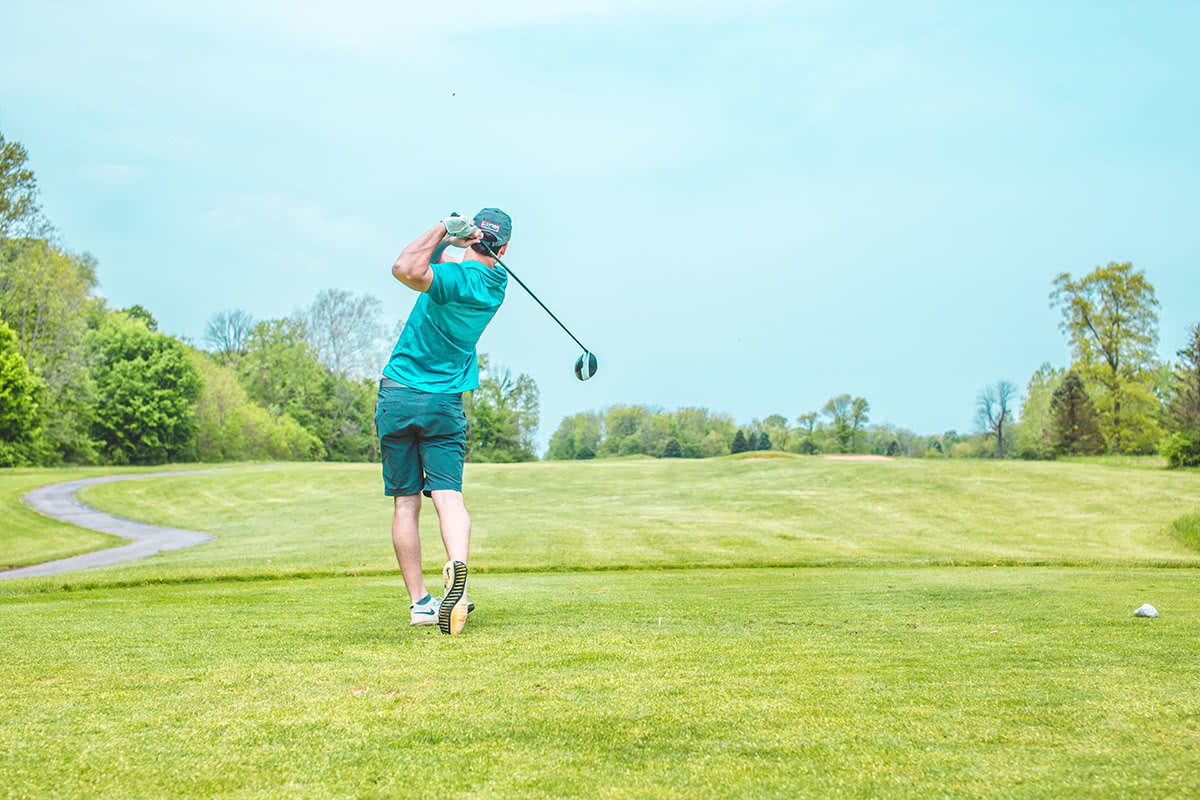
If you analyze the swing, that is, the golf stroke of a right-handed golfer, you’ll discover how many elements it is made up of:
- head position,
- visual fixation, that is, directing the gaze at a single point,
- arm flexibility,
- trunk rotation,
- hip positioning,
- internal rotation of the right leg,
- weight shift and knee positioning,
- tilt of the left ankle,
- balance.
Pilates sessions on the reformer relate directly to many of the elements above. It’s also worth combining them with neurological exercises to improve your golf game and reduce the risk of injury.
The key is to create a kind of neuromap that connects the brain’s sense of safety with correct movement.
CREATING A NEUROLOGICAL MAP
Good-quality signals sent to the brain provide a sense of safety and an understanding of what is happening. Put simply, the brain tries to avoid movements that could cause it harm (e.g. a fall) or cause pain in the body.
The brain communicates in various ways that it has found itself in an uncomfortable situation – through weakness, dizziness, or pain. Ignoring these subtle signs will only make things worse – you need to attend to them. Recognizing the brain’s sensations by providing it with the right stimuli can increase strength and precision and reduce pain.
To get to know the brain better, it’s worth using the analogy of a map. Imagine you’re driven to a new place – somewhere you’ve never been before. You’re given a map, but it turns out to be just a blank sheet of paper with nothing on it. That’s not helpful!
You find yourself in a similar situation when you start working with your brain, which has to pick up on the details created by awareness itself in order to shape the “brain map.” Here are a few examples:
- To create “roads,” you need quality of movement – full ranges, all angles, different speeds.
- To create “buildings,” you need the ability to sense heat and cold.
- To create “parks and trees,” you need the sense of touch and pressure.
The clearer the map and the more detail it has, the more easily you’ll move through life. That’s why a golfer’s goal should be movement that creates the details of the brain map. Set the following achievements as your goals:
- full ranges of motion with internal and external rotation at the hip,

I am a graduate in Managerial Economics as well as Finance and Accounting, with a specialization in Marketing. Since 2018, I have been working as a Copywriter at Balanced Body, where I create marketing content for the fitness and Pilates industries. One of my particular strengths is translating complex topics into accessible language and accurately analyzing the needs of target audiences. Outside of work, I am passionate about fire shows and volleyball, which helps me better understand the needs of physically active people.