


Pilates for Skiers
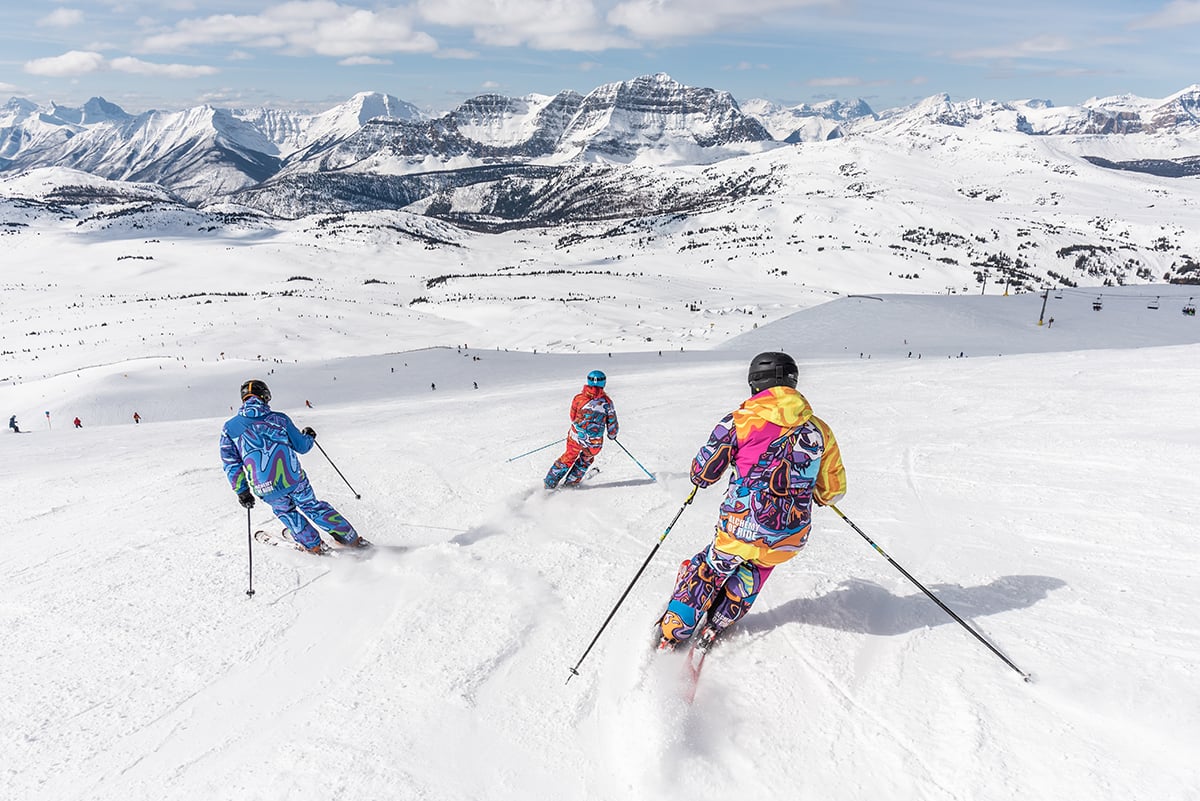
Do you ski? This exciting sport attracts many people with the thrill of speeding down a snow-covered mountain. Unfortunately, crazy skiing is also risky and requires good physical condition. It’s no wonder that injuries are common – every year, around 10,000 people end up in the hospital due to injuries related to winter sports.
Fortunately, preparing your body for a few weeks before hitting the slopes helps avoid injuries and falls. It will also improve your performance. The discipline that is particularly suitable for this is Pilates. This exercise method strengthens and stretches your body, giving it everything you need to ski well and safely.
Want to work on your fitness before your next ski trip? Maybe you’re worried about injury or just feeling really sore? Try Pilates exercises and feel confident!
WHY SHOULD SKIERS PRACTICE PILATES?
Pilates exercises are an excellent method of preparing for winter sports. Professional alpine skiers know this well, as they regularly practice Pilates. One of its great advantages is the ability to tailor exercises to individual sports needs.
Pilates develops traits that are crucial for skiers:
- Mobility and Flexibility
A good range of motion in the spine, hips, and ankles is essential for skiers. Many fundamental Pilates exercises focus on the mobility and flexibility of the lower body. Examples include exercises on Pilates machines, such as footwork or exercises with feet in elastic bands.
Flexibility and mobility are also improved through mat Pilates exercises. You can do them even while traveling – for example, to relax after a day spent on the slopes.
Although most bends in skiing occur at the knees, ankles, and hips, mobility in the upper body and spine is also important. A mobile and stable spine helps combat stress and fatigue that often result from hours of skiing.
With Pilates, you will learn to separate the lower body from the upper body while executing perfect turns. To do this, you need to have the ability to rotate in the thoracic spine. Pilates is perfect for that.
- Strength
Pilates is not a strength training program; however, it excellently strengthens the oblique muscles, abdominal muscles, and deep stabilizing muscles. It allows you to achieve a strong and stable torso, which is essential for skiers.
While skiing, the torso must remain relatively still while movement occurs in the lower limbs. Pilates teaches excellent control over specific areas of the body, allowing you to avoid wasting energy through unnecessary torso movements.
For skiers, having strong and stable legs is also crucial for maneuvering both skis evenly. Pilates offers many exercises that strengthen each leg individually – this is an ideal solution for skiers.
- Proper Posture and Technique
Proper alignment of the body parts is very important for skiers. Knees must be positioned centrally over the feet – without this, skiers will not feel stable. Pilates offers many exercises that focus on the relationship between the foot, ankle, and hip, allowing for proper alignment.
Pilates also teaches pelvic stability and maintaining a neutral spine during dynamic exercises. Finding a neutral spine and maintaining it is very important while moving on skis.
It is also essential to have strong hip and glute muscles. These are often neglected muscles, and without them, proper side-to-side hip movement while skiing is impossible. Fortunately, Pilates offers many exercises – on the mat and on machines – ideal for working on these muscles.
- Endurance
Many people preparing for a ski trip focus on plyometric (jumping) and strength exercises. While these can increase speed on the slopes, poor endurance often prevents truly successful skiing.
This is where Pilates comes in handy. It is an ideal choice for those skiers who want to work on their fitness and acclimate their bodies to prolonged exertion and staying in one position for an extended period.
- Injury Prevention
Pilates has another advantage – it can protect you from injuries in the event of a fall. A good range of motion will help you better manage if you land face-first in the snow or if you suddenly twist to avoid colliding with another skier.
Knees are particularly vulnerable to injuries while skiing. There are often tears of the knee ligaments. Many Pilates exercises, such as the bridge with a ball between the legs, strengthen the adductor muscles, which teach the skier to keep the skis directly under the body, helping to reduce the load on the knees.
Pilates exercises also help achieve body balance, including strengthening the hamstrings. This helps protect the sensitive knee ligaments and reduces the risk of injury.
PROPER POSTURE WHILE SKIING
In the correct skiing position, the knees are bent in a half-squat, and the spine is slightly leaning forward. Think of sitting down and standing up from a chair without using your hands: the range of motion you perform going from sitting to standing will be the fundamental movement you will execute while skiing.
During skiing, the knee joints are therefore the most heavily loaded. For this reason, the most commonly observed injuries among skiers are ailments of the tissues surrounding the knees, particularly tears of the anterior cruciate ligament, medial collateral ligament, and meniscus.
Fortunately, proper posture while skiing can significantly relieve the knees. Skiing requires twisting at the waist, but often this rotation is incorrectly transferred to the knees. Especially when larger muscles are fatigued, the knee joint takes on excessive pressure, which can lead to ligament tears. To prevent this, you should perform exercises that strengthen the oblique muscles, back extensors, and of course, the leg muscles during Pilates training.
Another area that often gets injured or overused while skiing is the lower back. Injuries in this area often occur due to fatigue and poor core stabilization. Unnecessary muscle imbalances (e.g., between the back muscles and abdominal muscles), compensations, and ultimately injuries arise. Pilates exercises help gain control over trunk stability to maximize limb mobility and performance while simultaneously engaging the abdominal and back muscles, reducing the risk of injury.
5 PILATES EXERCISES TO HELP YOU PREPARE FOR THE SKI SEASON
Over the past year, there has been a boom in all kinds of outdoor recreation. And with a limited number of spots at resorts, one could say that interest in skiing is at an all-time high. Even the spring ski season is in full swing.
Enthusiasm may be high, but without proper preparation, skiing will not provide you with the expected thrills. Here are a few exercises to get you started.
- Bird dog
This exercise engages numerous muscle groups – arms, back, hips, and glutes, and also develops balance, which is a key element of winter sports. How to perform it?
- Assume a quadruped position, or a kneeling position. Distribute your weight evenly on your hands and knees.
- Keeping your back in a neutral position, lift the opposite arm and leg so that both limbs extend from your back and are parallel to the floor.
- Hold this position for a few seconds, then slowly return to the starting position. Then perform the same movement with the other leg and arm.
- Spine Twist
This useful exercise can be performed without any additional equipment. How to do it?
- Sit up straight, with your feet extended in front of you, slightly apart.
- Extend your arms straight out to the sides.
- Twist your torso side to side, keeping your arms and hands in position.
- During the rotation, keep your eyes and head in line with your spine.
- Chest Expansion
This is a great Pilates exercise on the reformer for skiers and snowboarders. It can also improve your posture.
- Start in a position with one knee on the carriage and the other at a right angle.
- Slowly pull the resistance straps with both hands, moving on the carriage.
- Keep your head in line with your spine throughout this movement, which strengthens the chest, arms, and upper back.
If you do not have access to a reformer, you can also modify this exercise to perform it at home with resistance bands. Just follow the instructions, spreading the bands instead of the reformer cables.
- Modified Bridge
This exercise should also be performed on the reformer. This movement effectively strengthens the back, glutes, hamstrings, and will help you maintain an upright position while skiing.
- Lie on your back with your knees bent and feet flat. Position your legs hip-width apart. Extend your arms along your sides down.
- On an inhale, press your feet down to lengthen your spine and lift your pelvis towards the ceiling.
- Transition to a bridge position with your knees, hips, and shoulders in one line.
- Move your legs onto the footbar and hold this position for a few seconds.
- Then, add a march, lifting your feet up and down from the footbar.
- For safety, ensure that your head is resting on the headrest at all times.
Similar to the previous exercise, if you do not have access to a reformer, you can perform a regular bridge lying on a mat.
- Leg Work
This exercise utilizes the capabilities provided by Pilates machines and accessories. Perform it on the reformer, using the Pilates ring and the Jumpboard platform.
- The starting position is lying on your back. Place your legs inside the ring and rest them on the Jumpboard platform placed on the reformer.
- Rotate your toes and hips to mimic snowboarding. At the same time, bend your knees, pushing the carriage away.
This movement is great for teaching stability, just like when jumping over bumpy snow.
Remember – more time on the slopes means greater strain on your muscles and joints. You need to prepare them by learning movements that improve your strength, mobility, and flexibility. Regularly practicing Pilates will strengthen your core, glutes, hamstrings, and back, while also creating stability and mobility in your body. With Pilates, you will be well-prepared for riding and will be able to hit the slopes as often as possible to enjoy the beautiful, sparkling white landscape!

I am a graduate in Managerial Economics as well as Finance and Accounting, with a specialization in Marketing. Since 2018, I have been working as a Copywriter at Balanced Body, where I create marketing content for the fitness and Pilates industries. One of my particular strengths is translating complex topics into accessible language and accurately analyzing the needs of target audiences. Outside of work, I am passionate about fire shows and volleyball, which helps me better understand the needs of physically active people.