


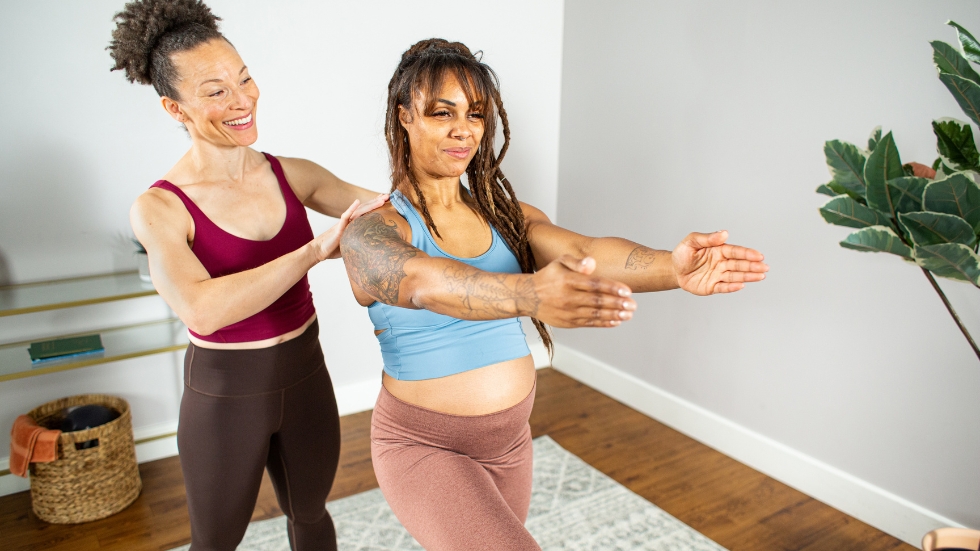
To what extent should Pilates training be modified during pregnancy? A modern approach, biomechanics, and managing pregnancy-related discomfort.
Physical activity during pregnancy is no longer a taboo topic. According to the latest medical guidelines, moderate movement isn’t just safe — it’s actually recommended for maintaining the mother’s health and supporting proper fetal development. However, what was safe and effective before pregnancy needs to undergo smart, individualized changes across the different trimesters.
A pregnant woman’s body undergoes dynamic and profound hormonal, anatomical, and biomechanical changes. For that reason, thoughtlessly continuing a standard training program — even one as safe as Pilates — requires vigilance and precise modifications guided by a qualified instructor.
In this article, drawing on the recommendations of the Polish Society of Gynecologists and Obstetricians (PTGiP), the Polish Society of Sports Medicine (PTMS), the guidelines of the American College of Obstetricians and Gynecologists (ACOG), as well as contemporary knowledge from urogynecological physiotherapy and obstetrics, I present a modern, updated approach to modifying Pilates training.
1. Busting the myths: is lying on your back during pregnancy really forbidden?
For years, both the fitness and obstetric communities held the belief that from the second trimester onward, a woman was absolutely forbidden from doing any exercises lying on her back. Modern medical guidelines and urogynecological research have revised this approach.
Supine Hypotensive Syndrome (vena cava compression syndrome) — facts and myths
The theoretical reason behind the ban on lying on your back is concern that the heavy uterus might compress the inferior vena cava and the abdominal aorta, which could reduce venous return to the heart, cause a drop in the mother’s blood pressure, and temporarily decrease blood flow to the placenta.
However, modern evidence-based medicine (EBM) emphasizes that:
- No symptoms = no danger
Short-lasting supine positions (e.g. exercises lasting a few minutes during a Pilates session) are completely safe for most women, as long as they don’t trigger any symptoms of discomfort. - The body’s warning signals
A woman’s body immediately signals compression of the inferior vena cava. If, while lying on her back, an expectant mother feels dizzy, nauseous, short of breath, suddenly flushed, or anxious, that’s a clear signal to change position right away (e.g. rolling onto the left side or moving into a semi-reclined position). - Modification, not elimination
Instead of completely giving up on brilliant Pilates exercises done on the back (like the footwork series on the reformer, which wonderfully activates the hips and feet), we use a semi-reclined position. Using special prenatal wedges (e.g. PilatesAngle), an adjustable reformer backrest, or pillows raises the chest and head higher than the pelvis, completely eliminating pressure on the blood vessels while ensuring full comfort and safety.
Reflux is another reason to use a semi-reclined position. Raising the upper body reduces the backflow of stomach contents.
2. Main training goals: focus on opening the chest and breath work
As pregnancy progresses, a woman’s posture undergoes a profound transformation. The growing bust and the forward shift of the belly move the body’s center of gravity. This causes a compensatory deepening of thoracic kyphosis (rounding of the upper back) and protraction of the shoulder blades (shoulders drawn forward).
That’s why one of the most important priorities in prenatal Pilates becomes opening the chest and strengthening the upper back. This is one of the elements of proper posture that affects how the diaphragm and pelvic floor work.
Why is opening the chest so important?
- Easier breathing
Expanding the ribcage and loosening the intercostal muscles directly supports rib mobility and makes three-dimensional lower-rib breathing easier. This gives the growing baby more space and prevents painful pressure under the ribs. - Preparation for breastfeeding and newborn care
After giving birth, a new mother will spend hundreds of hours in a flexed position (feeding, carrying, and holding her baby). A strong back and a flexible, open chest help prevent thoracic and neck pain during the postpartum period. - Support for the diaphragm
Proper body posture takes strain off the diaphragm, making breathing more effective when the thoracic and pelvic diaphragms are properly aligned relative to each other, working together during breathing and core activation. This is useful for everyday functioning, both during labor and afterward.
How do we achieve this in Pilates?
We use arm work in every possible position, essentially on all Pilates equipment, including reformers. Exercises from the Chest Expansion series, spring-based Arm Circles, or triceps work on the chair all open the chest while simultaneously stabilizing the deep muscular corset.
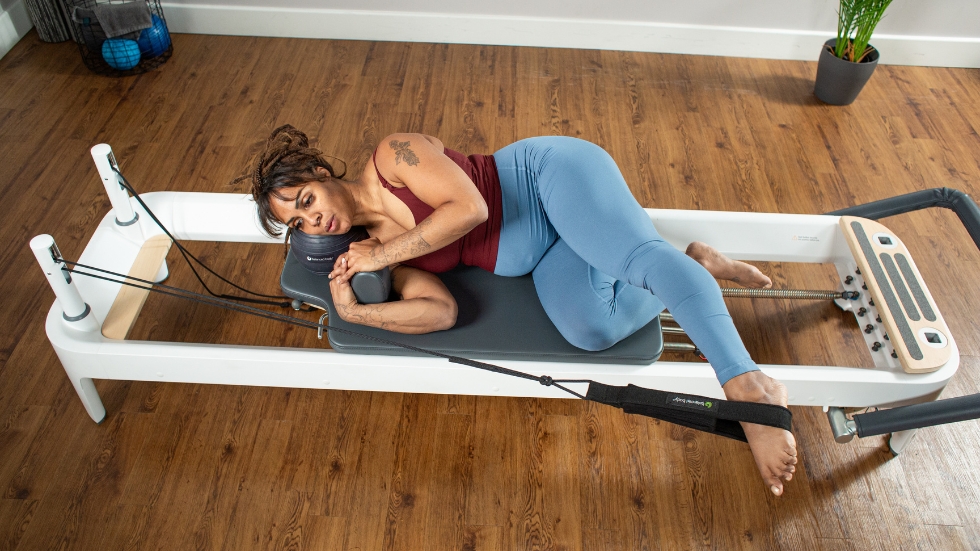
Additionally, exercises such as gentle thoracic spine rotations while lying on the side help loosen the ribs and chest. It’s worth remembering that during pregnancy, especially once the belly is already visible, deep closing rotations are generally avoided in favor of opening ones.
3. Modifications for the most common pregnancy discomforts
Pilates training also needs to be flexibly modified when specific physiological discomforts appear during pregnancy. Modern urogynecology and obstetrics give us precise tools to work with in these cases.
Reflux and heartburn during pregnancy
Heartburn is a common problem resulting from hormonal changes (progesterone relaxes the esophageal sphincter) and mechanical pressure from the growing uterus on the stomach.
- What to absolutely avoid?
Avoid lying flat on the back, as well as any exercises where the pelvis is positioned higher than the chest (e.g. inverted positions, Short Spine-type exercises on the reformer). We also avoid deep forward bends (trunk flexion), which physically press on the stomach, as well as exercises that generate a sudden spike in intra-abdominal pressure. - How should you train?
All exercises are done with the torso elevated (on wedges, in a seated position, kneeling with support, or standing). We focus on lengthening the spine and creating space between the pelvis and the ribs, which mechanically reduces pressure on the stomach and provides immediate relief.
Pubic symphysis pain and sacroiliac joint pain (Pelvic Girdle Pain – PGP)
Under the influence of relaxin, the pelvic ligaments loosen, which can lead to micro-movements within the pubic symphysis and sacroiliac joints, causing sharp, stabbing pain when walking or changing position.
- What to avoid?
It used to be common advice to avoid all asymmetrical movements. Now, instead, we tend to perform all exercises up to the pain threshold, while trying to build as much balance in the pelvis as possible between strength and flexibility. - How should you train?
We start with exercises using short levers, within closed kinematic chains. We check which muscles are overly tense and where there’s insufficient muscular control during movement. Sometimes releasing the hip rotators while simultaneously strengthening the glutes and iliopsoas can bring significant relief, though this is a very individual matter.
Diastasis Recti Abdominis (DRA)
The physiological stretching of the linea alba and the separation of the rectus abdominis muscles outward is a natural process that allows the baby to grow. What matters, though, is the extent of the separation and the pace at which it develops, which should be monitored by a urogynecological physiotherapist.
The linea alba is the place where all the abdominal muscles meet and “cross over” to the other side. Strong, elastic abdominal muscles, no excessive tension in the lower back extensors, and proper alignment of the pelvis and the rest of the body are the keys to success.
- What to avoid?
Exercises where the belly “domes” or “cones,” i.e. classic spinal flexion exercises (traditional crunches, chest-lift-type head and shoulder-blade raises, the hundred, roll-ups, or strong rotations combined with flexion). These exercises increase intra-abdominal pressure, pushing the abdominal wall forward and stretching the linea alba. Additionally, spinal extension exercises and prolonged time spent in a supported kneeling position may also be contraindicated later in pregnancy. - How should you train?
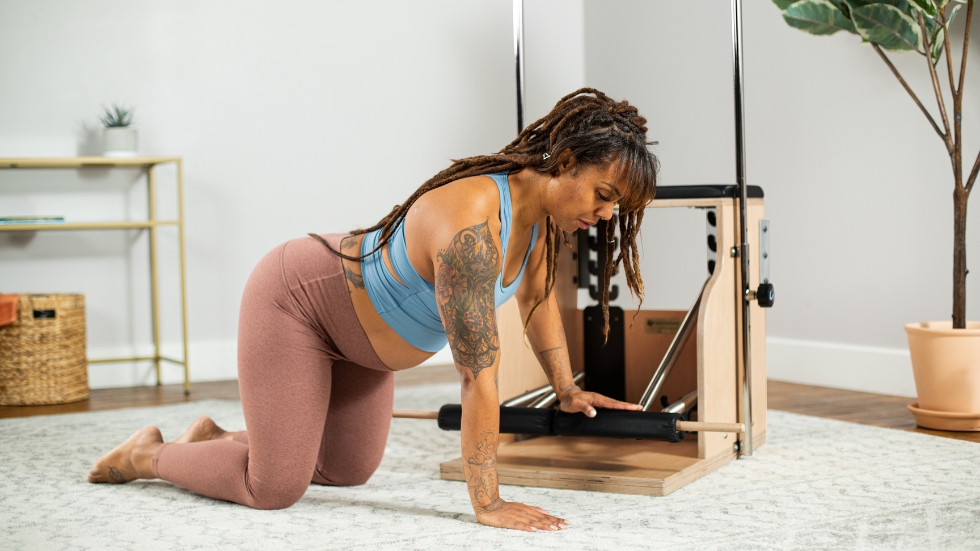
We support the abdomen through every exercise that engages the core. The foundation is learning to activate the transverse abdominis muscle through breath (the “hug the baby” exercise). We perform safe stabilization exercises in a supported kneeling position (e.g. alternating arm reaches without losing pelvic stability). Postural education during classes is also very important — we teach safe ways to lie down and get up by rolling onto the side. Also very important, though often overlooked in cases of linea alba separation, are rotational exercises, which are theoretically used to open the chest but also do a great job of loosening the oblique abdominal muscles, which play a significant role in preventing excessive separation.
4. Modifications by trimester – a urogynecological approach
Each trimester brings completely different anatomical and physiological priorities, which safe training needs to follow.
First trimester (weeks 1-13)
This is a phase of intense hormonal changes, organogenesis, and frequent weakness, nausea, and blood pressure fluctuations. During this trimester, feelings of fatigue and sleepiness, along with nausea and sometimes vomiting, are common. According to the latest guidelines, you can continue your existing physical activity, unless your doctor advises otherwise. You can also start exercising even if you’ve never trained before. This is a very individual matter, depending on how you feel and how the pregnancy is progressing.
Second trimester (weeks 14-27): functionality and ergonomics
This is often called the golden trimester — the discomforts from the first stage of pregnancy fade, and the growing belly doesn’t yet interfere with movement or breathing.
- Modifications
We monitor how the mother feels in supine positions (if any symptoms of vena cava compression appear, we switch to a semi-reclined position using wedges). We generally start avoiding lying on the stomach (it’s already uncomfortable for most women by this point). Due to increased ligament flexibility (from relaxin), we avoid passive stretching. We introduce regular foot work to prevent pregnancy-related flat feet, along with exercises that improve proprioception and balance under full support. We continue refining lower-rib breathing with visualizations for engaging and releasing the pelvic floor.
Third trimester (weeks 28-40): preparing for labor
This is the period when the body directly prepares for the effort of labor. The belly is large, and the pelvic joints are highly flexible.
- Modifications
We shift the direction of pelvic floor work. Whereas in the first and second trimesters we trained the pelvic floor to actively lift and strengthen, in the third trimester the priority becomes learning to fully release and lengthen the pelvic floor muscles on the exhale. We practice active vertical positions (e.g. squats assisted by PTB springs on the tower). We avoid exercises that cause tension in the lower abdomen and pelvis.
5. Red flags — when should you absolutely stop training?
During every training session, the most important thing is to listen carefully to the signals coming from your own body. In line with official gynecological and obstetric guidelines (ACOG and PTGiP), you should immediately stop exercising and consult your doctor if any of the following symptoms occur:
- Bleeding or spotting from the vagina.
- Leaking amniotic fluid (suspected rupture of membranes).
- Shortness of breath before exertion (difficulty breathing before starting activity or with minimal effort).
- Dizziness, severe headaches, or a feeling of weakness/fainting.
- Chest pain or heart palpitations.
- Painful, regular uterine contractions (that don’t change with rest).
- Sharp, sudden pain in the abdomen, pelvis, or lower abdomen.
- A noticeable decrease or absence of fetal movement.
- Pain, significant swelling, or tenderness in the calf (one-sided swelling may indicate deep vein thrombosis, a serious condition during pregnancy).
- Sudden loss of muscle strength affecting stability and balance.
Summary: Pilates during pregnancy
Modern prenatal Pilates replaces the old, rigid prohibitions with precise, individualized work grounded in the body’s biomechanics and physiology. Moving away from blanket restrictions toward continuous monitoring of the body’s signals and implementing precise modifications allows for safe, uninterrupted training at every stage of pregnancy.
Focusing movement work on opening the chest, optimizing three-dimensional lower-rib breathing, building flexible balance within the pelvis, and learning to fully release the pelvic floor toward the end of pregnancy forms the foundation for pain-free functioning and effective preparation of the musculoskeletal system for labor.
Ultimately, safe, smart prenatal movement isn’t based on rigid schemas, but on flexibly adapting the load to changing needs, working closely together with urogynecological physiotherapy.
Where can you find Pilates classes for pregnant women?
You can find classes for pregnant and postpartum women at, among other places, Rebalance Pilates Studio in Łódź.
Find a studio near you: Pilates studio map.

By profession and passion, I am a physiotherapist and the manager and Pilates instructor at Rebalance Pilates Studio in Łódź. From the beginning of my career, I worked as a trainer and physiotherapist, utilizing various methods, such as Kinetic Control. After maternity leave, Pilates became another passion of mine. I particularly enjoy the Low Pressure Fitness approach—a gentle breathing practice ideal for postpartum women, which I combine with physiotherapy and Pilates in my classes.