


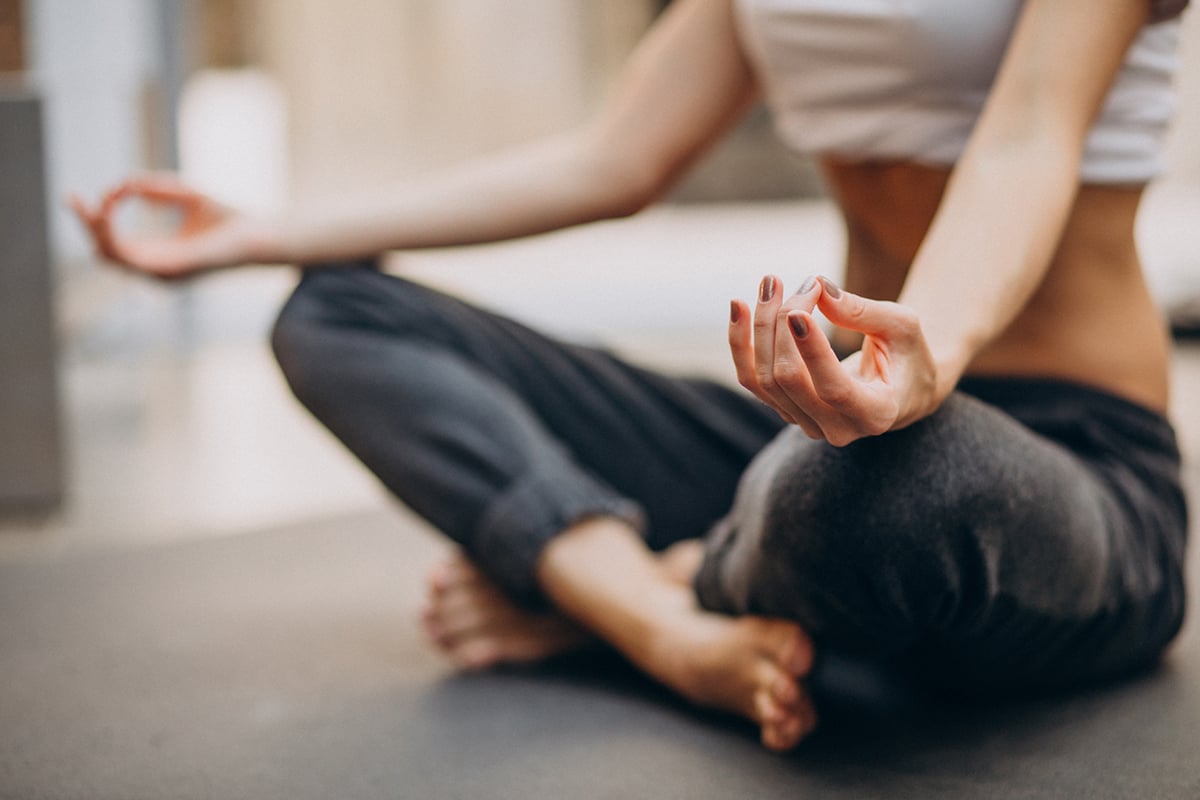
Pilates Effectively Supports the Fight Against Stress
Is stress accompanying you for most of the day? It’s time to free yourself from it – it can be the cause of many diseases and ailments, such as headaches, heart issues, stomach problems, fatigue, muscle tension, lowered immunity, neurosis, and even autoimmune diseases. Chronic stress exhausts you both mentally and physically.
You need a way to cope with stressful situations and calm your mind when necessary. Physical exercise can be an effective method. However, not all exercises reduce stress to the same extent. You will achieve harmony of mind and body when you learn focus, concentration, controlling, and calming your reactions. You can give yourself such an anti-stress therapy by practicing Pilates.
HOW DOES PILATES FIGHT STRESS?
In Pilates, it’s not just about the exercises. This method assumes that you must achieve full body awareness to practice effectively. Only by combining the action of the will and the muscles will you achieve the desired results. In Pilates, the mind and body are closely connected and cannot be separated. Therefore, by practicing in this way, you will experience gradual calming, leading to complete relaxation. You will learn to understand where the various movements you perform come from, as well as how to control them. This knowledge will allow you to rid yourself of accumulated thoughts and worries, enabling you to fully focus on what you are doing here and now.
Many chronically stressed individuals complain of prolonged muscle tension, often leading to pain. Pilates exercises, which are based on synchronizing breath with the tightening and relaxing of specific muscle groups, are excellent at addressing muscle tension and restoring the body to its proper state. By practicing Pilates, you will strengthen your physique while also regaining the desired peace.
Pilates also has a positive impact on the nervous system. The exercises require focus and precision, which improves brain function. You will feel that you think and work more efficiently, and you will also sleep better. Research has shown that Pilates can reduce the effects of diseases related to the nervous system, such as Alzheimer’s disease. It is also excellent at calming a stressed mind.
MINDFULNESS
When you are stressed, it is hard to free yourself from accumulated thoughts – you dwell on the past and worry about the future. Focusing your attention on one thing requires a lot of effort and can sometimes even be impossible. Mindfulness comes to the rescue – a training of awareness that is closely related to Pilates exercises.
Mindfulness has a lot in common with meditation. It teaches you to direct your attention to what you are experiencing at the moment – consciously and intentionally. By practicing Pilates, you can easily achieve such a state by focusing on the repeated execution of seemingly simple exercises. When you manage to combine movement with breath, proper posture, coordination, and fluidity of movement, you will feel that you are focused solely on a specific muscle group and its work. Daily worries will no longer have access to you – you will enter a state of rest and relaxation.
Breathing in Pilates Helps Fight Stress
Breathing in Pilates is incredibly important. It is one of the fundamental principles of this method. Of course, it has a huge significance for oxygenating tissues, gas exchange, and removing unnecessary carbon dioxide from the body, but in Pilates, breath is something more. It allows for muscle relaxation, avoidance of unnecessary tension, increased concentration, stabilization, and even protection of the spine during exercises.
That is why breathing in Pilates significantly facilitates the fight against stress, especially chronic stress. Note that practically all relaxation techniques incorporate elements of breathing exercises. Breath is one of the best weapons in the fight against stress – it helps slow down the pace, calm the mind and racing thoughts, alleviate feelings of anxiety, and mitigate the destructive effects of stress.
Deep breathing in Pilates engages the entire chest, which expands in all directions – forward, backward, and sideways. This intense way of breathing, known as rib-diaphragmatic or lateral breathing, engages not only the body but also the mind. Once you learn it, you can use deep breathing to relax in stressful situations, such as before an exam, a difficult conversation at work, or even before sleep when you are pondering challenging situations that seem to have no resolution.
When you focus on your breath, you become an observer of your own thoughts – you stop analyzing and controlling them. This helps restore balance and peace.

I am a graduate in Managerial Economics as well as Finance and Accounting, with a specialization in Marketing. Since 2018, I have been working as a Copywriter at Balanced Body, where I create marketing content for the fitness and Pilates industries. One of my particular strengths is translating complex topics into accessible language and accurately analyzing the needs of target audiences. Outside of work, I am passionate about fire shows and volleyball, which helps me better understand the needs of physically active people.