


Pilates as a Solution for Back and Spine Pain
Do you lead a sedentary lifestyle and suffer from back pain on a daily basis? We have a solution for you! Pilates exercises are a true remedy for back pain and a sedentary lifestyle – they strengthen the muscles in the lumbar region, reduce stiffness in the spine, and help relax tense back muscles.
WHERE DID PILATES COME FROM?
The Pilates method is a system of physical exercises invented in the early 20th century by the German Joseph Humbertus Pilates. It combines elements of yoga, ballet, and isometric exercises. The creator of the method was very frail as a child – he suffered from rickets, asthma, and rheumatic fever. Unfortunately, the exercise methods of the time did not allow him to engage in gentle physical activity that could help alleviate his ailments.
Joseph Pilates decided to create a method through trial and error that would help him eliminate the unpleasant effects of his conditions. Its goal was to stretch and strengthen all the muscles of the body without excessive strain, making it suitable for people recovering from injuries, traumas, and various illnesses. During World War I, Pilates worked as a nurse for soldiers, helping them regain their health.
The goal was achieved – after several years and various attempts, a method was developed that contributes to relieving and strengthening the spine, strengthening muscles without excessive hypertrophy, increasing body flexibility, teaching proper breathing, as well as improving overall health and reducing stress levels.
Joseph Pilates’ system quickly gained many followers among various groups. It works excellently for those looking to reduce back pain, increase fitness, and strengthen immunity, as well as for professional athletes and dancers who use Pilates as a supplementary training method, making their bodies more supple and flexible.
BACK PAIN – HOW TO DEAL WITH IT?
Many people believe that back pain is a condition that requires rest and immobility. When the problem arises, they reach for painkillers and spend time passively lying down. However, research shows that for lower back pain, which often occurs due to a sedentary lifestyle, a functional approach is much more justified, which involves actively combating the problem.
The role of a person suffering from back pain should change from that of a resting individual in bed to one who becomes active and responsible for regaining fitness and relieving pain. The most effective way to get rid of back pain is therefore through daily exercise.
Pilates works excellently here – it is one of the methods that allows for mastering and maintaining active stabilization of the lumbar spine, thus enabling posture control. By practicing Pilates, you will achieve active stabilization of the lumbar region and increase the strength of muscle groups, as well as learn how to consciously maintain coordinated, proper muscle activity.
PILATES FOR BACK PAIN – EFFECTS
Regular practice of Pilates exercises quickly brings noticeable effects. One of them is relief from lower back pain due to the strengthening of the muscles in that area. Pilates has a beneficial effect on the skeleton, especially on the spine in all its sections. Just a series of 10 workouts is enough to feel the difference.
The effectiveness of Pilates exercises lies in simultaneously stretching tense areas of the back and strengthening the deep muscles responsible for the proper alignment of the spine. By strengthening the lower back, abdominal, and gluteal muscles, it becomes easier to maintain proper posture and thus avoid pain resulting from incorrect body positioning.
Pilates also has a relaxing effect on the shoulders, arms, and neck. This helps prevent slouching and the development of various types of spinal deformities.
Pilates exercises teach full control over your body – it is not without reason that it is called “intelligent gymnastics.” Full concentration is fundamental – it conditions proper breathing and the execution of appropriate movement sequences. With this approach, you gain not only support for your spine and reduced pain but also learn to avoid injuries and better cope with stressful situations.
PILATES FOR SPINAL PAIN – HOW TO START?
To start your journey with Pilates, all you need is suitable, non-restrictive sportswear and an exercise mat. You can easily perform your first exercises at home to feel more confident.
Classes led by an instructor at a fitness club have the advantage over exercising at home, as it is easier to motivate yourself to exert effort. The instructor will also help you choose exercises suitable for you and master the correct technique for performing them.
In group Pilates classes, you have the chance to feel more energized, exercising with people who have similar problems as you. Group exercises provide an opportunity to meet many interesting people and establish new connections.
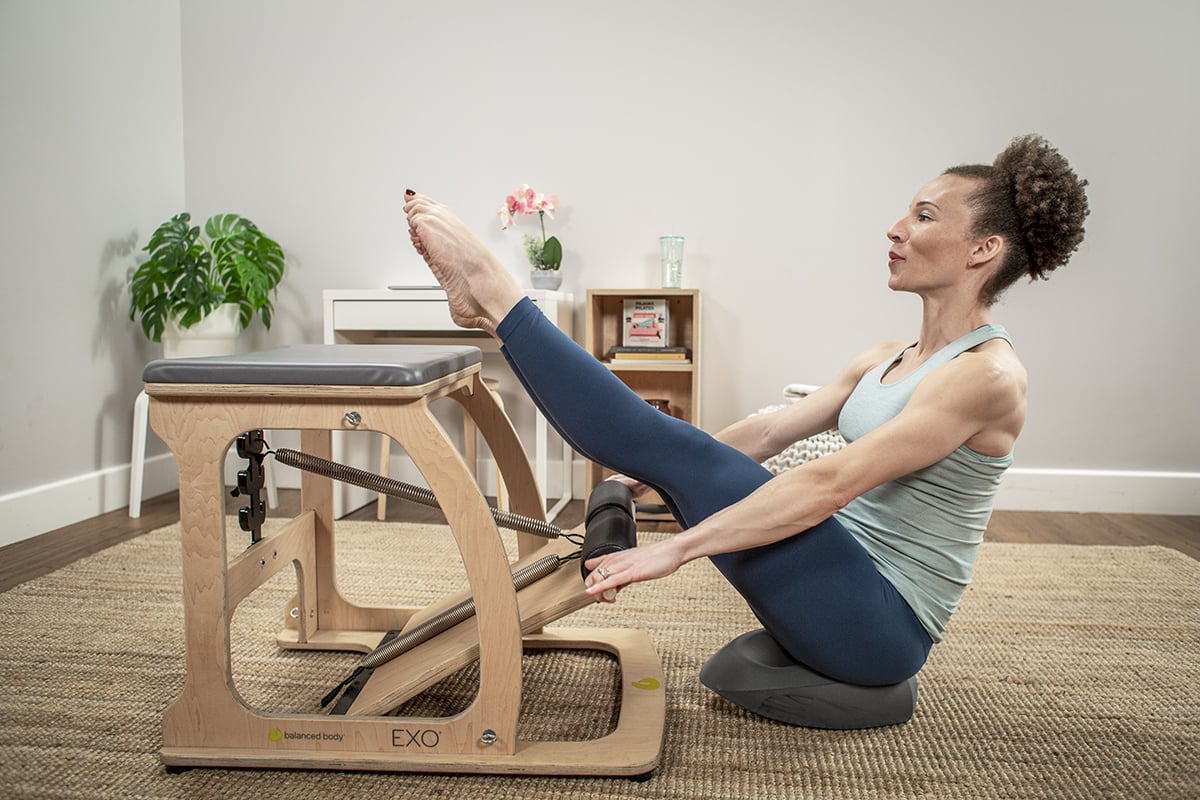
In addition to mat classes, it is also worth looking for Pilates classes on machines in your area. Pilates machines are specially designed exercise devices, such as the reformer, Cadillac, barrel, Wunda Chair, and others. They allow you to achieve better results in a shorter time. They are also perfect for beginners, as they provide support during movement and teach proper movement patterns.
Even if you decide to take classes at a fitness club, it is worth continuing your exercises at home as well. The optimal solution is to attend classes with an instructor 2-3 times a week and practice at home on the remaining days. To make exercising at home easier, you can use ready-made exercise sets or instructional videos.
PILATES – TRAINING FOR BACK PAIN
To help you get started with Pilates exercises for back pain and the spine, we have prepared a sample set of exercises that you can perform at home without the use of specialized equipment. Remember that to achieve the desired effect, you need to train at least 2-3 times a week.
Warm-up
Start with a warm-up. Stand with your feet hip-width apart, pull your shoulder blades together, and relax your shoulders down. Move your head – first, with each exhale, slowly tilt your head forward and backward, then to the right and left. Next, perform head circles.
The next elements of the warm-up involve activating different parts of the body. Perform hip circles, swings, and arm and wrist circles, bends involving gradually rolling the spine vertebra by vertebra, as well as lunges and ankle circles.
Pilates Exercises for Spinal Pain
Exercise 1
Transition to a quadruped position. Pull in your belly, assuming a neutral spine position. In this position, exhale and extend your right arm forward and your left leg back. Hold for a few seconds and return to the starting position. Then repeat the movement on the other side. Repeat the exercise 10 times.
Exercise 2
Get into a quadruped position. Support yourself on your forearms, bending your arms at a right angle at the elbows. Your shoulders should be directly above your elbows. Lift your torso, resting on your toes, and engage your abdominal muscles. Hold for 15-20 seconds. Repeat several times. This exercise in Pilates is called the plank.
Exercise 3
Transition to lying on your side and support yourself on your right forearm. Bend your legs at the knees, pull in your belly. Inhale and lift your hips and left arm straight up, exhale and twist your torso without lowering your hips, placing your left hand under your right shoulder. Inhale and lift your arm again, following it with your gaze. Perform the exercise 5 times on each side.
Exercise 4
Lie on your back with your arms along your body and your legs bent at the knees. Engage your abdominal muscles and slowly, vertebra by vertebra, lift your torso with your exhale. Extend your arms and place them over your head. Hold this position for a few seconds, then gradually, vertebra by vertebra, lower your spine back to the mat with your inhale until you return to the starting position. Perform 5 repetitions.
Relaxation Exercises
End your Pilates exercises with relaxation. Relaxation exercises will stretch the spine and relieve tension in the lower back.
Sit on your heels, spreading your knees to the sides. Extend your arms forward and lengthen your spine, trying to reach as far as possible with your hands. Wait a few seconds and slowly return to the starting position.
Sit on your heels, lean forward, and touch your forehead to the floor. Stay in this position for several seconds and breathe calmly, then return to the starting position.
You should take care of your spine from a young age, and the Pilates method is very beneficial for improving posture. With its help, you will reduce or completely eliminate back pain. You don’t need any special sacrifices for this – Pilates exercises are easy, enjoyable, and accessible to everyone!

I am a graduate in Managerial Economics as well as Finance and Accounting, with a specialization in Marketing. Since 2018, I have been working as a Copywriter at Balanced Body, where I create marketing content for the fitness and Pilates industries. One of my particular strengths is translating complex topics into accessible language and accurately analyzing the needs of target audiences. Outside of work, I am passionate about fire shows and volleyball, which helps me better understand the needs of physically active people.