


Joseph Pilates’ Students and Pilates Schools – History and Development of the Method
The history of Pilates began nearly 100 years ago. Over time, this unique form of bodywork gave rise to many different camps and schools of thought, which can broadly be divided into teaching schools founded and spread by the direct students of the method’s creator himself.
Who created Pilates and how did the method come about?
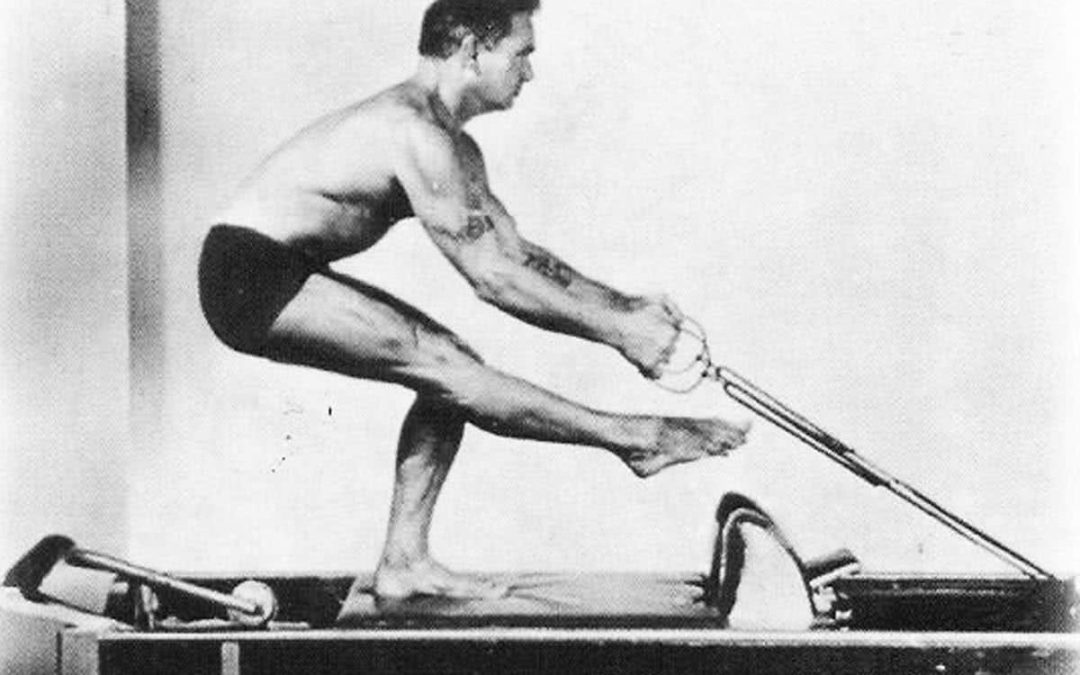
When wondering who invented Pilates, you need to go back to the early 20th century and the figure of Joseph Pilates himself. It was he who developed and refined this method with the support of his wife, Clara. He originally called the system “Contrology.” The origins of Pilates are closely tied to the need for rehabilitation and restoring fitness after injuries. The creator himself sought unconventional solutions — as he once stated in a press interview, he based his method on observing the mechanics of children’s and animals’ bodies. His Pilates studio in New York quickly became a refuge for people struggling with ankle, knee, or back injuries.
Who were the Pilates Elders?
“Pilates Elders” is the honorary title given to a small group of people who had the privilege of learning directly from the master himself. These outstanding students of Joseph Pilates drew their knowledge of Contrology straight from the source, and later passed it on, training successive generations of instructors around the world. The most important representatives of this first generation include Romana Kryzanowska, Ron Fletcher, Kathy Grant, Mary Bowen, Lolita San Miguel, Carola Trier, Eve Gentry, Bruce King, Robert Fitzgerald, and Jay Grimes.
How did the Pilates method evolve since Joseph Pilates’ time?
The original Contrology underwent natural transformations over time. The development of the Pilates method came about because time became an ally of learning and research. Over the years, students allowed themselves to introduce certain modifications, which made it possible to better tailor the exercises and equipment to the individual needs of each body. The method, initially popular mainly among injured dancers on New York’s Broadway, eventually began to be adapted for people recovering from surgery, athletes, and — as it came to be put over time — “ordinary housewives.”
What’s the difference between classical and contemporary Pilates?
When discussing classical Pilates and contemporary Pilates, it’s worth noting two distinct approaches that emerged among the creator’s students. The classical approach emphasizes fidelity to the original. A good example is Romana Kryzanowska, who wanted to remove from the method what she called “viruses” — that is, common mistakes and variations straying from Joseph’s original exercises. The contemporary movement, on the other hand, is the result of the students’ own experimentation — dancers introduced ballet-inspired modifications, Ron Fletcher pioneered standing exercises and so-called Percussive Breathing, and Mary Bowen combined the method’s principles with psychoanalysis (creating the Pilates Plus Psyche System). In this way, contemporary Pilates draws on the classical legacy while expanding it with knowledge from other fields.
The most important Pilates schools and their approaches
The easiest way to trace how the students shaped this form of movement is by getting to know the most famous Pilates schools and their founders.
Romana Kryzanowska’s school
Romana first met Joseph in the 1940s, seeking help for an injured ankle. After just three sessions of Contrology, she felt tremendous improvement. Over time she became the director of the Pilates studio, and in 1989 she opened her own. Due to the lack of a master during her certification period, Romana sometimes drew on knowledge from her professional ballet background in her teaching. If you’d like to dive deeper into this topic, check out the story of Romana Kryzanowska.
Carola Trier’s school
Born in Germany, Carola fled the Third Reich to the USA, where she continued her career in dance and roller-skating acrobatics. After a back injury, she found her way to Pilates in 1950. Fascinated by the results, she worked with him for 10 years, and later opened her own studio with his help. She developed many exercises dedicated to injured dancers. See what set Carola Trier’s school apart.
Kathy Grant’s school
Kathy Grant was one of only two people (alongside Lolita San Miguel) to receive an official certification directly from Pilates himself, after completing 2,200 hours of observation. She was a dancer, choir member, and administrative director at the Dance Theatre of Harlem. She later moved her studio to, among other places, New York University. Read more about what makes Kathy Grant’s method stand out.
Lolita San Miguel’s school
Lolita is one of the few people from the creator’s inner circle who still teaches today. After a knee injury at the Metropolitan Opera Ballet, she initially trained with Carola Trier before ultimately studying under Joseph. She received her certification in 1967. She currently promotes two original programs: “Lolita San Miguel Pilates Master” and “Lolita’s Legacy.”
Ron Fletcher’s school
Ron was an outstanding choreographer (having worked on Broadway and with the Ice Capades, among others) who came to Clara and Joseph’s studio in 1948 with a knee injury. After overcoming a struggle with alcohol addiction (during which Clara supported him), he opened the “Ron Fletcher Studio for Body Contrology” in Los Angeles in 1972. He brought Pilates to television (on “The Phil Donahue Show”). He was the first to teach standing exercises and to emphasize percussive breathing. He created the original programs “Fletcher Towelwork®” and “Fletcher Barrework.”
Eve Gentry’s school
Originally known as Henrietta Greenhood, she was an outstanding modern dancer. After undergoing a radical mastectomy in 1955 and losing part of her chest muscles, she regained the use of her arms solely through exercises with Pilates. She was known for filming her training sessions on video to prove the method’s rehabilitative benefits to doctors. In 1991, she co-founded the Institute of the Pilates Method.
Bruce King’s school
A professional dancer who trained under Clara’s guidance. Starting in 1966, he had a small studio in the same building as the Pilates couple, and continued working with them even after the tragic fire. After Joseph’s death, he helped Clara run classes, and opened his own school in mid-1970. He stood out for his tremendous precision, attention to detail, and excellent demonstration skills.
Mary Bowen’s school
A well-known actress who came to Pilates in 1959 because of back pain, intrigued by the fact that he based his method on “the child and the cat.” Besides her education under Joseph, after his death she also studied with, among others, Kryzanowska and Grant. What makes her approach unique is the combination of physical exercise with psychoanalysis — giving rise to the Pilates Plus Psyche System.
Robert Fitzgerald’s school
Another well-known dancer from the first generation. He opened his own New York studio in the 1960s, which attracted a huge number of dancers learning remarkable control of their own bodies and using the method to treat numerous injuries.
Jay Grimes’ school
Jay, a professional ballet dancer, began working with the master in the 1960s, and over 18 years of his dancing career suffered no injuries whatsoever — something he attributed entirely to the Pilates method. After the founder’s death, he continued studying with Clara and Romana. He emphasized that Pilates designed his equipment and exercises with men and athletes in mind as well. He was actively involved in refining the equipment — he was a co-creator of Balanced Body’s “Contrology Reformer Jay Grimes.” He ran the well-known Vintage Pilates studio. He passed away in 2024 at the age of 84.

I am a graduate in Managerial Economics as well as Finance and Accounting, with a specialization in Marketing. Since 2018, I have been working as a Copywriter at Balanced Body, where I create marketing content for the fitness and Pilates industries. One of my particular strengths is translating complex topics into accessible language and accurately analyzing the needs of target audiences. Outside of work, I am passionate about fire shows and volleyball, which helps me better understand the needs of physically active people.