


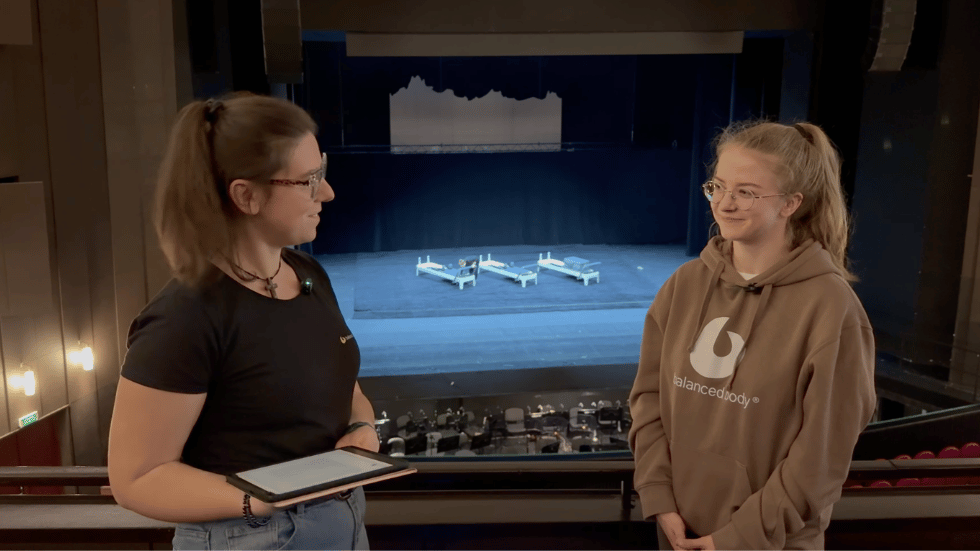
Pilates on the theatre stage. Why does ballet need reformers? An interview with Patrycja Brodek
Classical dance is associated with lightness, fluidity, and beauty. But behind that facade lie extreme strain, asymmetrical work, and movements in ranges inaccessible to the average person. How do you protect an artist’s body from injury when anatomy takes a back seat?
In this episode, we go behind the scenes at the Grand Theatre in Łódź. We talked with Patrycja Brodek – physiotherapist, the first Konnect Method educator in Poland, and an official Balanced Body school educator – about the specifics of working with dancers, movement habits, and biomechanics.
Find out why Joseph Pilates built his method around working with ballet in the first place, and why the Grand Theatre equipped its training room with the Rialto reformer, which, as she puts it herself, “doesn’t forgive mistakes.”
[Iza Wiśniewska from Balanced Body Poland]: Hi. I’m welcoming you today from a rather unexpected place, because this isn’t another Pilates studio. We’re at the Grand Theatre in Łódź. What could Pilates possibly have in common with ballet? It turns out — quite a lot. And today we’ll talk about that with Patrycja Brodek. A physiotherapist who, in her everyday work, also helps ballet dancers push the limits of the human body. Patrycja, you actually grew up backstage at this very theatre, since your parents are ballet dancers…
[Patrycja Brodek]: That’s right.
[Iza]: Tell me, you didn’t exactly follow in their footsteps, because you’re an educator, a Pilates teacher… and today also a mentor to other dancers. What’s it like coming back to the theatre, but in the role of the architect of the dancers’ health and fitness?
[Patrycja]: It’s definitely very rewarding work, given the sentimental value this place holds for me and all these family connections. I largely grew up backstage in this theatre, and it’s amazing that I can now help even people who remember me as a tiny child, while I remember them on stage, as that same little girl, and now we get to simply keep working together. It really is an incredible feeling of satisfaction.
[Iza]: Did you expect that this path of yours would lead to the theatre becoming a kind of workplace?
[Patrycja]: Honestly, I thought it would. Because throughout my studies I was always drawn to the topic of ballet and dancers’ health. And having two dancers at home who often needed some advice, I could simply put that to use. I think I have enough theoretical knowledge of dance that I understand very well what dancers need in terms of training outside the ballet studio.
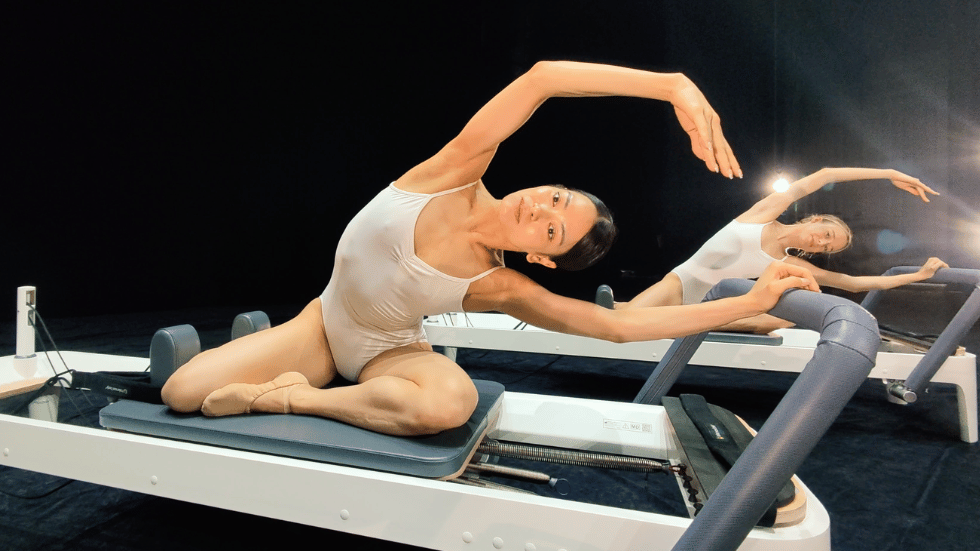
[Iza]: I could actually just ask briefly: why Pilates? But it’s worth recalling a bit of the history here, because ballet has been woven into this method of exercise from the very start. Joseph Pilates himself trained ballet dancers in his studio in New York. Usually that also had to do with rehabilitation after injuries. Patrycja, why do you think this method meets dancers’ needs so well today?
[Patrycja]: It’s above all a type of training that doesn’t visually overbuild the dancers’ muscles, which lets them preserve the aesthetics of movement and of their bodies on stage. At the same time, they gain much greater stabilization after training, which they need to perform all those demanding movements in ranges that are enormous and unattainable for an average person. All while preserving that aesthetic quality, calm, and fluidity of movement.
[Iza]: Ballet dancers are also athletes with very specific body structures and very specific physical demands. What are the biggest challenges you face working with the Grand Theatre’s company?
[Patrycja]: Oh gosh, the biggest challenge is that classical dance, ballet, isn’t entirely healthy from an anatomical standpoint. Because of that, we have to work on a lot of details that I don’t need to work on with regular people at all. Dancers have a lot of habits that don’t necessarily fit a healthy body posture. Rebuilding that, to ensure their bodies hold up for as long as possible, is the hardest part. Definitely — having to unlearn certain things, sometimes working in reverse, the opposite way, just to counteract the injuries they’re, unfortunately, very prone to.
[Iza]: You work with professionals, but not only — I know you also work with adults, with teenagers, with postural issues. Has working with professional dancers taught you something about building healthy movement that you apply to improving the posture of other, non-dancing people?
[Patrycja]: For me, proper posture and, in general, a healthy body through movement was instilled in me from the very beginning. I myself may never have danced, but I trained karate for 16 years, where I gained experience working with children and adults. And then, as we’ve already mentioned, through all these connections, it turned out that these days I work most with teenagers, students at the ballet school in Łódź. Their biggest issue is precisely developing that motor control. And through working with the adult company, I know what these young people are going to need in the future, and I’m able to help them start their careers already at full speed, with the best skills they can achieve in a healthy way. Because even children get injured, and yet ballet work, dancers’ work, is often asymmetrical, which makes it very easy to develop postural issues. So through this kind of training, I’m able to help them get injured as late as possible, or not at all.
[Iza]: And as if that weren’t enough, you’re also a lecturer in functional anatomy and biomechanics at the Faculty of Dance, right?
[Patrycja]: Yes, yes.
[Iza]: How important is that theoretical knowledge in the everyday work of a physiotherapist?
[Patrycja]: In my case, since I work with dancers and also teach more theoretical subjects to adult dancers… well, practice is still the most important part, because most of my knowledge and observations come from practice. And being able to pass that on, not only during training sessions but also in the lecture hall, is amazing too. Because it also lets me show dancers other career paths or complementary methods to help them become the best they can be. It all keeps feeding back into itself.
[Iza]: Some time ago, the Grand Theatre equipped its training room with a reformer. It’s the Rialto reformer. What drove that decision?
[Patrycja]: Why Rialto, or why a reformer?
[Iza]: Why a reformer, and why Rialto.
[Patrycja]: A reformer, because it really does let us work through the dancers’ full range of motion, which is enormous. And also, through our collaboration at our own studio outside the theatre, they simply came up with the idea that they’d like to get a machine like that, and asked me to help choose it. I went with Rialto because of how incredibly versatile the device is. The fact that we have a lot of options for adjusting the carriage relative to the footbar, and also just how easy it is to use. Simply put, so that even people without much reformer experience can still make good use of it.
[Iza]: And how did the dancers themselves react to being able to train on a reformer instead of at the barre?
[Patrycja]: They were thrilled. Really thrilled, because awareness of health and training outside the ballet studio — more preventive kind of training — is growing among our dancers. They know how much they need it, and the reformer fits right into all the standards they need to meet — they can perform all the exercises they need on the reformer and choose the right resistance for their skill level and needs. So they were very happy that they can use the reformer whenever they have a free moment.
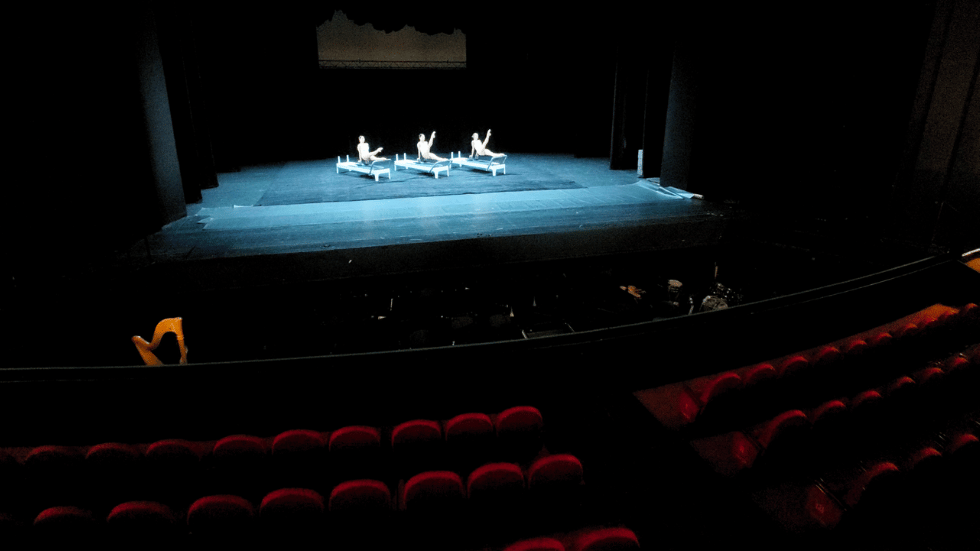
[Iza]: Right, because ballet involves such extreme external rotations, enormous ranges of motion. Your master’s thesis also focused on what dancers do, how they build movement, especially in the hips. How do you use the reformer to stabilize those joints and prevent injuries?
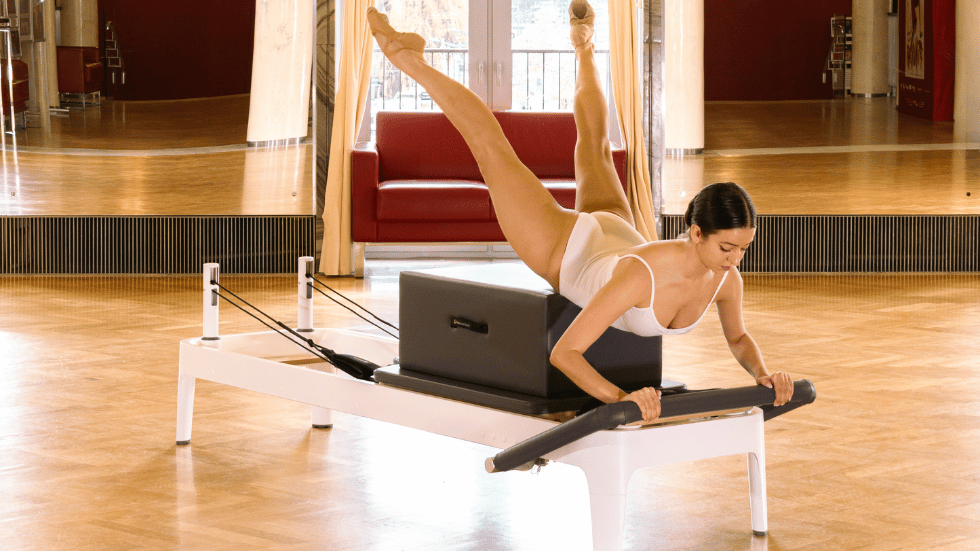
[Patrycja]: Well, the range of reformer exercises is actually quite broad when it comes to lower limb exercises. We have things like feet-in-straps, all sorts of footwork, we can bring in the jumpboard, box exercises. Generally, in pretty much any reformer setup, we’re able to do something for the hips, but also for all the other joints working in such extreme ranges, like, for instance, very flexible spines. Which, precisely because they’re so flexible, are unfortunately much more prone to injury. So the reformer works great for that. We’re able to do just about anything.
[Iza]: Right, you also mentioned jumpboards. How do you use them, and what do they give ballet dancers?
[Patrycja]: Well, for one thing, the chance to actually jump with a bit of load taken off. They’re able to control their posture, their body alignment, during the moment of the jump on the jumpboard. Regular gyms, the kind you can just walk into, simply don’t offer that possibility without a machine like this. And I don’t know of another machine you could use to practice ballet jumps, which often require various leg positions changing mid-air, simply put. So the jumpboard is one of my favorite attachments we can add to the reformer, specifically for working with dancers.
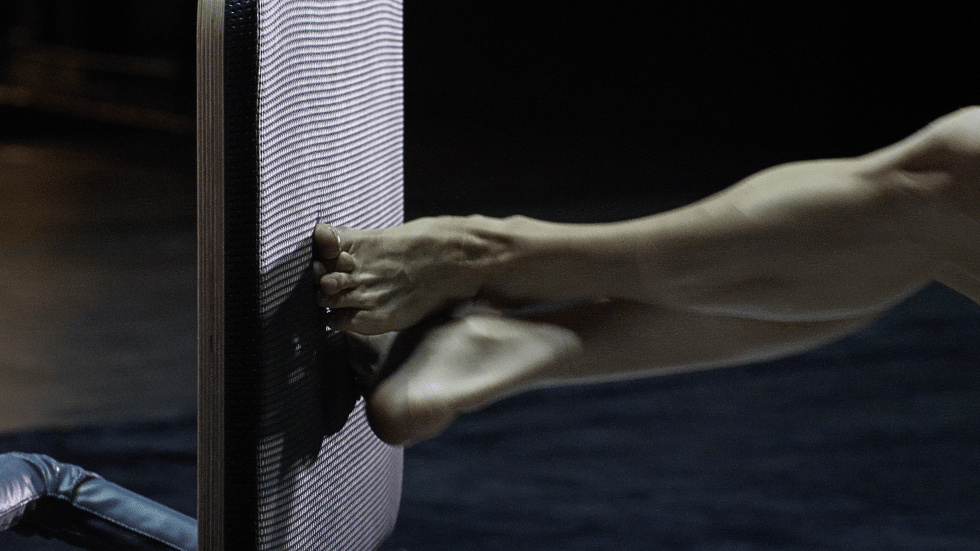
[Iza]: And is it true that the reformer doesn’t forgive mistakes?
[Patrycja]: Oh, no, it doesn’t. Every mistake shows up on the reformer. An unstable pelvis, poor spine alignment, poor alignment of the whole torso. You can see everything on it. So it’s also a fantastic machine for diagnosing any kind of faulty movement in the human body.
[Iza]: And how do the ballet dancers react to that kind of diagnostic feedback?
[Patrycja]: They’re surprised. They’re surprised, because often when I correct them, they’re convinced they’re, say, lying crooked on the reformer. Because in a lot of choreography, in a lot of routines, it’s simply not possible to work symmetrically. There’s always going to be some extra strain more on the right or the left side of the body. At first they’re mostly surprised, but after a while they trust me and know it’s good for them. But yes, the reformer definitely doesn’t forgive any mistakes.
[Iza]: And in your view, should the reformer become a permanent part of most ballet companies’ training?
[Patrycja]: Yes. Yes, yes, one hundred percent yes. I think you can really help yourself a lot here by training regularly on the reformer. I see it every day with all the clients who come to me — the results are really visible. So I think it’s the future for every ballet company to have this kind of equipment. Not just the reformer — the Cadillac, the chair — you can train really well on all of them, but the reformer is the most spectacular, so it’s simply the most appealing.
[Iza]: You’re also the first Konnect Method educator in Poland, meaning the Konnector system. Can you tell us what that is?
[Patrycja]: The Konnector is an attachment for all modern reformers, which lets us work all four limbs at once using handles. Because we have four handles, connected to each other by a single cable. So it’s a fantastic workout for proprioception. At that point the reformer becomes even less forgiving of mistakes, because with the Konnector you can see every discrepancy — whether the right and left limb are really working exactly the same way, at exactly the same moment. That’s why I use the Konnector very often when working with dancers. It also requires a huge amount of body control, and it gives us far more exercise options than a standard reformer.
[Iza]: And do the ballet dancers share your enthusiasm when it comes to the Konnector?
[Patrycja]: Not at first. At first, especially if they’d previously only worked with a classic reformer with two straps, they get confused, they don’t know what’s going on. It’s very demanding for them, but they really love a challenge. So after a while, once they get used to working with the Konnector, it actually feels strange for them to go back to a regular reformer.
[Iza]: Pilates is very close to your heart, not just through physiotherapy, but also because since 2026 you’ve officially been a Balanced Body educator. You train future instructors in Movement Principles, Mat, and Reformer. Tell me, why did the Balanced Body school, this Californian teaching method, become the number one choice for someone working at such a high, advanced level of movement as you?
[Patrycja]: Above all, because we place a huge emphasis on adapting the exercise to the client, rather than the client to the exercise. And that resonates with me completely, given that I’m a physiotherapist. Because I know that for training to be effective, you simply have to support the client in every way you can. And the knowledge required by the Balanced Body school, including human anatomy, is fundamental here. Thanks to that, we’re able to run a lot of health-focused training sessions, and it’s really geared above all toward helping all our clients, not just toward ordinary recreational physical activity.
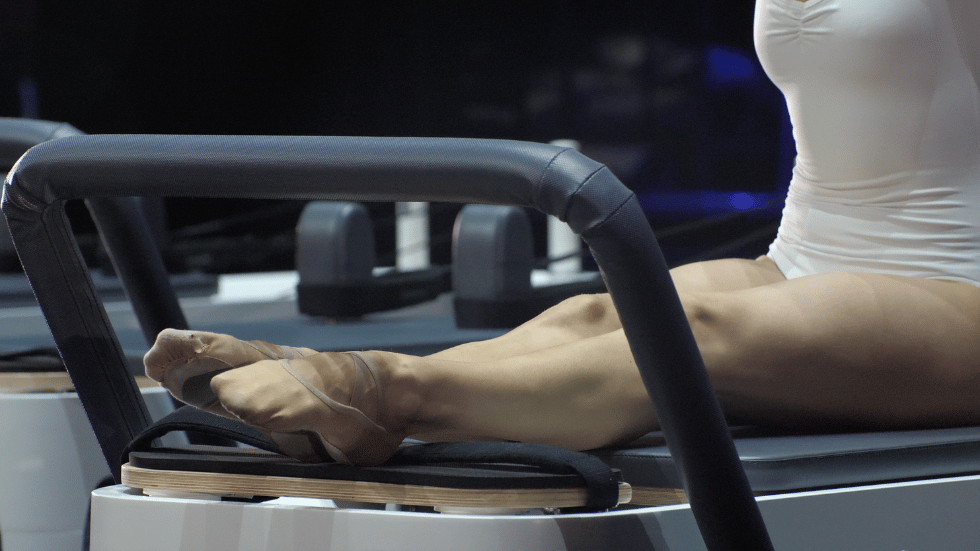
[Iza]: Patrycja, thank you so much for this lovely conversation. We’re in such a beautiful place, and you talked so wonderfully about dance. As we can see, combining physiotherapy with Pilates lets you achieve so much more with the body. So if other ballet companies are listening to us, definitely consider getting a reformer, or reach out to Patrycja. She’ll explain and clarify everything beautifully. We also invite you to Patrycja’s training courses. And if you’d like to read more about the equipment, including the Rialto we mentioned here, or the Allegro 2 reformers standing behind us, we warmly invite you to visit our website https://balanced-body.pl for more details. And of course, follow our channel, and see you in the next episode.
Pilates and ballet: biomechanics that don’t forgive mistakes
Combining physiotherapy with training on Pilates machines is the future of health prevention for professional ballet companies. As our conversation with Patrycja Brodek showed, the Rialto reformer and the Konnector system are effective tools for building deep stabilization, as well as advanced diagnostic devices that immediately expose asymmetries and errors in motor control.
Awareness of preventive training outside the ballet studio is growing — both among dancers and among the owners of movement studios looking for methods that guarantee their clients safe development.
💡 Want to open your own Pilates studio, or upgrade your space with safe, premium-tier machines? Try out the equipment that holds up under the extreme conditions of the Grand Theatre.
- See the technical details of the Rialto reformer.
- Discover the iconic and versatile Allegro 2 reformer.
- Start a professional career path and sign up for certified instructor training.
- Get in touch with us and create a Pilates studio tailored to every body’s needs.
Join Patrycja Brodek’s training courses:
IG: https://www.instagram.com/patrycja.pilates/
Address: Movimento Pilates Edukacja
Legionów 119, Łódź
Phone: 664 365 217
e-mail: patrycja.pilates@gmail.com
and visit the Grand Theatre in Łódź:
www: https://www.operalodz.com/
IG: https://www.instagram.com/teatrwielkilodz/
FB: https://www.facebook.com/TeatrWielkiLodz
TT: https://www.tiktok.com/@teatrwielkilodz
YT: https://www.youtube.com/user/TeatrWielkiLodz
Address: Plac Dąbrowskiego, 90-249 Łódź

I am a graduate in Managerial Economics as well as Finance and Accounting, with a specialization in Marketing. Since 2018, I have been working as a Copywriter at Balanced Body, where I create marketing content for the fitness and Pilates industries. One of my particular strengths is translating complex topics into accessible language and accurately analyzing the needs of target audiences. Outside of work, I am passionate about fire shows and volleyball, which helps me better understand the needs of physically active people.

I am a physiotherapist, academic lecturer at the Faculty of Dance at the Academy of Humanities and Humanities in Łódź, and the first Balanced Body Konnector® Educator in Poland. At Movimento Pilates in Łódź, I help dancers, athletes, and individuals with postural issues regain their fitness and biomechanical balance. I conduct certified Balanced Body training (Principles of Movement, Mat, Reformer) in Polish and English. My experience is complemented by a black belt (1st dan) in traditional karate.