


Effective Pilates Exercises for Fighting Rheumatoid Arthritis
Czy to możliwe, by żyć aktywnie z chorobą RZS? Zdecydowanie tak! Reumatoidalne zapalenie stawów nie oznacza, że musisz zrezygnować z ruchu i swoich pasji. Dobrze dobrany sport nie tylko da Ci satysfakcję, ale też pomoże złagodzić przebieg choroby. Jednak nie każda aktywność fizyczna jest zalecana w przebiegu RZS.
Jedną z polecanych dla chorych na RZS dyscyplin jest pilates. Pozwala on na zwiększenie zakresu ruchu w stawach, a także wyciszenie i relaks. Doskonale wpływa także na postawę ciała i uczy cechy bardzo ważnej dla cierpiących na reumatoidalne zapalenie stawów – tzw. świadomości własnego ciała.
WHAT IS RA AND WHAT ARE ITS SYMPTOMS?
RA, or rheumatoid arthritis, is an autoimmune disease. It attacks connective tissue and has no clearly defined cause. In its course, it affects the joints (synovial membrane) and internal organs. It is an inflammatory disease that can affect both young and older individuals. The inflammatory process begins inside the joint, resulting in the degradation of the synovial membrane and adjacent intra-articular structures.
RA may initially affect only small joints (e.g., hands, feet), and over time involve larger ones, gradually disrupting mobility. The disease is much more common in women.
Symptoms appear relatively early, but they can be easily ignored. So how can you recognize RA? What should raise concern?
- joint pain and stiffness accompanying morning awakening, often combined with swelling, as well as chronic fatigue and low-grade fever, which you might confuse with the flu,
- joint swelling, resulting from the hypertrophy of the synovial membrane in the joint,
- gradual loss of joint mobility, leading to irreversible changes in case of damage to its internal structures,
- joint deformities, appearing in advanced stages of RA,
- rheumatoid nodules, which may also appear on internal organs,
- excessive skin dryness,
- other diseases that may be a consequence of RA complications (atherosclerosis, pleuritis with shortness of breath and chest pain, dry eye syndrome, chronic urinary tract infections).
If you experience joint pain or swelling, do not wait – consult a specialist as soon as possible, preferably a rheumatologist. Such a doctor will immediately initiate appropriate treatment upon diagnosis, which will help halt the progression of the disease and avoid irreversible changes.
HOW CAN RA BE SLOWED DOWN?
Although the primary treatment for RA is pharmacotherapy, other factors play an equally important role, such as a proper diet, support from loved ones and a psychologist, physiotherapy, and physical activity.
It is worth pausing to consider the last factor. Physical activity should be tailored to the patient’s condition. If the disease is advanced, exercises should primarily aim to maintain independence for as long as possible. Therefore, those that support performing daily activities, such as dressing, preparing meals, washing, eating, etc., are recommended.
Patients with RA should not give up their passions, especially if the condition affected them at a young age. Physical activity improves the overall condition of the patient – it enhances joint function, strengthens muscles, and prevents contractures. However, one should avoid strength exercises, especially in joints affected by the inflammatory process. During acute phases of the disease, when inflammation intensifies, it is better to refrain from exercising.
PILATES – HOW CAN IT HELP PEOPLE WITH RA?
Pilates is a discipline particularly suited to assist in the fight against rheumatoid arthritis. The exercises proposed in this method do not strain the joints; on the contrary, they allow for increased mobility.
Many Pilates exercises excellently support the performance of daily activities. By practicing Pilates, you will learn how to safely get up, lift objects, etc. You will also develop proper body posture.
Pilates, by engaging the deep muscles and combining exercises with focus and mental work, teaches greater awareness of your body. This helps combat the limitations caused by the disease. The combination of mental and physical strength provides a powerful experience that challenges the illness.
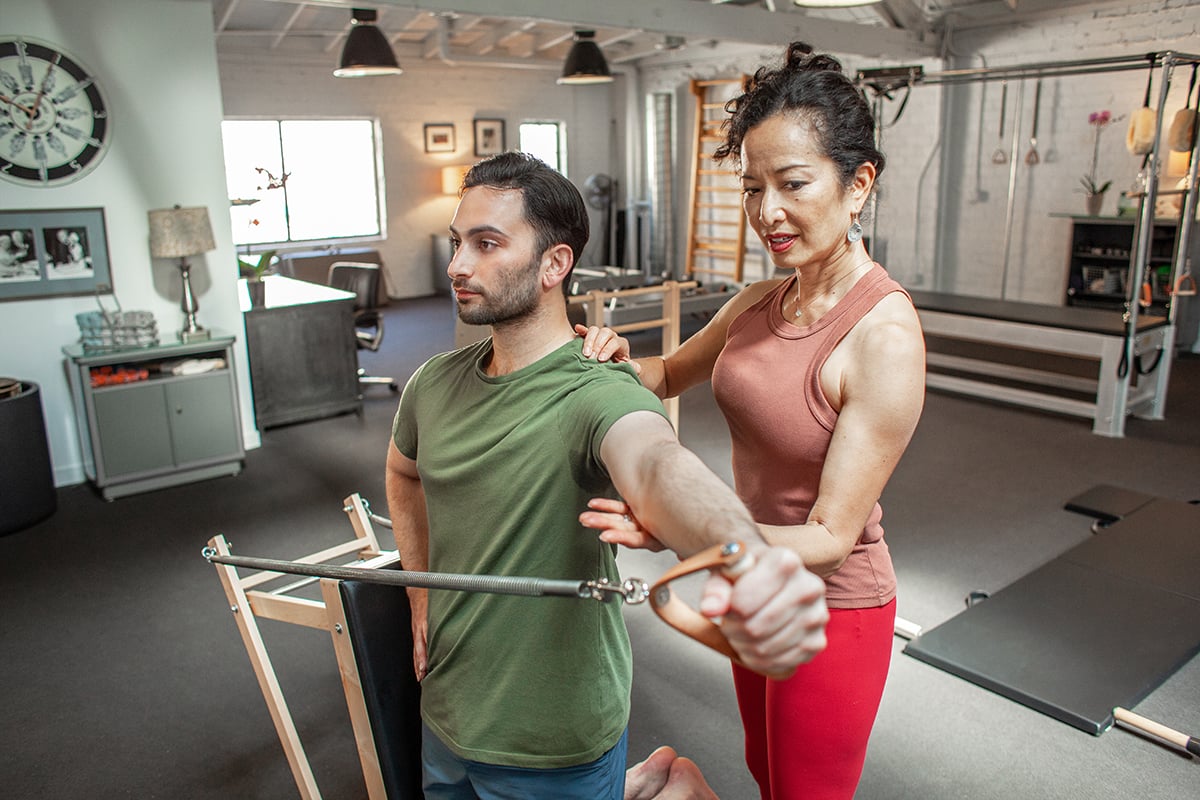
Pilates machines provide special support for those with rheumatoid arthritis. Their operation is based on the work of springs with varying degrees of resistance, supporting the body during exercises and allowing for results that patients would not be able to achieve on the mat. This helps to rebuild trust in one’s body, endurance, control, and joy in movement.
Exercises on the reformer maximize the strength and range of motion of individuals affected by RA. Thus, Pilates impacts not only the body but the entire life of the patient.
The relationship with movement in Pilates is dynamic – and it must be so in the course of RA. One must learn to modify exercises and pace. To challenge one’s body.
Pilates can be an exceptional form of rehabilitation for those with RA, providing the opportunity to work with passion and achieve success in one’s own body. It is a movement that can change your life!

I am a graduate in Managerial Economics as well as Finance and Accounting, with a specialization in Marketing. Since 2018, I have been working as a Copywriter at Balanced Body, where I create marketing content for the fitness and Pilates industries. One of my particular strengths is translating complex topics into accessible language and accurately analyzing the needs of target audiences. Outside of work, I am passionate about fire shows and volleyball, which helps me better understand the needs of physically active people.