


Conscious or Unconscious – What Are the Differences Between These Two Types of Movement?
Your body is your home. How you feel in it depends on you. Do you want it to listen to you, be intelligent, integrated, capable of reflection and renewal? Conscious movement comes to the rescue.
WHAT IS CONSCIOUS MOVEMENT?
You may not always realize it, but conscious and unconscious movements accompany you every day. How can you distinguish between them?
Conscious movement is the starting point for learning new activities. When you learn something new, each stage requires focus and attention to master a given skill. Whether it’s learning to walk, write, or drive a car, the process is similar until the activity becomes routine.
When you master a new skill, a neural pathway corresponding to the movement is created in your nervous system. What does this mean? The learned activity becomes second nature and shifts into the realm of unconscious movement. To perform it, you no longer need to focus on the individual elements of the movement.
Learning movements and then transferring their execution to the unconscious is an important process that conditions human survival in the environment. However, it also carries certain negative consequences. What are they?
WHY IS IT WORTH TRAINING CONSCIOUS MOVEMENT?
When you master various movement patterns, your body remembers both the good and the bad—without distinction. Past physical, emotional, or psychological injuries can influence the unintended movements you make. How you move is also connected to your system of behaviors and beliefs.
When you work on freeing yourself from emotional habits, old patterns, and pathologies, you become more aware of yourself, your feelings, and what else blocks your body. This inner work allows for further exploration of the layers of unconscious behavior until full awareness of movement is achieved.
HOW DOES CONSCIOUS MOVEMENT CREATE A CONSCIOUS BODY?
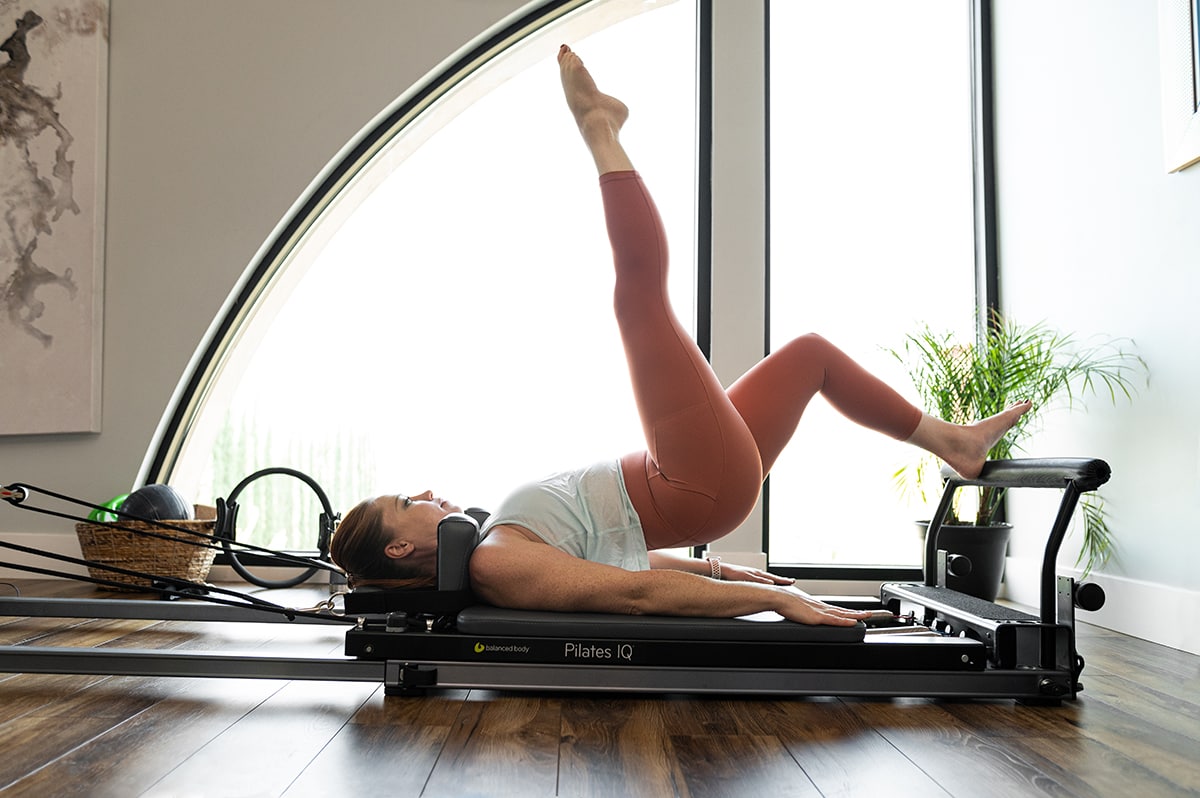
The Pilates technique is based on conscious movement, which enables self-observation and body awareness. What does this look like in practice?
During individual series of Pilates exercises based on the main pillars of the technique, such as breath, centering, precision, control, concentration, and flow, a process of inner healing and awareness of body movements occurs. Muscles strengthen, their flexibility increases, and joint mobility and posture improve. In this way, regular Pilates movements are associated with natural progress and the awakening of the body’s inner curiosity.
Pilates also offers sensory exercises (related to the senses) and proprioceptive exercises (developing the sense of orientation of one’s body parts) from a variety of techniques. These also make the body more aware. Thanks to them, you increasingly feel yourself and each movement, which enables you to engage in daily self-observation. This requires a commitment to self-development, which is a key step on the path to better health and well-being. Systematic work makes your body feel what it needs, listen to itself, and respect itself.
By practicing Pilates, you get to know your body and learn to guide it without excessive explanation—simply by performing repetitive exercises. Beneath all the movement patterns you possess lies body awareness, waiting to be discovered. Are you ready to give it a try?

I am a graduate in Managerial Economics as well as Finance and Accounting, with a specialization in Marketing. Since 2018, I have been working as a Copywriter at Balanced Body, where I create marketing content for the fitness and Pilates industries. One of my particular strengths is translating complex topics into accessible language and accurately analyzing the needs of target audiences. Outside of work, I am passionate about fire shows and volleyball, which helps me better understand the needs of physically active people.