


Classical vs. Contemporary Pilates
What is the difference between classical Pilates and contemporary Pilates?
Contrology – or classical Pilates – like all fields of science or sport, evolves over time. The more a category develops and expands, the more it is subjected to scientific research and modernization. Thus, Pilates has changed from its original version. Has this been beneficial? Were these changes necessary? And finally, how much of contemporary Pilates contains Contrology? Let’s start with the basic differences.
Differences between classical and contemporary Pilates
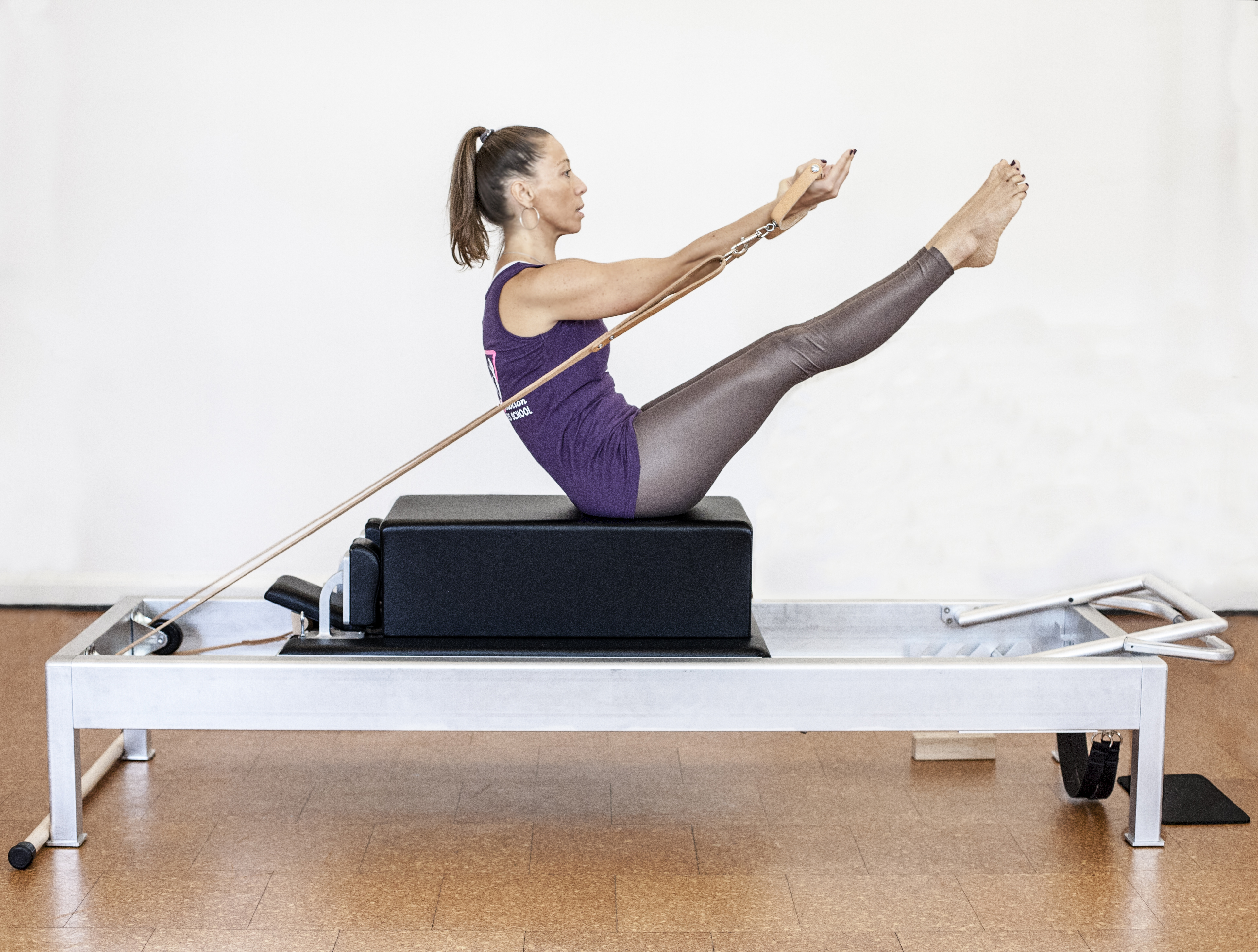
Joseph and Clara Pilates worked with many people, but only a few dared to take a step further and open their own studios. This was related to the spreading of Pilates teaching methods to ever more distant corners of the world. On the other hand, it also brought many changes in methods and teaching styles, which causes some confusion and makes it difficult to definitively state who is closest to the original. I would like to remind you that Contrology is nothing more than a faithful reproduction of exercises and the order in which they are performed, just as Pilates himself created them. Differences also appear in the positioning of the pelvis during mat exercises. Contrology states – among other things – that abdominal exercises should be performed in a “posterior pelvic tilt” – meaning that while lying on the back, the lower part should be completely pressed into the floor, creating a fold in the pelvis. Contemporary Pilates allows for the pelvis to be positioned in a “neutral” position or for exercises to be performed in a “healthy” spine position, which is the position the spine takes when a person is standing upright. Here, lying on the back, the lower back will have some space (it is not completely pressed into the floor), and the hips and pubic bones will be in the same plane. In contemporary Pilates, modifications to the equipment also play a significant role, which greatly facilitate the execution of many exercises. These adaptations are intended to lead a person to perform the final version of the exercises. However, many representatives of classical Pilates consider such adaptations to be half-measures.
Where do the differences come from?
Did Pilates really need changes? Is its more contemporary form a result of creativity and the desire to introduce the beliefs of subsequent trainers, or is it rather an inevitable progress? The greatest influence on the changes and the emergence of differences came from increasingly newer research related to physiotherapy and biomechanics. The exercises still rely on the original principles of Pilates, many of which remain unchanged. However, with the ongoing discovery of the human body, entirely new exercises have also emerged, as well as many variations of existing exercises, which allow for even better rehabilitation of injuries and enable even greater creativity. Therefore, it is difficult today to separate classical Pilates from its contemporary version – the most important thing is that the exercises are performed correctly, according to the original principles. It is not the person who should adapt to the exercises – rather, the exercises should be adapted to the specific person and their needs.
How to avoid falling victim to excessive creativity?
It is important to remember that the modern version of Pilates is based on strong foundations derived from Contrology. One cannot simply let their imagination run wild and separate these two variants. Modern Pilates would not exist without this classical version – not the other way around. Above all, you must know your own body and its needs well, so as not to injure yourself by creating ever newer variations of exercises just to satisfy your creativity. That is not what it should be about. You must understand what your body wants and needs, and the exercises should help you achieve that. The human body possesses a wisdom that must be learned – and Pilates can teach you to listen to that wisdom. And can there be anything more fascinating than rediscovering yourself and your needs while also taking care of your health?

I am a graduate in Managerial Economics as well as Finance and Accounting, with a specialization in Marketing. Since 2018, I have been working as a Copywriter at Balanced Body, where I create marketing content for the fitness and Pilates industries. One of my particular strengths is translating complex topics into accessible language and accurately analyzing the needs of target audiences. Outside of work, I am passionate about fire shows and volleyball, which helps me better understand the needs of physically active people.