


Pilates After a Cesarean Section and Getting Back in Shape
You had a cesarean section and want to get back to your pre-pregnancy shape and figure? Remember that the postpartum period and recovery after a cesarean is different from that after a natural birth. A cesarean section is a serious operation—regardless of whether it was planned or performed as an emergency. Your body has gone through a lot and faces challenges in returning to full fitness. How can you help it?
FIRST 10-12 WEEKS
The postpartum period after a cesarean lasts a bit longer than after a natural birth—about 10 to 12 weeks. Although the wound usually heals after 6 weeks, the deeper layers of muscle need more time. The process of fully healing the wound, which has many layers and goes deep, can take even longer.
How to take care of yourself during the first weeks after a cesarean? Use the following tips:
- rest as much as possible, especially in the first days after giving birth,
- ask for help and assistance with most household chores, e.g., from your husband, mother, or friend,
- when getting up, do not strain your abdominal muscles, but lie down and get up from the side,
- when the pain subsides and you feel ready, introduce breathing exercises. During exhalation, engage your pelvic floor and deep abdominal muscles. It is also a good practice to support your body with breath during various activities, e.g., getting up, lifting the baby, etc.,
- the next step is exercises for the pelvic floor muscles. A cesarean does not spare them—it can lead to nerve damage or scarring,
- when you feel better, try to spend more time on your feet—natural stimulation supports proper wound healing,
- take care of your posture and the proper execution of daily activities.
AFTER CHILDBIRTH
Has 12 weeks passed, and has your gynecologist confirmed that everything is okay and you can return to exercise? To ensure that physical activity is safe for you, you must remember to gradually increase the load and carefully observe your body. Start with two short workouts a week, for example, 15 minutes each. Then, gradually extend them until you reach 3-4 training sessions of 30-40 minutes per week.
Never continue exercising if you experience bleeding or pain in the scar, spine, or pelvis during or after the workout! In such cases, give yourself time. Listen to your body and adjust the intensity of your training to its capabilities.
To prepare well for exercise, pay attention to your body posture.
It is indicated by several elements:
- the tailbone in a neutral position, without tucking it under or sticking the buttocks out,
- maintaining an active abdomen and a long spine,
- ribs above the hips – the chest and chin should not be sticking out forward.
Also, remember that there are certain exercises that must wait.
These include:
- traditional abdominal exercises, such as crunches, bicycles, leg raises while lying down,
- jumps, jumping jacks, trampoline exercises,
- intense workouts,
- running,
- strength training with heavy weights,
- excessive stretching,
- any exercises that cause you discomfort.
PILATES TRAINING AFTER CESAREAN SECTION
The selection of exercises should always be individual. Classic Pilates exercises allow for many modifications and adjustments to meet your needs. It is important that you consult them with a qualified instructor or physiotherapist who will assess the condition of your abdomen and pelvic floor muscles and help you choose the appropriate exercises. If you are struggling with back pain, the specialist will also apply the proper therapy.
Thanks to Pilates exercises, you will gradually return to your pre-pregnancy fitness. Below are some exercise suggestions you can use.
1. Roll down
Rolling down vertebra by vertebra is one of the basic movements in Pilates. Stand with your feet slightly apart – they should be hip-width apart. Inhale, then exhale, bringing your chin to your chest and rolling your entire body down towards the floor, vertebra by vertebra. Take another inhale and, with an exhale, gradually return to a standing position. Repeat 5-10 times.
2. Foot work
Evenly distribute your weight across your entire feet. Focus particularly on the support points: the midfoot – heel. Then, gently lean forward, weighting the midfoot, and backward, weighting the heel. Repeat several times, increasing the range of motion.
The next part of the exercise is to tilt your feet outward to increase the load on the outer parts of the feet. Repeat several times. The entire exercise should last about 2-3 minutes.
3. Spine twist
Stand with your arms out to the side. Inhale and turn your arms to the right, then exhale and twist your entire body to the left. Repeat 5-10 times on each side.
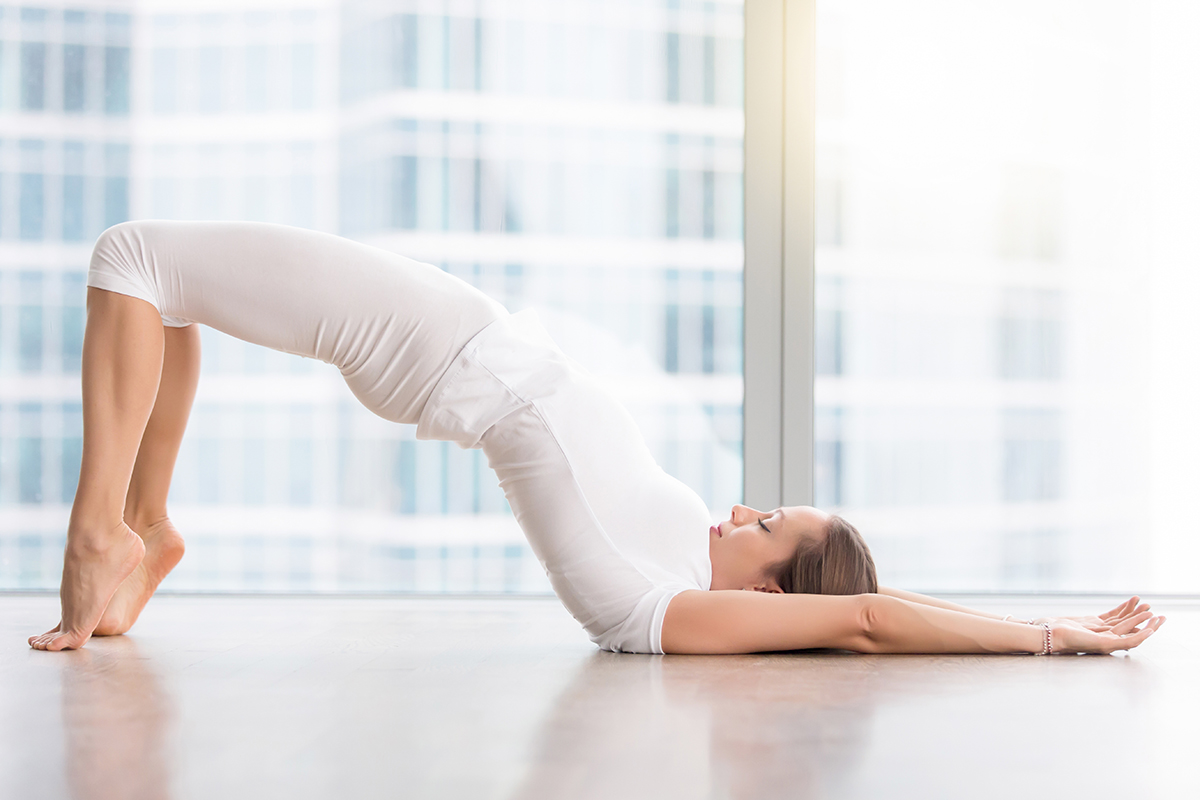
4. Shoulder bridge
Rest your feet on the mat, with your arms along your body. Lift your pelvis vertebra by vertebra, leading the movement with an exhale. When your pelvis is lifted, take another inhale and, with an exhale, roll your spine down. During the movement, very gently activate your abdominal muscles. Repeat 10-15 times.
When exercising after a cesarean section, remember that your muscles are very weakened and need gradual activation. Pilates is a great solution for returning to form without strenuous workouts. By choosing it, you will not only regain your fitness but also build health for years to come!

I am a graduate in Managerial Economics as well as Finance and Accounting, with a specialization in Marketing. Since 2018, I have been working as a Copywriter at Balanced Body, where I create marketing content for the fitness and Pilates industries. One of my particular strengths is translating complex topics into accessible language and accurately analyzing the needs of target audiences. Outside of work, I am passionate about fire shows and volleyball, which helps me better understand the needs of physically active people.