


What is Pilates?
Choć wielu uważa pilates za spokojną i niezbyt wymagającą metodę ćwiczeń, w rzeczywistości stanowi on wyzwanie dla niejednego sportowca. Sekret tkwi w elastyczności tej metody – ćwiczenia można dostosować dla osób początkujących, w okresie rekonwalescencji po chorobie, po kontuzji, ale też jako trening uzupełniający nawet dla zaawansowanych sportowców.
WHAT IS PILATES?
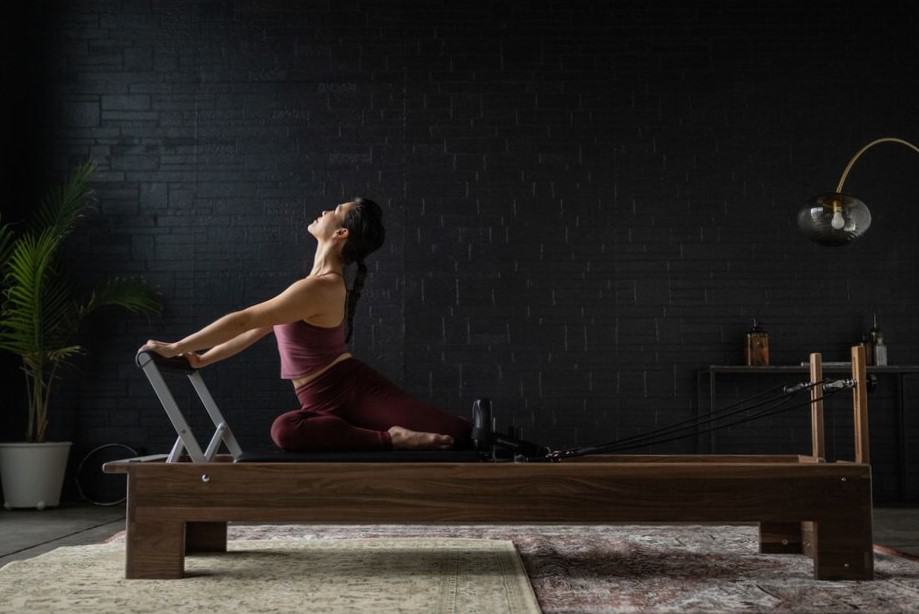
Pilates is a system of exercises developed by Joseph Pilates used to strengthen muscles, increase flexibility, and improve overall health. Exercises are performed on a mat and on specially designed equipment, the most important of which is the reformer. Although this method was created in the early 20th century, it was so ahead of its time that it began to gain widespread recognition only in the early years of the 21st century.
The Pilates system includes exercises for every part of the body. By strengthening the deep muscles, which are often overlooked in other exercise methods, Pilates allows for body shaping, strengthening the spine, and improving balance and stabilization. Through Pilates exercises, the body becomes flexible, and movements are smooth and graceful, helping to avoid injuries and strains. Pilates works excellently as a complementary training method for many sports disciplines, as well as for dance or acrobatics.
HOW TO PRACTICE PILATES?
Pilates focuses on the joint engagement of the mind and body (Body&Mind). Each exercise is performed with the utmost attention to breath and appropriate movement patterns. Pilates strengthens the core – the deep muscles that stabilize the body, especially the torso, pelvis, and shoulder girdle, while also improving balance, coordination, and reducing stress. The exercises are safe and can be adapted to each individual, regardless of skill level, health status, or age – they can support, for example, during the rehabilitation process, or be a challenge even for very advanced practitioners. Pilates focuses on teaching better movement so that the benefits are felt in daily life.
It should be noted that Pilates is not just exercises on the mat, although this is still often believed. According to the method’s creator, the foundation of training consists of exercises on special Pilates machines, such as the reformer, Cadillac, chair, or barrel.
Pilates on Machines
Pilates machines rely on the use of springs that generate varying degrees of resistance. They allow for greater work with fewer repetitions, enabling you to see results faster. When working on Pilates machines, users have the opportunity to perform movements in a controlled manner. As a result, exercises on machines are exceptionally safe, and the risk of injury is minimal.
The most commonly used Pilates machines are:
The most versatile and universal equipment, resembling a bed. It consists of a frame, a carriage moved by the practitioner, springs providing resistance, a footbar, and adjustable straps and loops.
The most advanced Pilates machine. It combines the benefits of a training mat, reformer, and tower. It allows for the engagement of practically all muscle groups.
It consists of a seat and a movable footrest attached with springs of varying resistance. Despite its small size, it allows for a comprehensive workout.
The barrel allows for exercises that lengthen and strengthen the torso, arms, back, and legs. It is an ideal tool for improving spinal health.
THE MOST IMPORTANT PRINCIPLES OF PILATES
There are several fundamental principles of Pilates:
- BREATH – in Pilates, breath is closely integrated with every movement to focus attention on what we are doing and improve the flow of oxygen throughout the body
- CONCENTRATION – focusing attention on the exercises being performed, being present, and concentrating on the movements
- CONTROL – maintaining full control over the body, precision, and keeping the proper form and effort throughout the entire exercise
- CENTER – developing a strong, stable, and flexible core
- BALANCED DEVELOPMENT – evenly developing all muscles in the body
- RHYTHM and FLOW – performing all movements smoothly, at the right pace, shaping optimal movement patterns
WHY IS IT WORTH PRACTICING PILATES?
Pilates can truly change your health without straining the body. Check out the biggest benefits of Pilates training:
- Strengthening the core, improving stability and balance of the body
- Better coordination and control over the body
- Greater range of motion
- Improved endurance and sports performance
- Increased flexibility of the body
- Development of optimal movement patterns
- Slimming of the figure
- Reduction of muscle tension, joint pain, and spinal discomfort
- Relief from stress and tension
- Lower susceptibility to injuries and strains
- More effective rehabilitation and faster recovery after injuries
WHERE TO TRAIN PILATES ON MACHINES?
Start your Pilates training on machines in your city! Find the nearest Pilates studio and don’t hesitate to give it a try.
I am a graduate in Managerial Economics as well as Finance and Accounting, with a specialization in Marketing. Since 2018, I have been working as a Copywriter at Balanced Body, where I create marketing content for the fitness and Pilates industries. One of my particular strengths is translating complex topics into accessible language and accurately analyzing the needs of target audiences. Outside of work, I am passionate about fire shows and volleyball, which helps me better understand the needs of physically active people.