


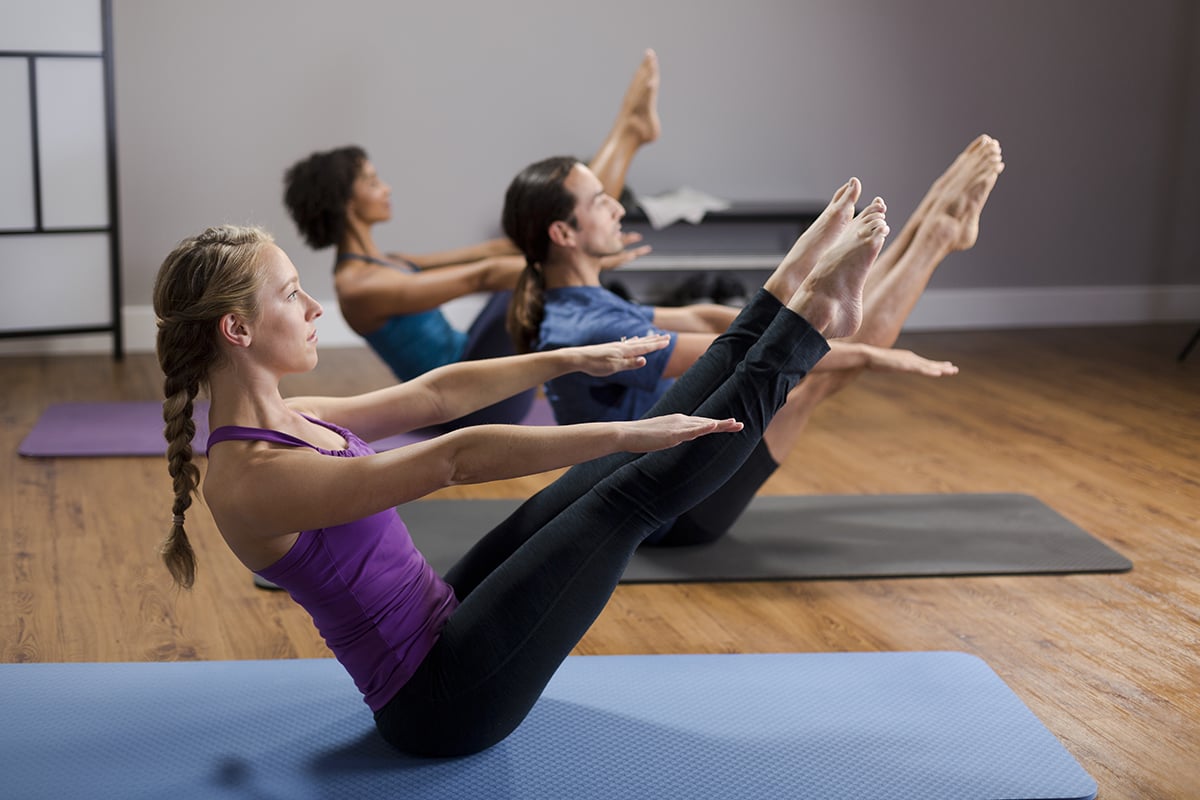
Is conscious movement important in the gym as well?
When you go to the gym, the practice of mindfulness is probably not at the top of your priority list. It is primarily associated with exercises based on slow breathing and deep focus, such as yoga or Pilates. Is this a correct approach?
Fitness instructors and physiotherapists promote mindfulness, or “conscious movement,” as a key element of any exercise program – not just those that are slow and performed with focus. What exactly is conscious movement and how can it be implemented during workouts? Read on to learn more.
WHAT IS CONSCIOUS MOVEMENT
Conscious movement is currently gaining popularity, but it is not a new concept. This style of slow, deliberate, and mindful movement, emphasizing the connection between body and mind, is already the foundation of ancient practices – for example, the Chinese martial art Tai Chi.
Conscious movement is the starting point for learning new activities. When you learn something new, you think about each step to master a given skill. This changes over time – when performing a learned activity, you act automatically and it is difficult to even pinpoint what exactly you are doing step by step.
Achieving conscious movement with learned activities is not easy. The first step to do this is body awareness in a standing position. Which muscles are tense and which are relaxed? Breathing should be slow and deep to stimulate the parasympathetic system and slow the heart rate. Then, each movement should be performed slowly and mindfully. Awareness of how your body works allows you to exert minimal necessary effort in each physical activity. This helps in daily movement as well as during strength training, to prevent injuries, strains, and overloads, and also to achieve peace of mind.
WHAT BENEFITS DOES CONSCIOUS MOVEMENT OFFER
Conscious movement is demanding, but it brings many benefits. Here are the most important ones:
- helps to free yourself from bad movement patterns that your body has memorized, e.g., as a result of past physical, emotional, or psychological injury,
- helps to discover what else is blocking your body,
- reduces the risk of future injuries and strains,
- allows you to “save energy,” as you only use the muscles that actually need to work for each movement,
- helps achieve better results during training,
- teaches you to adjust the intensity of exercises to the current needs of your body,
- helps to modify training when you are injured, to give your body space to heal.
WHICH PILATES EXERCISES SUPPORT CONSCIOUS MOVEMENT?
Pilates enables self-observation and allows you to gain body awareness. Exercises based on the main pillars of the technique, such as breath, centering, precision, control, concentration, and flow, help gradually uncover the intricacies of each movement until they are fully realized.
When you exercise at the gym, achieving movement awareness will significantly enhance your capabilities. That is why Pilates serves as an excellent complementary workout. Through it, you will strengthen your muscles, increase their flexibility, improve joint mobility, and posture. Once you learn to focus on the contraction of a muscle or muscles, you will help them work more efficiently – which means better results and fewer injuries.

I am a graduate in Managerial Economics as well as Finance and Accounting, with a specialization in Marketing. Since 2018, I have been working as a Copywriter at Balanced Body, where I create marketing content for the fitness and Pilates industries. One of my particular strengths is translating complex topics into accessible language and accurately analyzing the needs of target audiences. Outside of work, I am passionate about fire shows and volleyball, which helps me better understand the needs of physically active people.