


9 Things to Know Before Your First Reformer Workout
Are you about to have your first Pilates workout on the Reformer? Not sure what to expect? You’re not alone – many people feel confused during their first encounter with this type of machine.
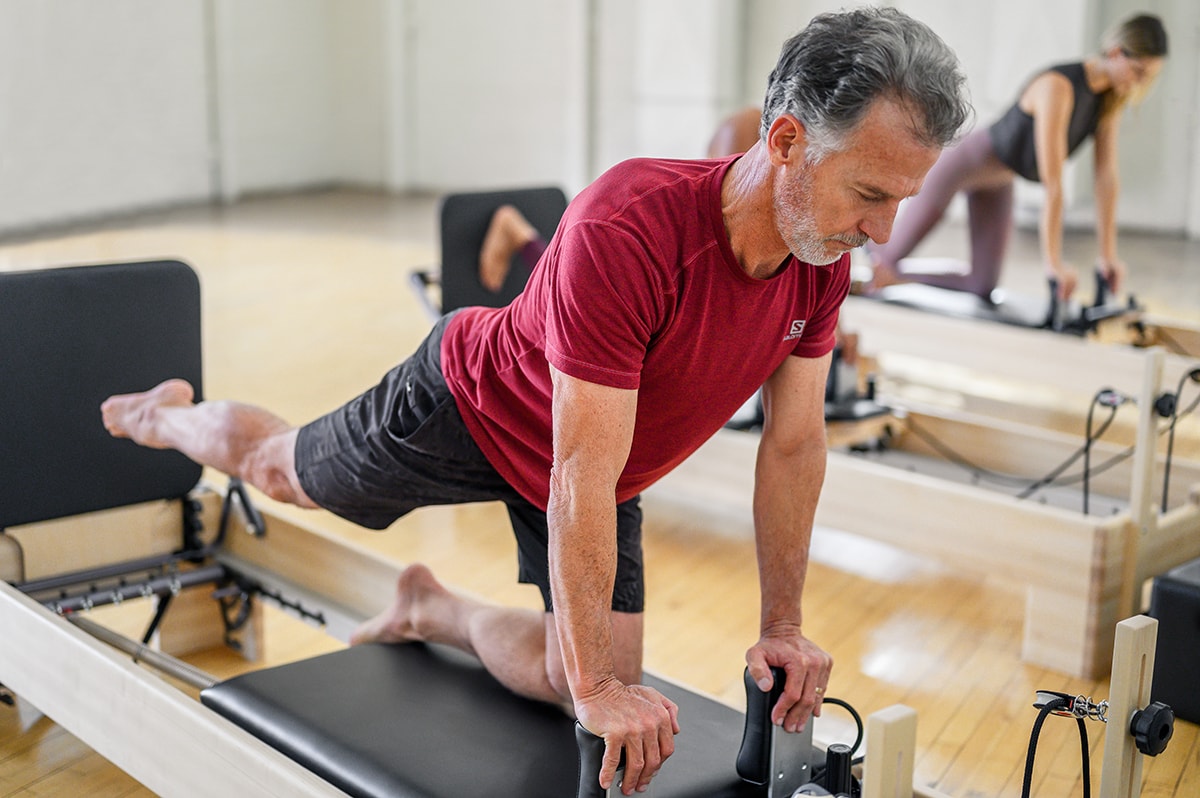
First of all, if you think it will be an easy, slow workout, you are in for a surprise. Classes on the Reformer engage the entire body to improve strength, flexibility, and posture. Although many movements may be small and slow, they require focus on specific muscle groups, which is not possible without effort.
Don’t get me wrong – Pilates is a great method for beginners as well as for people at every level of experience. However, before stepping into your first class, it’s good to be aware of a few things. How can you prepare for your encounter with the Reformer?
1. Choose fitted clothing
During exercises on the Reformer, you will be moving your body in all possible positions. In loose, moving clothing, you won’t feel comfortable. Opt for a fitted tank top and leggings – this outfit will also allow the instructor to properly assess your alignment so you can get the most out of the class.
2. Invest in socks and gloves
Do you know those socks with little dots on the soles? Those dots are a kind of small rubber grip that provides traction and prevents your feet from slipping on the machine… especially when you start to sweat.
There are also gloves with rubber inserts that have the same properties. You might think it’s silly, but trust us – your hands, especially if you are just starting out, will sweat in no time. With gloves and socks, you can focus on activating the right muscles rather than slipping fingers and feet.
3. Prepare for something different than on the mat
When you enter a Reformer class, you won’t be lying on a mat on the ground. Most movements will be performed on a machine equipped with a carriage that moves back and forth, connected with springs of varying resistance.
What is the biggest difference between the mat and the Reformer? Adding resistance to exercises or assisting work when in a weaker form. This allows the workout to be both more intense and demanding, as well as easier for those recovering from injuries or just starting their journey with Pilates on the Reformer. Many basic movements, however, look the same as in all Pilates classes.
4. Listen to the instructor
When you first encounter the Reformer, you will notice many moving parts. It’s easy to get lost trying to adjust the resistance or properly place your hands and feet on the platform. During group classes, you can look at your neighbor to see what position you should be in, especially if they have more experience than you. However, the best way is to carefully listen to the instructor and follow their instructions closely.
5. Yellow, blue, and red – remember these colors
At the beginning of the class, your instructor will explain how the Reformer works and all its parts. One of the most important elements is the springs, which allow you to adjust the resistance. In most Balanced Body Reformers, you will find yellow, blue, and red springs. Yellow is the lightest resistance, blue is medium, and red is the heaviest. Don’t worry at first about which resistance you should use – your instructor will suggest which one will be best for you for each exercise based on their experience.
6. Your wrists may surprise you
Have you ever thought that your wrists also have muscles, just like any other part of your body? Building strength in this area also requires work and time. So don’t be surprised when your wrists start to tire – this is a normal symptom during Pilates exercises that target smaller, less frequently used muscle groups. When it gets tough, take a short break, shake out your wrists, and keep going.
7. You may experience confusion
Moving without the sensation of gravity is one of the distinctive features of Pilates on the Reformer. Lying on your back on a moving platform at first may…
e may seem strange – don’t let that discourage you! The more you use the equipment, the more proficient you will become in all movements, and the lack of gravity will bring you a lot of joy!
8. You will receive props
The Reformer is a wonderful piece of equipment, but instructors often use additional accessories to make the exercises more engaging. The most commonly used are balls, resistance bands, and Pilates rings.
9. Keep a towel handy
Pilates is a full-body workout. When you are focused and concentrated on the movements, you maximize energy expenditure. Your body will warm up, you will activate muscles that you usually don’t use, and if you do it correctly, you will engage every part of your body. It’s no wonder that you will be dripping with sweat! So it’s a good idea to have a towel or tissues with you.
Now you know what to expect in your first Reformer class. One last piece of advice – have fun! Trying out Pilates machines is a challenge that you should treat as a great time.

I am a graduate in Managerial Economics as well as Finance and Accounting, with a specialization in Marketing. Since 2018, I have been working as a Copywriter at Balanced Body, where I create marketing content for the fitness and Pilates industries. One of my particular strengths is translating complex topics into accessible language and accurately analyzing the needs of target audiences. Outside of work, I am passionate about fire shows and volleyball, which helps me better understand the needs of physically active people.