


The Impact of Pilates on Health – An Analysis of Scientific Research
Pilates has an impact on health. This is known by everyone who has ever heard of this exercise method. The question that should be asked is not “if?” but: what impact does Pilates have on health? It is an exercise method characterized by a holistic approach, combining core strengthening, strength and flexibility with precise muscle control, proper posture, and conscious breathing. Initially popular among dancers, Pilates has become a valued form of physical activity for a wide audience, as well as an effective tool in rehabilitation and fitness. What do scientific studies say about this? Let’s find out!
Pilates in Rehabilitation: From Mat to Balanced Body Machines
Scientific studies confirm that Pilates is an effective tool in rehabilitation. It helps alleviate pain and improve function in various conditions, such as:
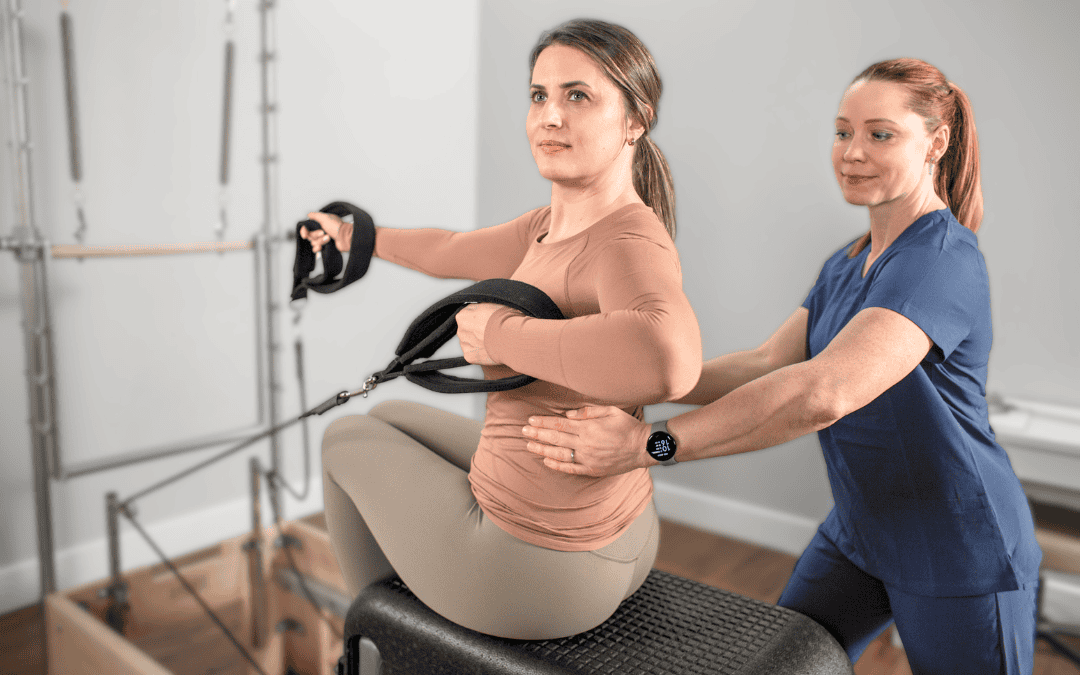
- Chronic low back and neck pain – Pilates strengthens deep muscles, stabilizing the spine and reducing tension. Exercises on the Balanced Body reformer, with adjustable resistance, allow for safe and gradual increases in muscle strength.
- Ankylosing spondylitis – Pilates improves mobility and flexibility, which is fundamental in the therapy of this disease. Balanced Body equipment allows for exercises to be performed through a full range of motion while relieving stress on the joints.
- Postmenopausal osteoporosis – Pilates, especially with resistance, helps maintain bone density. Exercises on the reformer or Cadillac, with appropriately selected resistance, can be a safe form of training for women with osteoporosis.
- Knee osteoarthritis – Pilates strengthens the muscles surrounding the knee joint, improving its stability and reducing pain. Exercises on the Wunda chair allow for isolated strengthening of the leg muscles.
- Scoliosis – Pilates, focusing on proper posture and muscle balance, can support scoliosis therapy. Balanced Body equipment allows for corrective exercises with precise movement control.
- Hypertension – Regular Pilates exercises can contribute to lowering blood pressure. Dynamic exercises on the reformer improve circulation and cardiovascular fitness.
Moreover, research confirms the positive impact of Pilates on mental health, including the reduction of symptoms of depression and anxiety, improvement in sleep quality, and overall quality of life.
Pilates and Neurological Diseases
In the context of neurological diseases, Pilates shows promising results, particularly in the case of multiple sclerosis (MS) and Parkinson’s disease (PD). In a review of recent studies: “Beyond Conventional Therapies: Exploring the Role of Pilates in Neurological Physiotherapy”, we find the following conclusions:
Multiple Sclerosis (MS)
Multiple sclerosis (MS) is a chronic inflammatory disease of the central nervous system, affecting over 2 million people worldwide. It manifests as reversible episodes of neurological disturbances and has various clinical forms. Common movement disorders in MS include restless legs syndrome, tremors, ataxia, and parkinsonism. After 10-20 years, many patients develop a progressive course, leading to deterioration in mobility and cognitive functions. Treatment for MS includes disease-modifying pharmacotherapy and symptomatic treatment, often requiring a multidisciplinary approach.
- In a study conducted in Turkey in 2020: “The effects of Clinical Pilates training on walking, balance, fall risk, respiratory, and cognitive functions in persons with multiple sclerosis: A randomized controlled trial”, Zuhal Abassyanık and colleagues compared the effects of Pilates training and home exercises in people with MS. The quasi-experimental study showed that Pilates training was more effective than yoga in improving walking speed, quality of life, and confidence in maintaining balance in MS patients.
- In 2021, in a randomized clinical trial titled: “Home-based Pilates for symptoms of anxiety, depression and fatigue among persons with multiple sclerosis: An 8-week randomized controlled trial”, Karl M. Fleming and colleagues assessed the impact of an 8-week home Pilates program on symptoms of anxiety, depression, and fatigue in people with MS. The results indicated significant improvement in these areas, especially in reducing symptoms of depression and fatigue, particularly in women with MS. In a qualitative analysis titled: “Participant experiences of eight weeks of supervised or home-based Pilates among people with multiple sclerosis: a qualitative analysis”, the same authors found that Pilates is a safe and accepted form of activity that supports the mental health of people with MS, and the home version of the program effectively increases access to exercise.
- Mehdi Gheitasi and colleagues conducted a randomized clinical trial published in 2021 titled: “Effect of twelve weeks pilates training on functional balance of male patients with multiple sclerosis: Randomized controlled trial”, which assessed the impact of 12 weeks of Pilates training on functional balance in men with MS. A significant increase in balance indicators was observed in the Pilates exercise group compared to the control group.
- Parisa Najafi and colleagues in their study from late 2022 to early 2023 titled: “Effects of Tele-Pilates and Tele-Yoga on Biochemicals, Physical, and Psychological Parameters of Females with Multiple Sclerosis” RCT evaluated the impact of an 8-week tele-Pilates and tele-yoga program in women with MS. Positive effects were observed, such as an increase in prolactin levels (affecting the repair of myelin sheaths), a decrease in cortisol levels (suggesting regulation of the HPA axis), improvement in depressive states, and increased physical activity, walking speed, and quality of life.
Pilates improves balance, strength, quality of life, cognitive functions, physical fitness, gait, and posture in patients with MS. It is well tolerated, associated with minimal side effects, and may reduce symptoms of depression.
Parkinson’s Disease (PD)
Parkinson’s disease (PD) is the second most common neurodegenerative disorder of the central nervous system. It is characterized by symptoms such as bradykinesia, rigidity, tremors, and balance disorders.
Research indicates potential benefits of Pilates training for individuals with PD:
- Fahriya Çoban and colleagues conducted a study in 2021 titled: “Effect of clinical Pilates training on balance and postural control in patients with Parkinson’s disease: a randomized controlled trial”, which compared the effects of clinical Pilates and traditional physiotherapy on balance and postural control in patients with PD. It was found that clinical Pilates was as effective as physiotherapy but yielded better results in dynamic balance.
- Júlia de Faria and colleagues in 2023 studied the impact of mat Pilates exercises on the gait of patients with PD (“Multicomponent and mat Pilates training increased gait speed in individuals with Parkinson’s disease when walking and carrying a load: A single-blinded randomized controlled trial”). Both groups (Pilates and multicomponent training) improved gait speed, but the Pilates group showed additional improvements in gait tempo and rhythm, which may have increased stability.
- Evrim Göz and colleagues in a 2020 study titled: “Effects of Pilates and Elastic Taping on Balance and Postural Control in Early Stage Parkinson’s Disease Patients: A Pilot Randomised Controlled Trial” assessed the impact of Pilates training and elastic taping on balance and postural control in individuals in the early stages of PD. Both Pilates and taping positively affected dynamic balance parameters, with no significant differences between the two methods.
- David Pereira Maciel and colleagues in studies published in 2020: “Pilates method improves balance control in Parkinson’s disease patients: An open-label clinical trial” demonstrated that Pilates improves balance control in patients with PD. Patients participating in Pilates sessions achieved better results in mobility and activity assessments compared to the control group.
- Jose Maria Cancela and colleagues in studies published in 2018 titled: “Feasibility and Efficacy of Mat Pilates on People with Mild-to-Moderate Parkinson’s Disease: A Preliminary Study” assessed the feasibility and efficacy of a mat Pilates program for individuals with mild to moderate PD. The program was feasible, safe, and positively affected the physical fitness and quality of life of participants.
Pilates is a safe form of exercise for individuals with mild to moderate Parkinson’s disease. Preliminary evidence suggests a positive impact of Pilates on fitness, balance, and physical functions.
Pilates Machines and Multiple Sclerosis
Balanced Body equipment, such as the reformer with a tower, allows for exercises in various planes of movement, which is essential in MS therapy, helping to improve coordination and stability. The exercises are safe, and the variety of springs allows for resistance to be tailored to the individual needs of the patient. This enables everyone to perform specific exercises that would be impossible without variable resistance.
Pilates Machines and Parkinson’s Disease
Exercises on Balanced Body equipment may be more effective than other forms of activity in improving lower body function and balance. The Wunda Chair and Cadillac from Balanced Body allow for exercises that strengthen muscles weakened in the course of PD, improving mobility and reducing the risk of falls.
Pilates for Health: Machines for Everyone
Pilates is not just a method of exercise; it is a philosophy of movement that promotes health and well-being at every stage of life. At Balanced Body, we believe that everyone, regardless of age, physical condition, or any limitations, can benefit from Pilates. That is why we offer a wide range of equipment and accessories that can be tailored to individual needs and training goals – which means that no one has to give up on activity; it is enough to properly configure the equipment designed to assist in training and improve quality of life.
We understand how important quality and precision are in every Pilates exercise. That is why we design and manufacture equipment that supports these principles, enabling effective and safe training. Our reformers, cadillacs, Wunda chairs, and other machines are created to provide optimal support, resistance, and adaptability to the individual needs of each user.
We collaborate with a wide range of experienced trainers and therapists who use the Pilates method in their daily work on our equipment. Their years of experience and positive patient relationships are invaluable confirmations of the effectiveness of the Pilates method and the highest quality of our machines.
People working on our machines often emphasize how the ability to precisely adjust resistance and configuration of Balanced Body equipment allows them to work effectively with individuals with diverse needs – from athletes to those in rehabilitation (see an interview with Dr. Danuta Wiśniewska, PhD in Health Sciences and Medical Sciences).
Regularly organized training sessions for instructors by the Balanced Body School ensure that knowledge about the proper use of equipment is continuously updated and passed on, increasing the number of people who can benefit from Pilates training.
Discover our solutions:
- Reformers – versatile devices that allow for hundreds of strengthening, stretching, and coordination exercises. Some models can be equipped with a tower.
- Cadillacs – beds with a multifunctional frame that enable exercises in suspension, relieving the spine and joints.
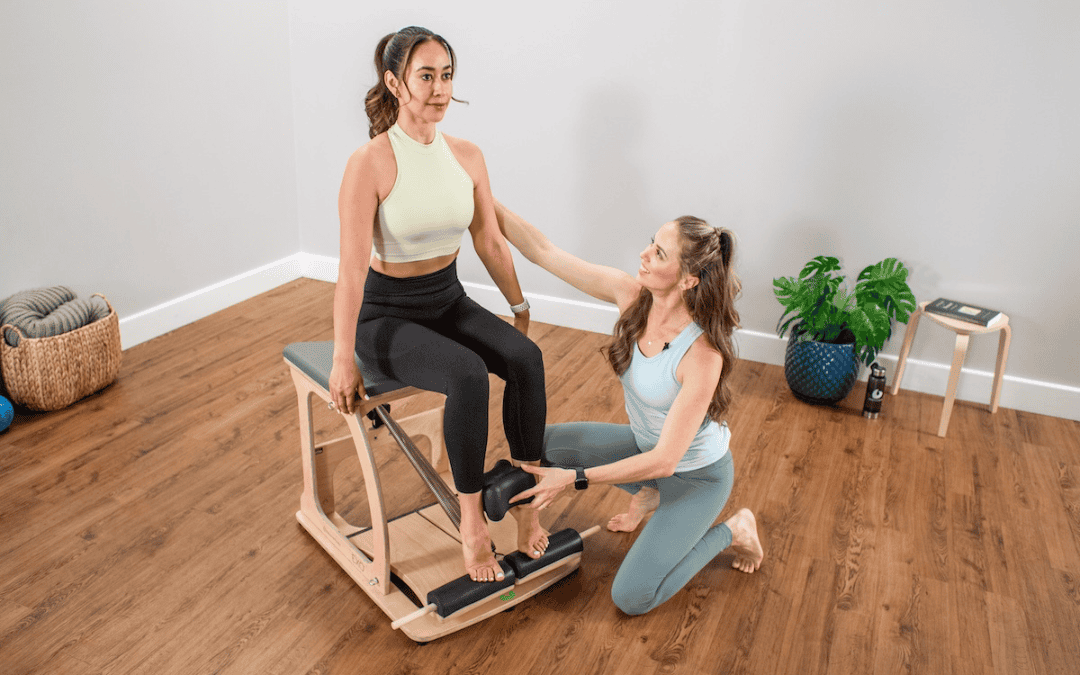
- Chairs – compact devices that allow for intense strength and stabilization training.
- Barrels – ideal for exercises that strengthen the leg and glute muscles, improving posture and balance.
- Accessories – Magic Circle, MOTR, Smart Bell, and other aids that diversify training and allow for targeted strengthening of specific muscle groups.
Pilates and Balanced Body – The Path to Health
Pilates, supported by the highest quality Balanced Body equipment, is an investment in health and well-being. Our Pilates machines are increasingly appearing in rehabilitation and physiotherapy clinics. Scientific research confirms the effectiveness of this method in rehabilitation, improving physical condition, and supporting therapy for various conditions. Whether you are a professional athlete, someone returning to fitness after an injury, or simply taking care of your health, Pilates will help you achieve your goals.

I am a graduate in Managerial Economics as well as Finance and Accounting, with a specialization in Marketing. Since 2018, I have been working as a Copywriter at Balanced Body, where I create marketing content for the fitness and Pilates industries. One of my particular strengths is translating complex topics into accessible language and accurately analyzing the needs of target audiences. Outside of work, I am passionate about fire shows and volleyball, which helps me better understand the needs of physically active people.