


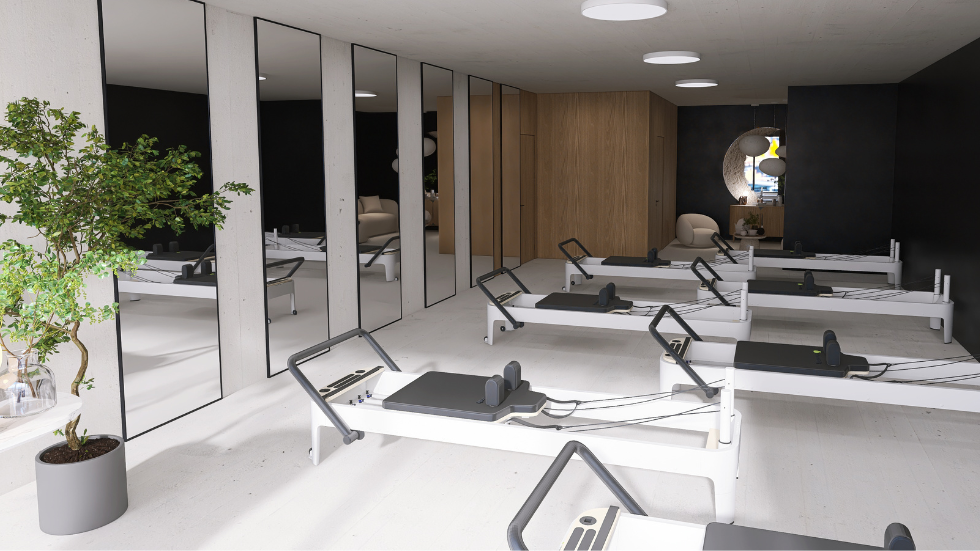
Pilates Studio – Technical, Legal, and Sanitary Requirements – A Guide
Is the thought of your own Pilates studio becoming more and more real in your mind? That’s a fantastic decision! The fitness market is continuously growing, and Pilates on reformers is gaining more and more popularity. However, before your studio opens its doors to the first clients, you must face a series of legal, technical, and sanitary requirements. At Balanced Body, we know this may seem complicated, but don’t worry – this guide will clear your doubts and show you how to realize this dream step by step.
1. Business Plan and Formalities – The Foundations of Your Success
Before you start looking for the perfect location, consider a solid business plan. A well-structured plan will allow you to assess the profitability of the venture, estimate costs, and plan a marketing strategy. Be sure to include the following in your business plan:
- Market and Competition Analysis
Who are your potential clients? What Pilates studios are already operating in the area? What can you do differently, better than they do?
- Financial Strategy
Projected startup costs (rent, renovation, equipment, legal fees), operating costs, revenue forecasts. Remember to secure funds for the first months of operation.
- Business Model
What services will you offer? Individual classes, group classes, workshops, or perhaps something more?
- Marketing Strategy
How will you reach your clients? Social media, website, local partnerships?
Choosing the Legal Form of Business
This is a step without which you cannot proceed. In the case of a Pilates studio, forget about unregistered business activity. The most commonly chosen legal forms are:
- Sole Proprietorship
The simplest and quickest to establish, ideal for a start. Minimal formal requirements, but you are liable for obligations with all your assets – even personal ones.
- Civil Partnership
Two or more people run the business together. Simpler than commercial companies, but personal liability of partners also applies here.
- Limited Liability Company (sp. z o.o.)
A more complex and complicated form, but it provides limited liability of partners’ assets up to the amount of contributed capital. It offers greater opportunities for development and attracting investors.
Business Registration and PKD Number
Regardless of the chosen legal form, you must register your business. In Poland, this is usually done through:
- CEIDG (Central Register and Information on Economic Activity) for sole proprietorships and partners in civil partnerships.
- KRS (National Court Register) for limited liability companies.
A very important element is the correct determination of PKD codes (Polish Classification of Activities). For a Pilates studio, the appropriate codes are usually:
- 93.13.Z – Activities of facilities for physical well-being improvement (most suitable for fitness studios, gyms, etc.)
- 85.51.Z – Extracurricular forms of sports education and sports and recreational activities (if you offer courses, training, etc.)
- 96.04.Z – Service activities related to physical well-being improvement (if you offer, for example, massages or other wellness-related services).
Correct PKD codes allow for proper tax accounting and help meet the specific legal requirements for them.
2. Location and Technical Requirements – Take Care of the Heart of Your Studio
Choosing the right location is half the success! Remember that the place should be:
- Accessible – easy access, parking, proximity to public transport stops.
- Visible – well-marked, with a visible entrance.
- Of Appropriate Size – you need enough space for reformers, a mat exercise area, reception, changing rooms, bathrooms, and… perhaps expanding the studio with more equipment as your business grows 🙂
Room Area and Height
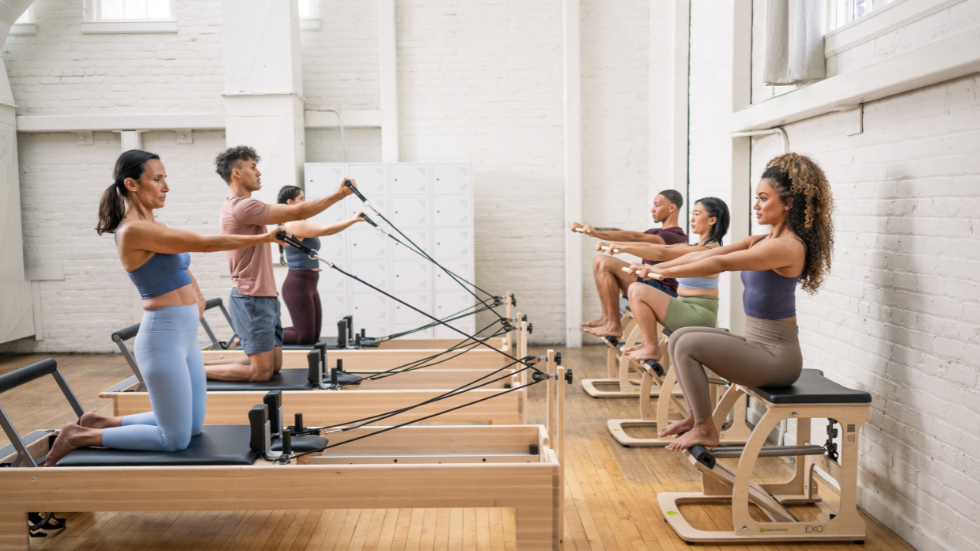
Although regulations do not specify strict standards for Pilates studios, it is advisable to follow common sense and client comfort. It is assumed that about 3-4 m² of usable space is needed for each reformer to ensure freedom of movement and safety. Additionally, remember about:
- Space for Mats – if you plan to hold mat classes, it will be most convenient to designate a separate area for them. However – if you dream of such classes, and the location you have in mind is not too large – there is nothing stopping you! Balanced Body offers reformers that you can easily move, stand vertically, or stack one on top of the other to gain the necessary space for laying out mats!
- Room Heights – ideally at least 2.5 meters for usable rooms, but the higher, the better – especially for dynamic exercises or the presence of a Cadillac or reformers with a tower.
Ventilation, Air Conditioning, and Heating
Thermal comfort is essential! Ensure your clients have optimal temperature and fresh air – especially in the exercise room.
- Ventilation – essential for health and comfort. An efficient mechanical ventilation system (supply and exhaust) with a capacity of at least 50m3/h/person (for the maximum number of people exercising simultaneously) is necessary. It will ensure proper air exchange, moisture removal, and odor control.
- Air Conditioning – if the room has mechanical ventilation, air conditioning may not be necessary, but… it is worth having. It is especially useful during the summer. It will ensure comfortable exercise conditions even on hot days.
- Heating – important to effectively and evenly heat the rooms during the autumn-winter period.
Floors and Their Proper Finish
The floor in a Pilates studio must be:
- Non-slip – safety first! Avoid slippery surfaces.
- Easy to Clean – materials that are easy to disinfect.
- Durable – resistant to intensive use.
Vinyl panels (LVT), PVC flooring, or specialized sports floors work excellently. Don’t forget about acoustic insulation – it will help ensure a comfortable working environment for instructors and clients.
Lighting
Proper lighting affects the atmosphere and safety. Focus on:
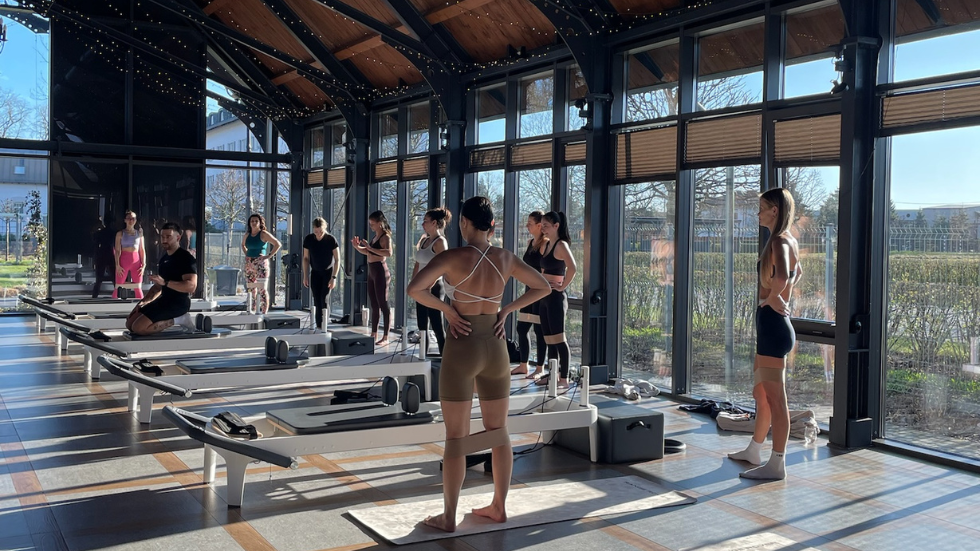
- Access to Natural Light – large windows are always an advantage.
- Artificial Lighting – bright, even, but not blinding. LED lighting with adjustable intensity works well to adapt it to different types of classes.
3. Sanitary Requirements – health and hygiene in your studio
The Sanitary Inspectorate (Państwowa Inspekcja Sanitarna) is your ally in ensuring client safety. Although it does not issue separate permits for operating a Pilates studio, it will conduct an inspection before opening to ensure that you meet all hygiene and sanitary standards. For a Pilates studio, it is advisable to refer to the guidelines for fitness clubs.
Changing Rooms and Bathrooms
This is an absolute foundation of comfort and hygiene – you must consider the changing room and bathroom during the planning stage.
- Changing Rooms – ideally, they should be separate for women and men, equipped with lockable lockers and benches. However, they can also be coat racks. It can also be one changing room with a designated area for a cabin. The minimum area of the changing room should allow for comfortable changing and be adapted to the maximum number of people (it cannot be less than 0.5 m2/person).
- Toilets and Sinks – if you plan separate changing rooms for women and men, keep in mind that each changing room should have direct access to a sanitary facility. The rule is one sink with hot and cold water for every 10 people and one toilet. Provide liquid soap, paper towels, and trash bins.
- Showers – although they are not absolutely required, they are a significant advantage for clients. The requirement for fitness studios is 1 shower for every 10 people.
Cleanliness and Disinfection of Equipment
This must not be forgotten! It is the foundation of maintaining sanitary safety.
- Equipment – after each use, reformers and other accessories (mats, magic circles, balls) must be thoroughly cleaned and disinfected. Invest in professional, equipment-safe, and skin-safe disinfectants. You can read more about this in our article: Maintenance and Control of Pilates Equipment.
- Cleaning Schedule – develop and adhere to a rigorous cleaning and disinfection schedule for all surfaces, floors, toilets, and changing rooms.
- Availability of Hand Sanitizers – place hand sanitizers in visible locations for clients.
Storage of Equipment and Cleaning Supplies
- Ensure a separate space for storing clean equipment and accessories.
- Store cleaning and disinfecting agents in closed cabinets, away from areas accessible to clients and with appropriate labeling.
4. Studio Equipment – Choose the Quality of Balanced Body
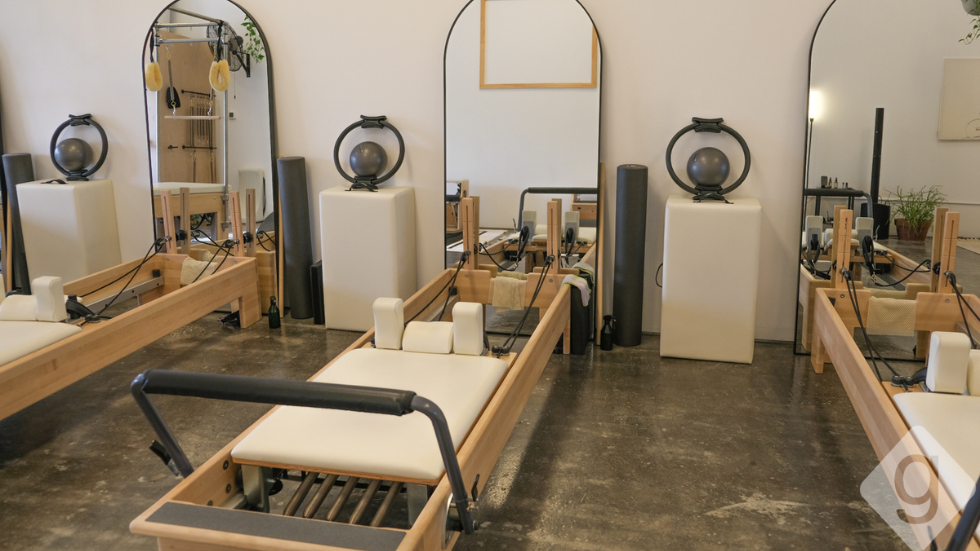
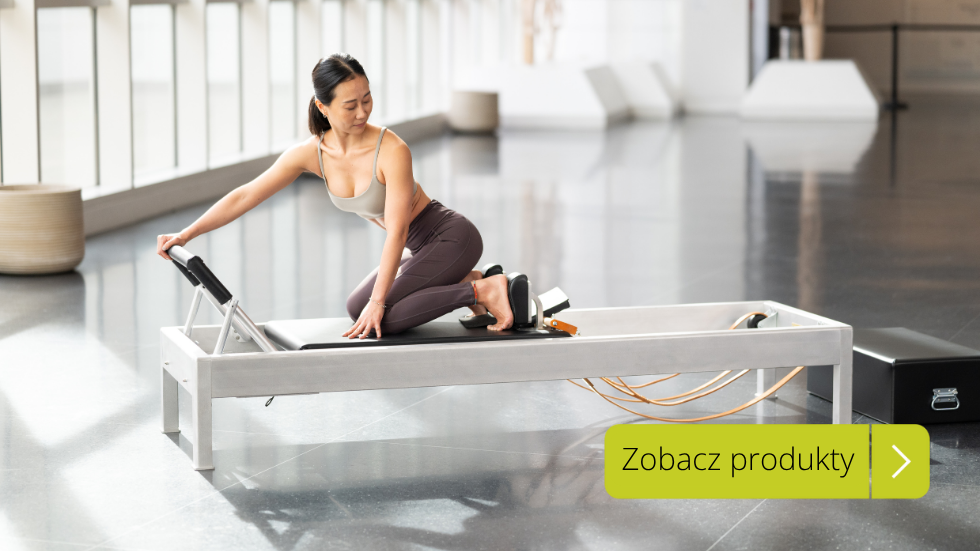
Once you have sorted out the formalities and the location, it will be time for the heart of your studio – reformers and other equipment. High-quality equipment is a long-term and multifaceted investment. Not only will you gain machines for many years, but also ensure the safety of your clients, the comfort of your instructors, and the durability of your business. At Balanced Body, we take pride in our reformers, which are synonymous with durability, innovation, and engineering excellence. Thousands of people around the world trust them. The premium class speaks for itself. Our machines guarantee smooth movement, reliability, and adaptability to the needs of every client – from beginners to advanced.
What to choose from the Balanced Body offer?
- Reformers
Consider the number of reformers you need. Popular models for studios include Allegro 2 Reformer and Studio Reformer. However, this is a very individual matter, and we are happy to help you design the studio of your dreams!
- Complementary Equipment
Don’t forget about barrels, chairs, or the Cadillac (Trapeze Table) – they will broaden your offer and attract a diverse clientele. You can also purchase them in the future, but remember to plan space for them now.
- Accessories
Mats, magic circles, balls, resistance bands, rollers, or Sissel Spinefitter – essential for conducting various classes and expanding training possibilities. Visit our website and see the full offer – there is plenty to choose from! Our experts are happy to advise you on selecting equipment perfectly tailored to your needs and budget. Remember, we also provide support for transportation and assembly!
5. Insurance and Safety – Peace of Mind for Every Entrepreneur
Do not underestimate the issue of insurance! Running a Pilates studio, you are responsible for the safety of your clients. Of course, the most important aspect is the equipment. However, there are some situations that no one can control – an accidental bump against a bench in the changing room, or slipping in the shower, and trouble is ready to happen.
- Public Liability Insurance for Business
It protects you against claims from clients for personal or property damage arising from the activities of your studio. This is an absolute must!
- Property Insurance
It protects your equipment and furnishings against theft, fire, or other unforeseen events.
- Health and Safety and Fire Safety Training
Both you and your employees must undergo appropriate training in occupational health and safety as well as fire protection.
- First Aid Kit
Your studio must have a properly equipped first aid kit and a designated person trained in providing first aid.
Your success is within reach!
Opening a Pilates studio with reformers is an exciting venture that requires careful planning and attention to detail. While the list of requirements may seem long, remember that each step brings you closer to realizing your dream. Investing in premium quality Balanced Body equipment, adhering to regulations, and ensuring client comfort are the foundations on which you will build your success. Don’t be afraid to seek support! We are here to help you at every stage. Contact us, and together we will create a studio that will be vibrant with energy and positive vibes.

I am a graduate in Managerial Economics as well as Finance and Accounting, with a specialization in Marketing. Since 2018, I have been working as a Copywriter at Balanced Body, where I create marketing content for the fitness and Pilates industries. One of my particular strengths is translating complex topics into accessible language and accurately analyzing the needs of target audiences. Outside of work, I am passionate about fire shows and volleyball, which helps me better understand the needs of physically active people.