


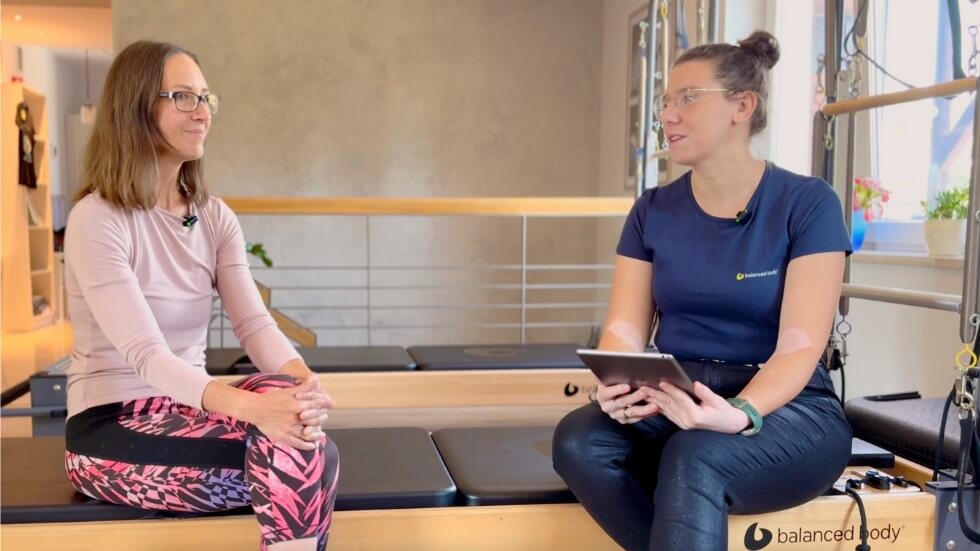
How to Build a Profitable Pilates Studio and Avoid Professional Burnout? An Interview with Kasia Twardzik
Do you dream of having your own Pilates studio? Or maybe you already run one, but feel that you need a fresh perspective and new inspirations? Meet Kasia Twardzik – the founder of a Pilates studio in Rzeszów, a Comprehensive Pilates Instructor at Balanced Body, and the creator of the original program “Pilates for Nerds.” Watch our interview to learn how to turn your passion into a business, overcome industry challenges, and not lose the joy of what you do. In this conversation, Kasia shares her experiences, from her beginnings as a fitness instructor, through discovering the power of Balanced Body equipment, to running a studio and creating original projects for instructors.
[Iza Wiśniewska from Balanced Body Poland] We warmly welcome you to the Balanced Body channel. Today we are in a very inspiring, dynamic, and passionate place – with Kasia Twardzik in Rzeszów. Kasia is a Comprehensive Pilates Instructor at Balanced Body, a personal trainer, a specialist in therapeutic training, and the author of the project “Pilates for Nerds.” Kasia, thank you very much for taking the time to meet with us.
[Kasia Twardzik] Thank you very much for wanting to visit me and come here. I am very pleased to host you in my humble studio.
[Iza] Great, Kasia. Your journey with movement started very early, as you obtained your first instructor qualifications at the age of 18. Tell me, what over the years led you to specialize in Pilates and therapeutic training?
[Kasia] I generally started as a fitness instructor, and it stemmed from my passion. As a child, I danced, and when I stopped training ballroom dance, I was looking for some kind of escape or another activity that would allow me to pursue that passion. I became interested in fitness, and at that time, my specialization was step. Step, particularly in a choreographic form. For several years, I was very passionate about this form and trained a lot. Then I started looking for more calming forms. At that time, there were no studios with Pilates equipment, only fitness studios, so everything was done on the mat. Fitness classes were conducted in such a way that the instructor exercised along with the participants, which was quite demanding. When I started leading a lot of these classes, I began to feel a bit drained of strength and energy, and I was looking for other forms of movement that would allow me to conduct many classes. Because it was also my form of income, essentially for a while – the only one – I didn’t want to limit the number of hours. However, I needed a calmer form to physically manage working. I was interested in various forms leaning towards yoga, towards body art. And Pilates also came up, I saw such forms at conferences and conventions. In the meantime, I also started to delve into movement therapy, which attracted me. Perhaps it stemmed from the desire to help more and more people who began coming to me with issues like back pain and postural defects. More and more of these people appeared in my classes. I also wanted to gain knowledge, experience, and skills to work with these people safely. So, this movement therapy was going on in parallel, and it connected very well with Pilates because I noticed that therapeutic movement plus Pilates, essentially, you can’t separate them – you can do them simultaneously. And perhaps that’s why Pilates absorbed me. I also think thatto is a form that resonates well with me, with my little touch of perfectionism. Because I have this tendency to seek precision, perfection, I like technical movement, so here Pilates simply gives me a lot of room to express myself. Sometimes even too much, I have to keep an eye on myself not to go too far. And that’s why Pilates has probably stuck with me now practically 100%.
[Iza] Oh indeed, perfectionism and Pilates have a lot in common. Looking at that precision. You ended up in the Comprehensive training at Balanced Body, tell me what…
[Kasia] …yes, yes, actually after many years, because the first Pilates training I did was mat Pilates. At that time, there weren’t that many courses in Poland, I don’t even know if there were any equipment courses at all. Back when I started Pilates, it was 2006, I didn’t even know about the existence of reformers, I didn’t know about other Pilates equipment. There was only mat Pilates, and that’s the training I did. First basic, then advanced mat Pilates, and for many years I taught mat classes. However, later when I started discovering that there was something more in Pilates, by chance. I started going to a friend who had a studio in Rzeszów, the first one with machines, and I began to go to her as a client and get to know this equipment, and it was simply a revolution. I was just so amazed. At first, of course, I was devastated because thinking that I was an advanced Pilates practitioner, I could do something, and I got on the reformer and couldn’t do the basic exercises. It turned out that I didn’t have the strength for it, my body somehow didn’t cooperate fully. So at first, there was a moment of despair, but then I got very into it. I saw how quickly progress started to happen for me as a practitioner. And I also noticed that it would be much easier for me to teach movement if I had equipment in the studio. So it was a quick decision that I had to get trained in this, I had to buy equipment, and simply there was no way that I could unsee it, you could say.
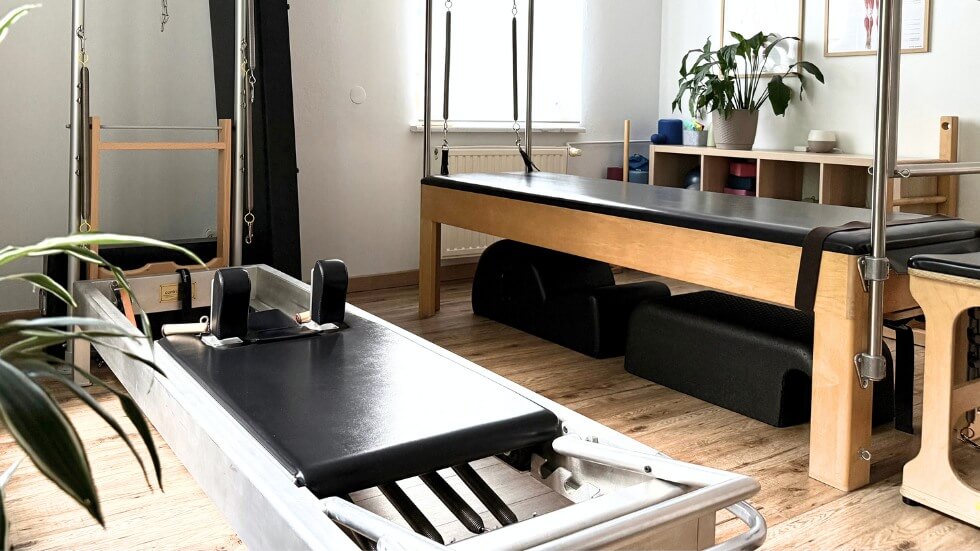
[Iza] Nicely put, so generally mat Pilates and machine Pilates are two different stories a bit?
[Kasia] I would say that it is actually one system. That’s how I explain it to people now. Back then we had mat Pilates, and Pilates on equipment was something elite, and people didn’t associate it that way. Now we have Pilates on reformers – very popular. Studios with reformers are opening, and people generally ask – when they call us, for example, because they want to sign up for classes, they ask if we practice on reformers? I say no, we practice Pilates in the whole system, in the whole spectrum of equipment. And it’s like: “mhmm but there are other equipment too” no, so there’s surprise. I treat it systemically, so for me the mat is one of the pieces of equipment. The reformer is one of the pieces of equipment, other equipment also comes into play, and Pilates is just Pilates. There is no mat Pilates, there is no reformer Pilates, there is just Pilates – simply.
[Iza] And why did you choose training at Balanced Body?
[Kasia] The reason…I was considering the choice of a school. It was in 2018, I believe, when I started training at the Balanced Body school with Andżelika Mirek in Krakow. I was pondering the choice of school, and I chose Balanced Body mainly because of the brand. It was a well-known, global brand, also associated with good equipment, which I had already become familiar with. So I decided to go for it. I could have chosen training with instructors or teachers who were offering training in Poland at that time, but they were more like – training under their own name. So I thought that if I wanted to train abroad later, I could say that I graduated from Balanced Body, and everyone would know what that means. But if I mention a name, it might not be as clear or well-known. And I would probably have to fight for spots in some advanced trainings. That’s what I thought back then; now I know it doesn’t exactly work that way, but at that time, it was my main argument.
[Iza] Would you recommend this training to others?
[Kasia] Absolutely! I constantly recommend it, because I do not train instructors, although I still get inquiries about whether I train instructors from scratch. I do not train instructors from scratch. I only train my own staff for my studio. However, if someone asks me about training, I wholeheartedly recommend Balanced Body training. I believe it is a great foundation for a Pilates teacher, a base for further development. It’s really solid training.
[Iza] So following the spirit of the training, you also invested in equipment, which you have quite a lot of here.
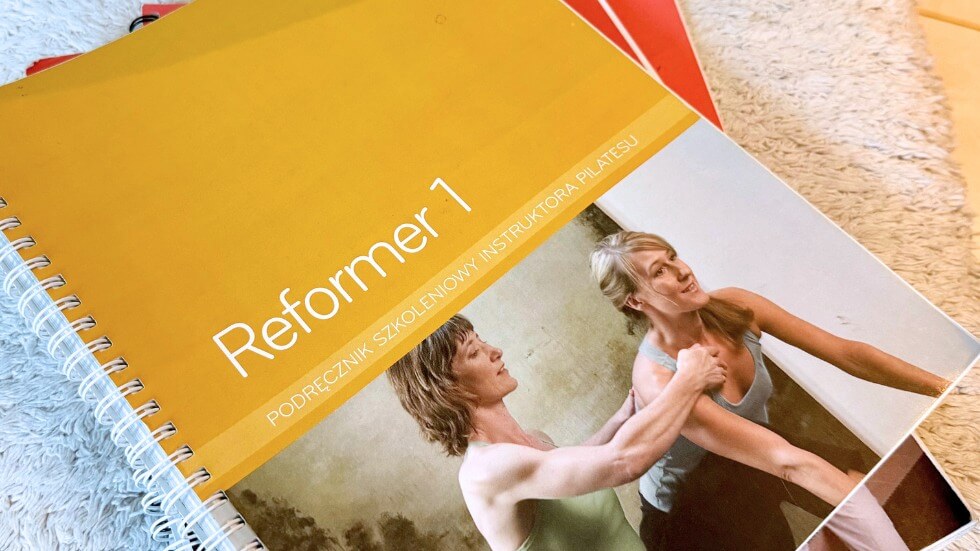
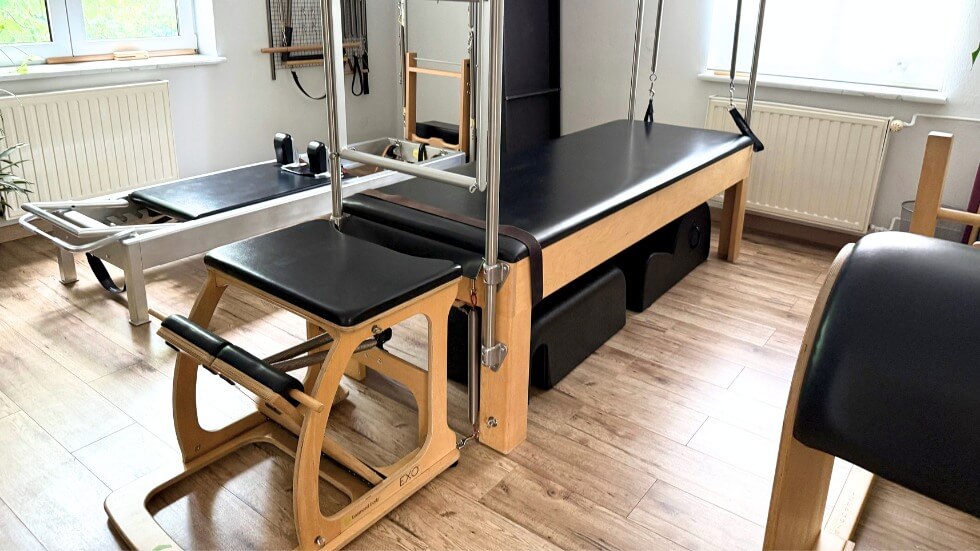
[Kasia] Yes, yes. For me, the choice of equipment at the time when I was starting the Comprehensive training opened up opportunities, as my friend and I were opening a studio, which was the largest in Rzeszów, equipped comprehensively with Pilates equipment, including the system, so we wanted to have a complete set of equipment. We received funding. We partially financed it with funds from RARR – the Rzeszów Regional Development Agency. It was a nice project, so we took advantage of it. And it was also important for us that it was a company from which I would receive a Polish invoice, with VAT, just to avoid problems later with the settlement of this funding. Because the alternative was importing equipment from abroad, customs duties, and so on, which was very troublesome to settle. So that was one of the arguments. The second argument: we have service on-site, so we can always count on the company’s help if needed. And also the reliability of this equipment. The equipment has been produced for decades, probably over 40 years, so it is a proven brand, and for me, it is also very important to have that quality and not worry that something will happen during training, as it is also safety for clients.
[Iza] You created a project: “Pilates for Nerds,” which sounds very intriguing and doesn’t say much in general. Where did this idea come from? What is it all about?
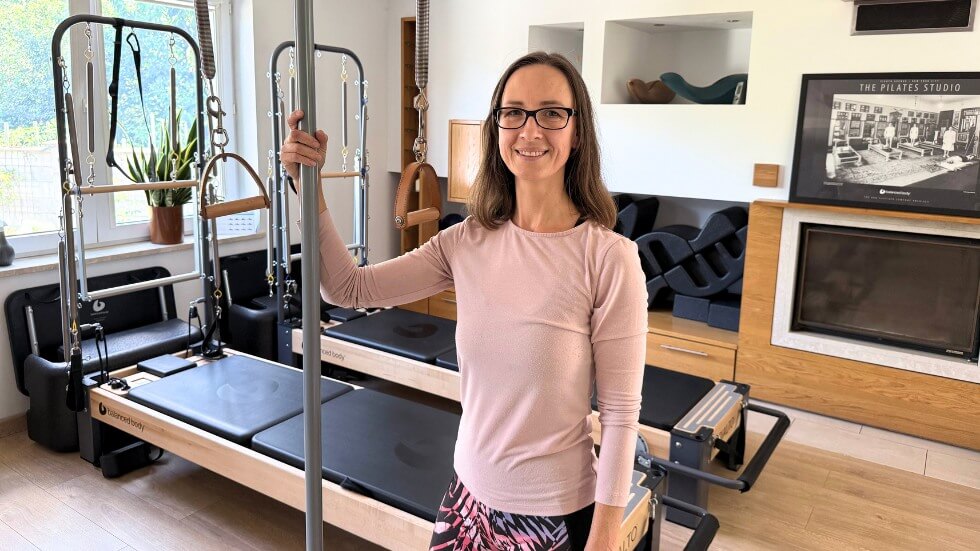
[Kasia] The idea came a bit from my desire to share knowledge. As I mentioned, I do not train instructors from scratch because I believe there are many schools saturating the Polish market. I don’t necessarily want to compete with other schools here. At least for now, I don’t see a place for myself, perhaps. However, I wanted, I had a need to share my experience with teachers who need some support.a already later. So we finished the diploma training, we want to do something further. I personally chose such a mentoring training, you could say, a postgraduate program in Barcelona, with Maria Earle. And I saw that at that time there were no such proposals for teachers in Poland, and I decided that this is the moment when I can share this knowledge. I already have enough experience, I have had so many clients under my care that I have something to say on this topic. I also responded to the demand from my colleagues in the field who ask whether I teach or lead. I started with individual workshops. And then the idea was born to combine it into a comprehensive annual program, because it lasts 9 months with me, so I would say two semesters of postgraduate studies that simply do not teach from scratch. They are based on some foundations that each of us has. However, we refine certain details, analyze them in terms of biomechanics, anatomy, and exercises. We analyze Pilates as a system. We consider how to lead problematic clients, that is, those with postural defects or pain issues. Because many instructors, after their diploma studies and training, have problems with such individuals, who we encounter daily in the studio, because everyone comes to Pilates with some issue. Physiotherapists are starting to recommend Pilates as a remedy for back pain, but we don’t really know how to work with it. How to lead a training session so as not to cause even more harm to someone. So here, having my experience and the knowledge I gained from various trainings, I can share it. And that’s how our program was created. The first edition is already behind us, and now a group is gathering for the second edition, which will start in October. I must say that I am very satisfied after this first edition. Of course, I have some thoughts on what to do better, but the girls also spoke very positively about this training, and it turned out very well.
[Iza] And we also warmly invite everyone to this training who wants to broaden their horizons and cares about the safety of clients and knowledge above all. Kasia, every career path has its challenges. Tell me, what are the biggest challenges you have encountered on your path?
[Kasia] I think the biggest challenge for someone who works like me, that is, full-time or even two jobs, you could say, because for a studio owner, working as both a teacher and a studio owner is, well, like for any entrepreneur, we work 24 hours a day, 7 days a week. We are constantly thinking and organizing the studio’s work, even if we are doing something else. And I think the biggest challenge is the risk of burnout. It seems to me that this is rarely talked about, and when we look at the work of our colleagues in the field on Instagram, for example, everything looks so super rosy, wonderful, everyone is smiling, everyone is passionate, sharing their knowledge, and simply loving their work and working from morning till evening. But in life, it doesn’t look that rosy, and sometimes we do face burnout. Working with clients, we really have to be a bit of psychologists, a bit of educators. And it’s not an easy job because everyone is different, everyone needs a slightly different approach, and we as teachers have to juggle this a bit. Sometimes we are also carried away by various emotions, sometimes we get angry with these clients, but we cannot show it. And these are, well, difficult things. I think this is a big challenge, and in my program “Pilates for Nerds,” we talk a bit about this. And we discuss how to defend against it, how to maintain that balance between work and life.In order to prevent burnout from affecting us to such an extent, we need to defend ourselves, observe the symptoms as early as possible, and take action in advance to function.
[Iza] Indeed, but this is a very, very important topic that you are raising here now. Very few people talk about it, so thank you for bringing it up, because I think it is invaluable for those who are considering opening their own studio, right, to pay attention to this. Listen, because you do a lot of things, here training, here “Pilates for Nerds,” but you also organize other really interesting events, as far as I know, you even had the pleasure of teaching Pilates at a horse riding stable.
[Kasia] Yes.
[Iza] Tell me, what can Pilates offer to a rider?
[Kasia] Oh [laughter] you’ve entered dangerous territory, because once I start on this topic, I might not stop. It all started when I began riding horses. This is somewhat related to the topic of burnout and looking for an escape, yes. Because I believe that if you start working in the field of your passion, like Pilates was my huge passion, I started working in it full-time, and that passion is no longer my passion, it is my professional work. Of course, I love it and I always try to take care of it so that the passion remains, so that the fire keeps burning, but on the other hand, I need something else to have that escape. I recommend to everyone, to all teachers, to do something else as well. And for me, horses came into the picture, horse riding appeared. Currently, I even have my own mount, recently. And I simply spend a lot of time at the stable. And I thought to myself, since I am at the stable, I know there are great people who also want to develop, want to improve their riding skills – because it must be said that horseback riding is a very demanding, very difficult sport. I don’t know a more difficult sport than horseback riding, because I have to manage not only my body but also the horse, which has its own brain, its own ideas. And it doesn’t always go as we planned. It is not a machine, yes, it is not a reformer that I simply know how to operate. Every day, something different comes up. And in fact, I need to have control over my body to be able to cooperate with the horse. To not interfere with its movement, because it moves with its balance. If I am stiff, do not have balance, do not have the correct posture, if there are uncontrolled movements, some pulling with my hand, or shifting my leg not where it should be, it simply bothers the horse. There are horses that forgive a lot, and there are horses that do not forgive such things. So for riders, it is very important to work with their bodies to achieve body awareness and control. Is there a better method to work with the body to build body awareness and control than Pilates? I don’t know one!
[Iza] I don’t either!
[Kasia] It is the perfect method to work on this topic, because it is not really about strength. It is somewhat about flexibility. It is very much about core muscles, because that gives us our balance in the saddle, where the horse moves, and we must be relaxed on one side, but on the other side, we need to have some stability so that we don’t just fall out of the saddle. But on the other hand, if we stiffen up, we will simply not be able to follow the horse’s movement.i we will not cooperate well. We will also overload our bodies, and we will get injuries. So what we want to achieve in Pilates, what we normally say in the studio, is that it is for the health of the spine, it is for our proper posture, which means that tension from within, that proper tone of the deep muscles, which maintain our correct posture. This is what we need in the saddle to maintain balance and body control. And then we can have soft hands, soft legs, act precisely when we need to, because we have perfect control. By the way, Pilates wrote about this, right? That we must have control over our body, and not be at the mercy of our body – a quote from the book, probably a paraphrase, because I don’t know that quote by heart, but this is what Pilates said, that this is really the essence.
[Iza] That hits the nail on the head, which is why we invite all riders to Pilates.
[Kasia] There will be new proposals, because for now this is a beginner project, just starting out. For now, I am starting with these classes at the stable, but I also want to hold workshops here with the equipment in the studio. Because I believe that the equipment can help us a lot in this work for riders. So I hope, maybe even for some regular classes. There will also be videos on YouTube, they will definitely appear. So there will be a lot happening in this area as well.
[Iza] Since you are talking about the future, what are your plans for the further development of the studio?
[Kasia] I would like the studio to develop, so to speak, in terms of servicing the local market here. It will definitely always be an intimate studio. Because I don’t want to go into a large room with reformers – 10 reformers just doesn’t suit me. I prefer a work focused on meeting the individual needs of clients, which in a group, for example, like here we have 4 people exercising simultaneously in the studio, we are still able to manage, oversee all the details, and teach people the movement nicely. Of course, there will also be personal training and duets. So I definitely will not be going in the direction of expanding in terms of the size of the studio. I also do not plan any franchises or building a new location. I would like to focus more on quality and really utilizing the potential of this place. This place is really my home. I live upstairs, and the ground floor is the studio. I really like that. I don’t have the need for it to be some kind of business, just in Rzeszów with 4 locations. I don’t have such ambitions. My ambition is definitely to develop these projects: “Pilates for Nerds” and Pilates for riders. I would like that to grow, because that is also a bit of a side activity for me in relation to the studio. I would like the studio to simply operate and be an independent project that sustains itself. I have great girls here, instructors. We are developing the team, so I would also like to create opportunities for development for other people, young people. Because let’s not hide it, I hit forty a few years ago, so…
[Iza] You don’t look it!
[Kasia] …so I would like to pass this work on to younger generations. I definitely would not want to give up working with clients, because that also gives me that…
[Iza] So, to wrap up, what would you say to those who have seen Pilates, liked it, and would like to become instructors? What advice would you have for them?
[Kasia] First of all, practice. A lot of people come to Pilates without any practice. I mean, they come to instructor training without their own prior practice because they see something like: “oh, studios are opening up here, maybe this will be a nice place for me to start working,” and for example, I am a fitness instructor or a personal trainer, so maybe a one-day training or a weekend training and I start working. Well, it doesn’t work that way. Pilates is really a deep method; to truly teach Pilates, you need to have quite a bit of knowledge, but that knowledge has to come through your own practice. So if someone wants to go in that direction and transition to a professional path, they should start with regular training in a studio, under the guidance of an experienced instructor, an experienced teacher. Ideally systematically, to understand the system comprehensively. Reformer studios are opening up, and there is a demand for Pilates training on the reformer, but I believe that a teacher, even if they only work on reformers or only on the mat, should have the experience of working with all equipment for themselves. To feel the method in their body, because then it’s easier for us to convey how clients should feel during a given exercise. The equipment really facilitates this, even if we don’t work with a full set of equipment, I believe that every teacher should have this practice for themselves. So training, perhaps not Comprehensive training right away, maybe training on the mat, on the reformer. Because I think we absolutely cannot escape from the mat, because the mat is really the heart of the method, and it is always a test of our physical fitness. So we, our clients, even though they pay for reformers, and for the tower, and for chairs, and so on, we occasionally do mat training with them so they confront gravity, with their own body weight. However, we should not escape from the mat. You can do Pilates training on the reformer, but your own practice as a studio client on a full set of equipment is absolutely necessary.
[Iza] Great, Kasia. Thank you very much for this passionate and inspiring conversation. For all this advice. I hope that many people will take away the most important information and values from this conversation at the beginning of their journey. We wish you as many Nerds as possible, so that the studio continues to grow and brings you smiles and joy, because it’s clear how you talk about it that it’s truly your life passion. Dear viewers, we warmly invite you to our website balanced-body.pl, where you will find all our equipment and more information about it. Kasia excellently utilizesten equipment in your work. Perhaps it’s time for you to also take an interest and start using this equipment as well. See you in the next episode.
[Kasia] Thank you very much.
[Iza] Thank you.
We hope that the story of Kasia Twardzik will be an invaluable inspiration for you. It shows that success in the Pilates industry is not only about passion but also strategic thinking, continuous development, and the courage to create your own unique path.
If you want to follow in Kasia’s footsteps and grow your studio, start with a solid foundation. Visit our page on Pilates machines and see how Balanced Body equipment can transform your work and your clients’ experiences. Remember that investing in quality is an investment in safety and development that every client will appreciate.
If you have any questions, feel free to write! We are happy to help you at every stage of your business journey.
You can find Kasia Twardzik online:
Studio IG: https://www.instagram.com/kasiatwardzik_pilates_studio/
IG: https://www.instagram.com/kasiatwardzikpilates/
YouTube: https://www.youtube.com/@Pilatesdlanerdow
WWW: https://kasiatwardzik.pl/
I am a graduate in Managerial Economics as well as Finance and Accounting, with a specialization in Marketing. Since 2018, I have been working as a Copywriter at Balanced Body, where I create marketing content for the fitness and Pilates industries. One of my particular strengths is translating complex topics into accessible language and accurately analyzing the needs of target audiences. Outside of work, I am passionate about fire shows and volleyball, which helps me better understand the needs of physically active people.
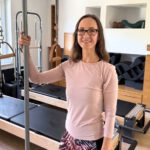
I’m a personal trainer and certified Pilates teacher, including a Comprehensive Pilates Instructor from Balanced Body. My specialization is Pilates and therapeutic training. I created the “Pilates for Nerds” program, where I help other Pilates teachers further develop their skills. I believe in a holistic approach to health that combines strength, mindfulness, and breathing. Besides coaching, my other great passion is horseback riding and everything related to it. I help people build strength, confidence, and harmony!