


Pilates in Injury Rehabilitation
Pilates – rehabilitation for everyone
Pilates is one of the fastest-growing forms of training and injury rehabilitation. This popularity stems from many advantages of this method, such as: increasing muscle strength without unnecessary bulk, improving flexibility, and enhancing posture. Exercises based on Pilates principles can be performed by anyone. It is considered a very safe form of rehabilitation and training. The level of physical fitness and age do not matter here. A significant advantage of Pilates, in addition to safety, is its comprehensiveness, allowing the entire body to engage in development. As a result, Pilates has become an activity highly recommended by doctors and rehabilitation specialists as part of the healing process.
Everything starts at the center of the body
The method was created by Joseph Pilates, who suffered from various illnesses as a child. As a preventive measure and treatment for his own ailments, he developed over the years a system of exercises based on yoga, ballet, and isometric exercises. He named it “the art of Contrology.” According to this method, all activities are controlled by our mind. Every movement is conscious and originates from the center of the body, which Pilates called the “powerhouse” or “core.” The foundation of our body, which according to Pilates consists of the muscles between the diaphragm and the pelvis, forms the most important “corset” that supports our body and internal organs. When the corset is too tight or too loose, meaning the muscles are excessively contracted or relaxed, our body assumes an incorrect posture, and the joints are improperly aligned, resulting in a greater susceptibility to injuries. Many factors contribute to the lack of balance between individual muscle groups in your body. Posture, the way you walk, sit, bend, sleep, run, or train plays a huge role in muscle dysfunction. The way you move during regular activities can lead to improper loads, and consequently, a lack of stabilization of joints and ligaments. Pilates utilizes a recruitment technique aimed at engaging specific muscle groups. It is based on the ability to activate the deep lumbar-pelvic-hip muscles, which are the most important building blocks of our body’s stability. Creating a strong corset in this muscle group guarantees the best opportunity for developing balance, coordination, and harmony of movements.
Pilates in injury rehabilitation
This method is increasingly being incorporated by therapists into rehabilitation treatment plans. Pilates is excellent for rehabilitation after an injury because it is a form of exercise that stimulates agility and proper posture by strengthening the muscles of the spine and abdomen and increasing the flexibility of the entire body. Pilates helps to balance the discrepancies between overly strengthened and stretched muscles, thereby strengthening the body and preventing diseases and injuries. The method is mainly used in the following cases:
- sports training,
- rehabilitation after sports injuries,
- post-injury rehabilitation for older adults,
- prevention and rehabilitation of spinal overload pain,
- rehabilitation for pregnant women,
- urogynaecological rehabilitation,
- pain prevention for knee and hip joints,
- rehabilitation after knee and hip joint endoprosthesis surgeries,
- rehabilitation after ligament injuries of the knee and ankle joints.
In addition to the many indications for using Pilates, a very important aspect is also good breath control and harmony during training, which contributes to reducing stress levels. Today’s research leaves no doubt about how important these aspects are in helping to return to health.
Flexibility and Simplicity of Pilates as a Guarantee of Success
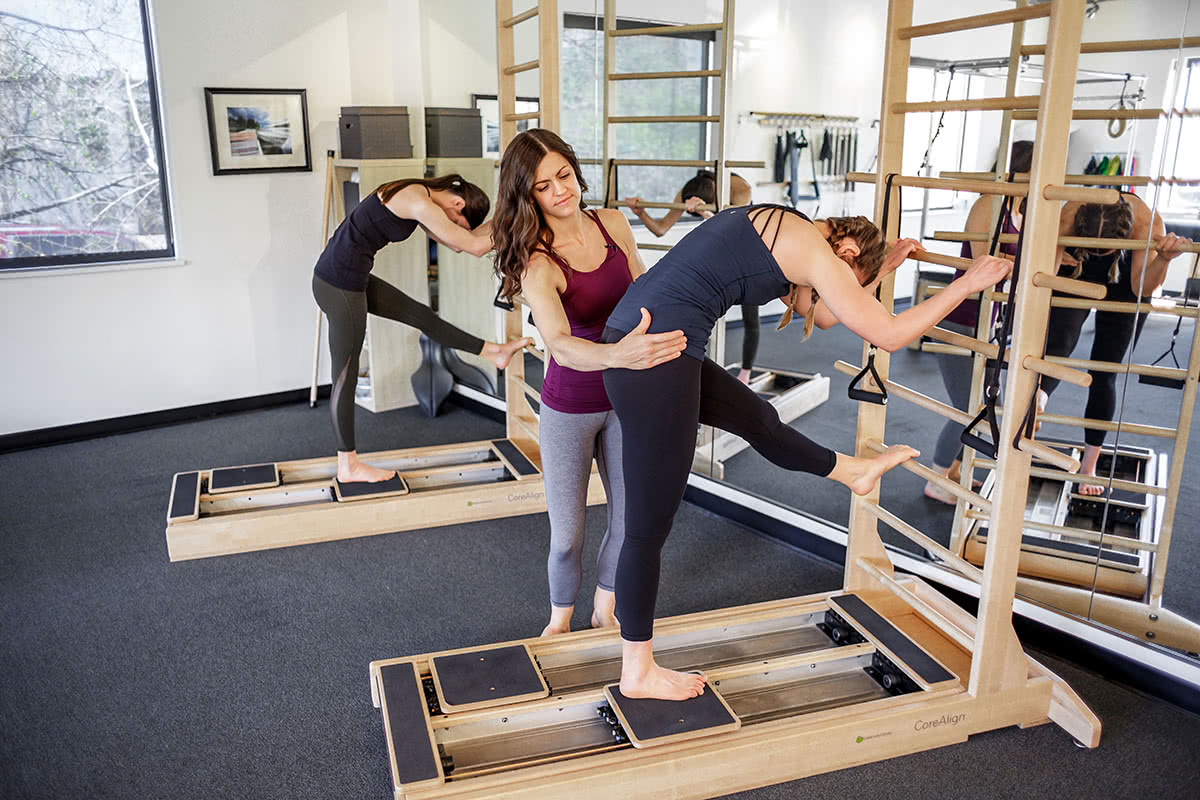
Physiotherapists around the world consider Pilates to be one of the most flexible forms of rehabilitative treatment. An efficient Pilates workout provides greater flexibility compared to other conventional therapy options. Pilates consists of exercises that can be modified according to the patient’s skills and comfort level. Depending on the severity of the injury, one can choose exercises from basic to more advanced forms. Pilates training teaches how to work correctly with your body and achieve proper posture. The effectiveness of Pilates training has many benefits, but only when performed correctly. Otherwise, it can lead to injuries or worsen ailments. The best method is training under the supervision of a therapist. Expert instruction increases the chances of healing an injury and avoiding further health problems. It is important to know that there is a significant difference between Pilates exercises performed as training and those performed as therapy. It is excellent for rehabilitation after an injury, but if not applied in conjunction with appropriate therapy techniques, it can exacerbate the injury. Choose the best Pilates instructors to help recover from injuries and alleviate pain. It is the therapists who guarantee the effectiveness of therapy and training.

I am a graduate in Managerial Economics as well as Finance and Accounting, with a specialization in Marketing. Since 2018, I have been working as a Copywriter at Balanced Body, where I create marketing content for the fitness and Pilates industries. One of my particular strengths is translating complex topics into accessible language and accurately analyzing the needs of target audiences. Outside of work, I am passionate about fire shows and volleyball, which helps me better understand the needs of physically active people.