


Exercises for Knee Injuries
Causes and Effects of Knee Injuries
Knee injuries are among the most common orthopedic injuries. Their causes can be both direct injuries that cause immediate damage to the joint, as well as long-term degradation processes of the joint and the surrounding tissue. Another, less common and somewhat less obvious cause of injuries to this joint is misalignment of the joints above and below the knee. Combined with repetitive movements and activities, such as walking, running, or work-related tasks, this phenomenon can lead to accelerated wear of the joint surfaces. In the knee, the structures most susceptible to wear are the articular cartilage of the femur and patella, as well as the medial and lateral menisci that absorb shocks. Degradation of joint tissues leads to deformities that cause discomfort such as: popping, grinding, and locking of the joints. Changes in the joint that go unnoticed in time will ultimately lead the patient to pain and dysfunction.
Using Pilates for Assessment and Treatment of Knee Injuries
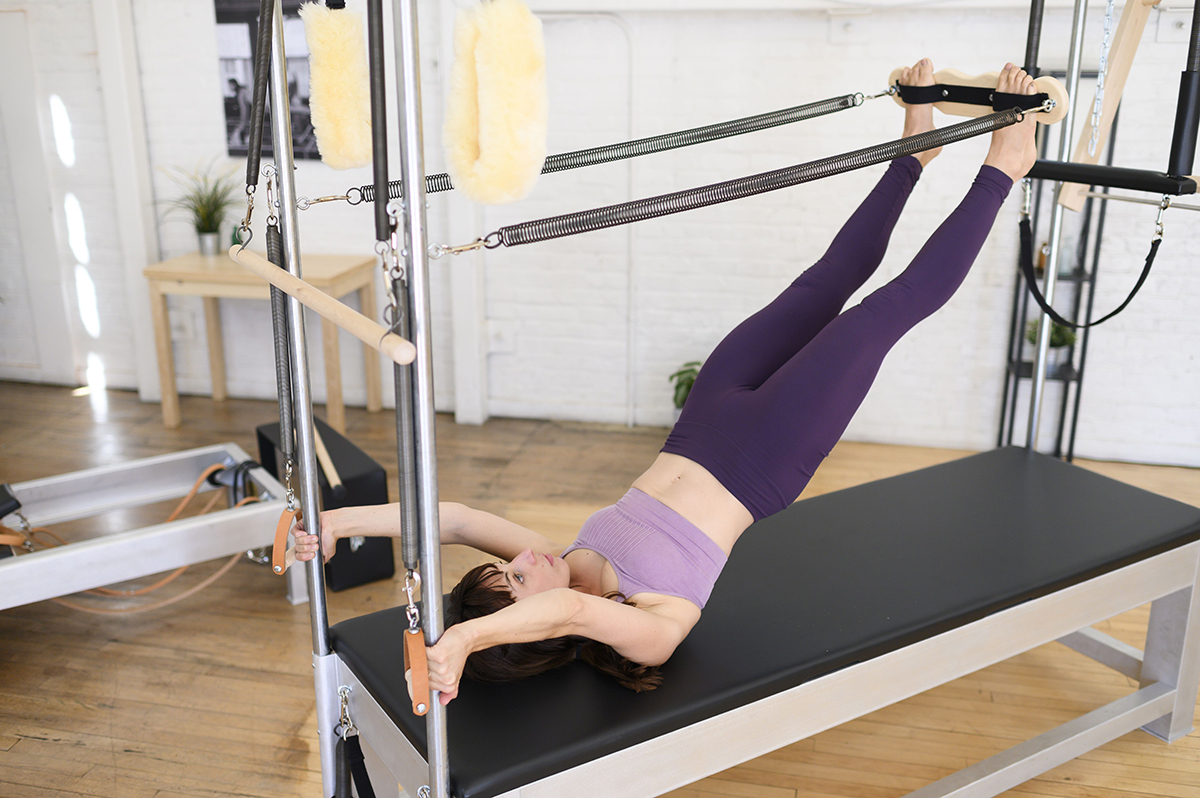
The movements performed during Pilates exercises on equipment are very useful in knee rehabilitation, both in terms of assessment and treatment of injuries. The assessment of movements can be used to gain general information about how the joint moves and what the movement preference is. As for treatment, exercises can be applied at a more localized level and allow work on how the joint moves within the joint capsule. Elements such as tilting and sliding can be utilized in a supportive environment, such as Footwork on the reformer. Furthermore, in such a non-destructive environment, a more efficient muscle mobilization can be restored. With appropriate movement, as well as its control, support, and guidance from the therapist, change and a return to proper function of the engaged muscles can be achieved. As the patient gains increased confidence and control, movements can begin to be performed under full load, with support from the springs turned off. Exercises such as Standing Leg Pump without hand support, Forward Lunge on the chair, Side Splits and Front Splits on the reformer, or Assisted Squats with Leg Springs on the Cadillac – all can support the restoration of full control of the knee joint.
Pilates exercises on the reformer also allow addressing the previously mentioned, less common cause of knee injuries – misalignment of the joints above and below the knee. The primary plane of movement for the knee joint is the sagittal plane, which means that flexion and extension are the most comfortable for the joint. Therefore, when we talk about rotations in the knee joint or medial and lateral rotation, in most cases we are referring to the rotation of the hip joint. If appropriate attention is not paid to controlling the movement in the hip as carefully as in the knee, then combined with constant loading of the foot, the knee can become twisted, regardless of the strength of the muscles around the knee. Maintaining control and alignment of the hip joint will ensure proper positioning of the knee between the hip and foot, preventing undesirable twisting of the knee joint during loaded knee flexion.
Effectiveness of Knee Rehabilitation Using the Pilates Method
The results of treating knee injuries are usually good, as the Pilates method allows focusing on specific issues related to the injury. However, the course of rehabilitation using Pilates exercises on equipment and its progress depend on various factors. Treatment and control of movement can help reduce destructive forces and allow for tissue healing, but may not reverse all structural changes that have occurred. The tissue that has been injured, its tenderness, the duration of the injury, and the compensatory mechanisms that the body has adopted play a significant role in the rehabilitation process and affect the extent and speed at which the patient will be able to regain functionality.

I am a graduate in Managerial Economics as well as Finance and Accounting, with a specialization in Marketing. Since 2018, I have been working as a Copywriter at Balanced Body, where I create marketing content for the fitness and Pilates industries. One of my particular strengths is translating complex topics into accessible language and accurately analyzing the needs of target audiences. Outside of work, I am passionate about fire shows and volleyball, which helps me better understand the needs of physically active people.